

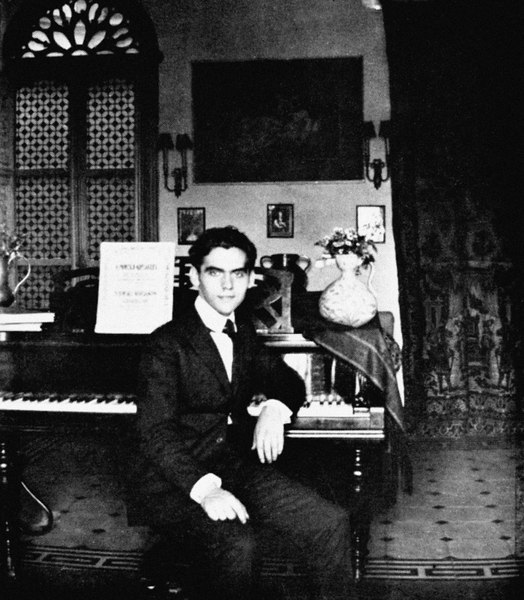
The mystery of Federico García Lorca's death: Why his body remains unfound after 90 years
Translated from Romanian, summarized and contextualized by DistantNews.
At a glance
News
Sources not specified
Context piece
- Federico García Lorca, a renowned Spanish poet and playwright, was assassinated in August 1936 during the Spanish Civil War, and his remains have never been found.
- Despite numerous searches and excavations in the Granada province, Lorca's body remains undiscovered, making him one of the most prominent cases of victims from the Spanish Civil War and Franco's dictatorship whose remains are still missing.
- The article explores the historical context of the Spanish Civil War, the societal tensions leading up to it, and the reasons why Lorca, despite not belonging to a political party, became a target due to his progressive cultural ties and known homosexuality.
Ninety years after his assassination, the exact burial site of Federico García Lorca, the celebrated Spanish poet and playwright, remains an enduring mystery. Lorca, known for masterpieces like "Blood Wedding" and "The House of Bernarda Alba," was reportedly shot in August 1936 in the Granada province, between the towns of Víznar and Alfacar. Despite extensive searches and excavations over the decades, his remains have never been recovered.
According to BBC Mundo, Lorca's case is emblematic of the many victims of the Spanish Civil War and Francisco Franco's subsequent dictatorship whose final resting places are unknown. Official records indicate Spain has around 6,000 mass graves containing the remains of over 11,000 unidentified individuals, though some experts estimate the number of disappeared and buried in such sites could be as high as 20,000 to 25,000.
Lorca was killed just weeks after the Spanish Civil War erupted in July 1936, following a military uprising against the Popular Front government. The conflict plunged Spain into a nearly three-year civil war. Lorca, who had been in Madrid, returned to his native Granada on July 14, likely believing his family's home offered refuge from the escalating national violence.
The Republic wanted to modernize Spain.
Historian Julián Casanova explains that societal tensions had been building since the establishment of the Second Republic. Reforms in social, political, and religious spheres deeply divided Spanish society. "The Republic wanted to modernize Spain," Casanova notes, but these changes were perceived as too radical by some and too slow by others, fueling widespread discontent.
Lorca, from a well-off family, was not affiliated with any political party but was connected to progressive cultural circles and artists like Luis Buñuel and Salvador Dalí. Through the state-supported itinerant theater project La Barraca, he brought performances to rural Spain, making theater accessible to a wider audience. His homosexuality was also known, and conservative publications had attacked him before his death. Casanova suggests that in an era of rapid repression, these factors were sufficient to endanger Lorca, even without him being on a specific "blacklist."
In a period when repression was rapidly expanding, such things were enough to put him in danger. It was not necessary, he says, for Lorca to have been on a 'black list.'
DistantNews Editorial
Originally published by Adevărul in Romanian. Translated, summarized, and contextualized by our editorial team with added local perspective. Read our editorial standards.
More Stories


From Our Blog

What Gets Lost (and Found) When News Is Translated

The Critical Role of Diaspora Media in Global News

What Travellers Should Know About Countries with Restricted Press

A Digital Nomad's Guide to Following Local News

How the Same Story Looks Different in Different Countries
