


The Pig War: How a single animal sparked a 12-year Britain-US standoff
Translated from English, summarized and contextualized by DistantNews.
At a glance
In-depth
Sources not specified
Outcome reported
- A dispute over a pig in 1859 escalated into a 12-year military standoff between Britain and the United States over San Juan Island.
- The conflict stemmed from an ambiguous boundary in the 1846 Oregon Treaty, which left the San Juan Islands' ownership unclear.
- Both nations established rival camps on the island, but diplomacy and arbitration eventually resolved the unusual crisis, preventing open warfare.
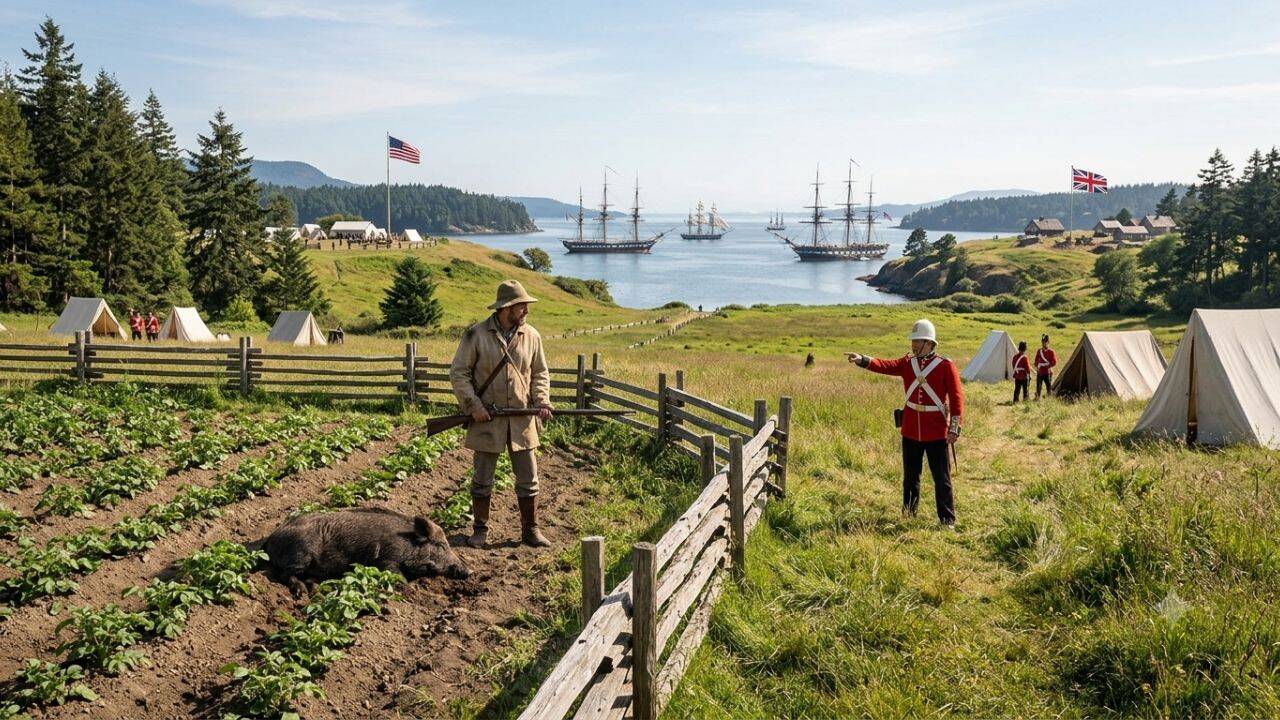
The unlikely Pig War, a 12-year territorial dispute between Britain and the United States, began not with political maneuvering but with a single, unfortunate pig. In 1859, an American farmer shot a pig belonging to the British Hudson's Bay Company on San Juan Island, sparking a confrontation that nearly led to armed conflict between the two global powers.
The incident's roots lay in the poorly defined border established by the 1846 Oregon Treaty. The treaty specified a boundary along the 49th parallel but used ambiguous language to describe the channel separating the mainland from Vancouver Island. This ambiguity allowed both Britain and the United States to claim the strategically located San Juan Islands, situated between the Haro and Rosario Straits.
As American settlers began arriving and claiming land used by the Hudson's Bay Company, tensions mounted. The British viewed the settlers as unauthorized occupants on their territory, while the Americans relied on U.S. law for their claims. With no clear governing authority, everyday disputes quickly became politically charged, creating an atmosphere ripe for escalation.
In response to the perceived threat to British interests, British warships and American soldiers were deployed to the island, establishing rival military camps. Despite the heightened military presence and the potential for conflict, both sides exercised restraint. The standoff persisted for over a decade, characterized by competing territorial claims and a tense, yet largely peaceful, coexistence.
Ultimately, the Pig War was resolved through diplomatic negotiations and international arbitration. This peaceful resolution prevented a potentially disastrous war and serves as a curious historical footnote, illustrating how a seemingly minor incident, exacerbated by unclear treaties, could bring nations to the brink of conflict.
DistantNews Editorial
Originally published by Times of India in English. Translated, summarized, and contextualized by our editorial team with added local perspective. Read our editorial standards.
More Stories

From Our Blog

What Press Freedom Means for the News You Read

What Gets Lost (and Found) When News Is Translated

The Critical Role of Diaspora Media in Global News

What Travellers Should Know About Countries with Restricted Press

A Digital Nomad's Guide to Following Local News
