


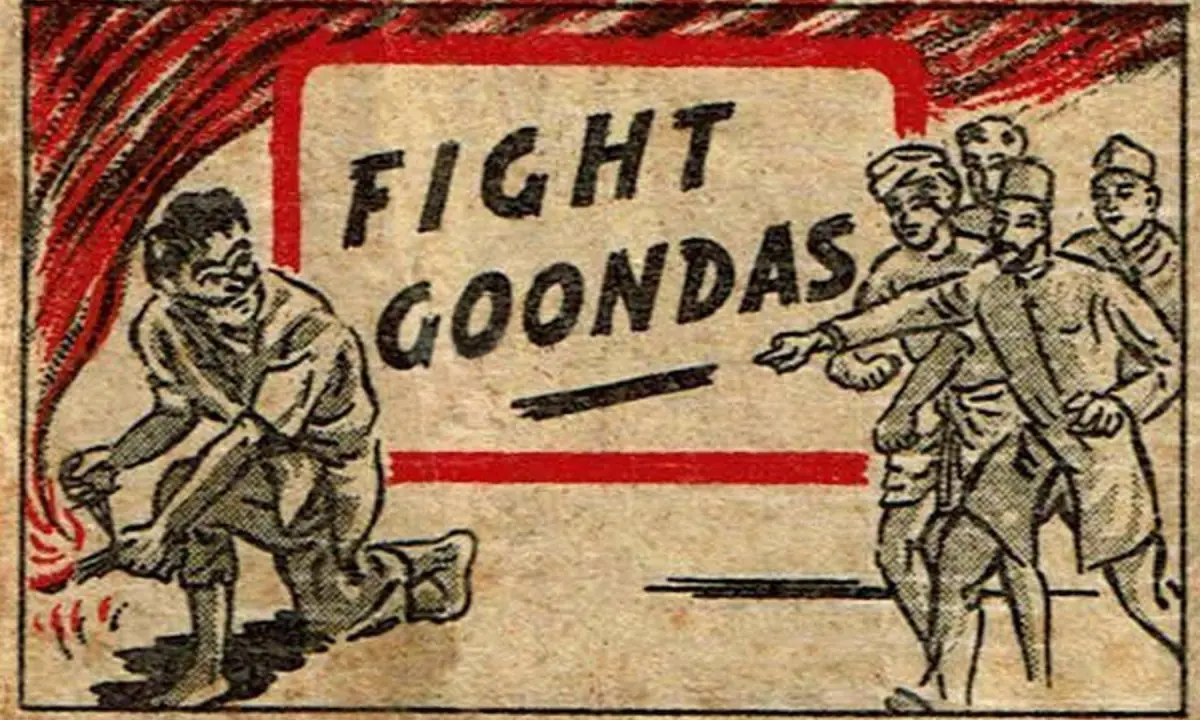
The Punjab government goes full Goonda
Summarized and contextualized by DistantNews.
At a glance
News
Sources not specified
New plan
- Punjab is considering a new law that would grant the executive broad powers to freeze bank accounts, seize property, and impose surveillance on individuals deemed habitual offenders or anti-social.
- The proposed Punjab Control of Habitual Offenders and Anti-Social Behaviour Bill 2026 echoes colonial-era legislation like the Criminal Tribes Act of 1871 and the Restriction of Habitual Offenders Act of 1918, which allowed for restrictions without conviction.
- Critics argue the bill, which has cleared committee and awaits assembly vote, represents a draconian expansion of executive power, drawing parallels to British colonial repression.
Punjab is poised to enact a law that critics are likening to the oppressive measures of the British Raj. The Punjab Control of Habitual Offenders and Anti-Social Behaviour Bill 2026, set for a vote in the Punjab Assembly, grants the executive sweeping powers.
Enough said. Seventy-eight years after independence, Punjab is moving with aplomb to legislate a law of such a draconian nature that it would make even the officers of the British Raj blush.
Under the proposed legislation, authorities could freeze bank accounts, seize property, remove online presences, confiscate phones, and implement electronic surveillance. These actions would be based on the assessment of an intelligence committee, bypassing ordinary criminal procedures and evidentiary standards.
The 2026 Bill does not merely replicate the most sordid colonial-era repression, but rather turbo-charges it in what can only be described as a fitting celebration of the unbroken intellectual continuity of our bureaucracy from the colonial era.
The bill's intellectual lineage traces back to colonial-era laws. The 1871 Criminal Tribes Act classified entire communities as hereditary criminals, subjecting them to registration and movement restrictions. This was followed by the 1918 Restriction of Habitual Offenders Act, which allowed for surveillance and movement restrictions on individuals without a conviction.
The law rode above ordinary criminal procedure, and its punishments were administrative and not judicial. What made it particularly useful to colonial administrators was precisely that it bypassed the evidentiary standards and procedure required by ordinary law for sanctions.
Further expanding such powers, the 1959 West Pakistan Control of Goondas Ordinance enabled District Magistrates to declare individuals "goondas" and impose restrictions for up to two years without conviction. The 2026 bill is presented as a replacement for these older laws, but critics contend it turbo-charges colonial-era repression, demonstrating an "unbroken intellectual continuity of our bureaucracy from the colonial era."
The Secretary of State for India in London, reviewing the original 1918 Punjab Habitual Offenders Bill, stated that restricting the movement of and extending police surveillance to individuals not yet convicted of any offence “accepts a principle which has not, I think, found a place in the permanent, as opposed to emergency, legislation of British India”.
DistantNews Editorial
Originally published by Dawn. Summarized and contextualized by our editorial team with added local perspective. Read our editorial standards.
More Stories



From Our Blog

What Gets Lost (and Found) When News Is Translated

The Critical Role of Diaspora Media in Global News

What Travellers Should Know About Countries with Restricted Press

A Digital Nomad's Guide to Following Local News

How the Same Story Looks Different in Different Countries
