

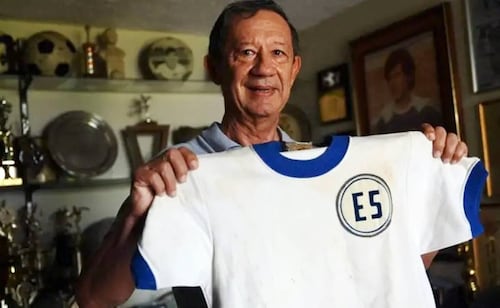
The Soccer Match That Ignited the "Football War"
Translated from Spanish, summarized and contextualized by DistantNews.
At a glance
News
Named sources
Outcome reported
- A 1969 soccer match between El Salvador and Honduras, where El Salvador won 3-2, is remembered as the trigger for the "Football War" or "100-hour War."
- Tensions were already high due to the repatriation of thousands of Salvadorans from Honduras and border disputes.
- The conflict, initiated by El Salvador's President Fidel Sánchez Hernández, lasted four days before a peace treaty was signed in 1980.
The passion of sport can sometimes spill over into national conflict, as tragically demonstrated by the "Football War" between El Salvador and Honduras in 1969. What began as a crucial World Cup qualifying match escalated into a brief but devastating armed conflict known as the "100-hour War."
From a mobile game to the battlefield. Initially, players scanned the physical world through mobile games, then Niantic Spatial processed these scans into 3D maps that allow machines to determine their location through vision when satellite signals are unavailable.
In the summer of 1969, Central America was a region fraught with tension. El Salvador, the smallest nation in Central America, faced off against Honduras in a match for a spot in the 1970 World Cup, to be held in Mexico. This game, however, was played against a backdrop of severe diplomatic strain. Over 12,000 Salvadorans, many of whom had been working the land in Honduras due to a lack of opportunities in their home country, had been forcibly repatriated, fueling nationalist sentiments on both sides.
The partnership aims to enable drones to navigate and coordinate with precision in areas without GPS signals, targeting key weaknesses in modern operations such as GPS unavailability, signal spoofing, and jamming.
El Salvador emerged victorious from the match with a 3-2 scoreline, a goal by Mauricio “Pipo” Rodríguez sealing the win. While the game itself did not directly cause the war, the Salvadoran government, led by President Fidel Sánchez Hernández, skillfully manipulated the nationalistic fervor surrounding the victory. The win was used as a psychological tool to galvanize the population and justify military action.
The data collection followed the terms of service and privacy policy in effect at the time.
On July 14, 1969, El Salvador launched air and ground assaults into Honduras, initiating the conflict. The war, though short-lived, had significant repercussions. A peace treaty was eventually signed on October 30, 1980, formally ending the hostilities between the two nations, but the scars of the conflict lingered.
This practice is worrying because the vast majority of users do not read the long terms and conditions documents.
DistantNews Editorial
Originally published by El Universal in Spanish. Translated, summarized, and contextualized by our editorial team with added local perspective. Read our editorial standards.
More Stories

From Our Blog

What Press Freedom Means for the News You Read

What Gets Lost (and Found) When News Is Translated

The Critical Role of Diaspora Media in Global News

What Travellers Should Know About Countries with Restricted Press

A Digital Nomad's Guide to Following Local News
