

The teenage sensation who could save France's successful sport
Translated from Hungarian, summarized and contextualized by DistantNews.
TLDR
- Belgian cyclist Paul Seixas, 19, is emerging as a potential successor to French cycling legends.
- He recently won the Flèche Wallonne and is considered a strong contender for the Liège–Bastogne–Liège race.
- Seixas is seen as a significant talent who could revive French success in major cycling events.
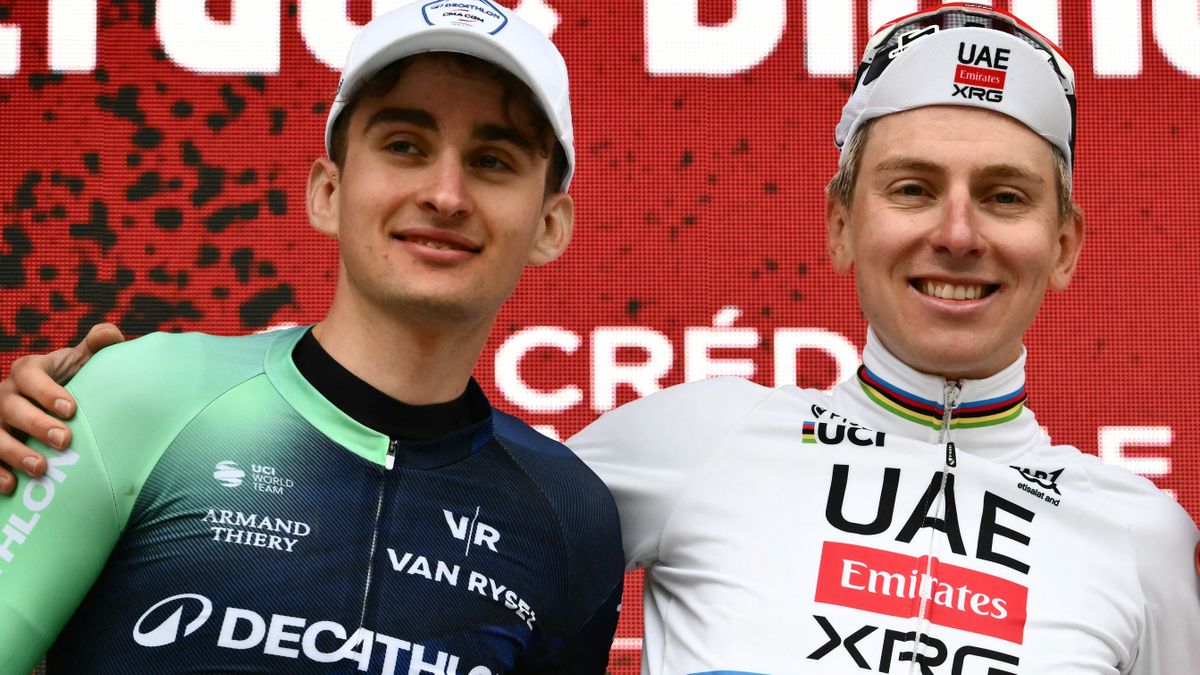
The French cycling scene is abuzz with the meteoric rise of 19-year-old Paul Seixas, a talent many believe could herald a new golden era for the sport in France. After a stunning victory at the Flèche Wallonne, Seixas is now poised to make a significant impact at the prestigious Liège–Bastogne–Liège, often dubbed 'La Doyenne'. His performances have drawn comparisons to cycling titans and ignited hope for a French rider to once again contend for Grand Tour victories, a feat not achieved since 1995.
Seixas's maturity and versatility at such a young age have impressed not only fans but also former cycling greats like Bernard Thévenet and Bernard Hinault. They see in him the potential to challenge the dominance of current stars such as Tadej Pogačar. While Seixas himself remains grounded, acknowledging he is not yet at the level of the sport's all-time greats, his performances suggest a remarkable aptitude for both climbing and time trialing – key components for success in grueling three-week races.
I would like to thank my teammates for controlling the breakaway, we were well positioned all day. There were attacks, we had to be there, and at one point I fell. An incredible moment to win here for the first time, but this is a victory for the whole team. We tried to dictate the pace, but on the circuit course I stayed with the others' wheels, and from the foot of the Mur de Huy I had the feeling I could go even better, and when I saw everyone going at their maximum, I pushed even harder.
For France, a nation with a rich cycling heritage, Seixas represents more than just a promising rider; he embodies the resurgence of a sport that has long awaited a new national hero. The recent successes of riders like Julian Alaphilippe, while celebrated, have been tempered by the fact that he is past his prime. The emergence of Seixas offers a tangible prospect of renewed French glory on the world stage, filling a void keenly felt by the cycling-mad public.
International coverage often focuses on the established stars and the broader narrative of European cycling dominance. However, from a French perspective, Seixas's ascent is a deeply personal and national story. It's about reclaiming a legacy, inspiring a new generation, and the sheer excitement of witnessing a homegrown talent challenge the established order. The anticipation surrounding his performance in Liège–Bastogne–Liège is palpable, as French fans eagerly await the possibility of another victory that could cement his status as the future of French cycling.
I would like to thank my teammates for controlling the breakaway, we were well positioned all day. There were attacks, we had to be there, and at one point I fell. An incredible moment to win here for the first time, but this is a victory for the whole team. We tried to dictate the pace, but on the circuit course I stayed with the others' wheels, and from the foot of the Mur de Huy I had the feeling I could go even better, and when I saw everyone going at their maximum, I pushed even harder.
DistantNews Editorial
Originally published by Magyar Nemzet in Hungarian. Translated, summarized, and contextualized by our editorial team with added local perspective. Read our editorial standards.
More Stories
From Our Blog

Countries Without a Free Press: What You Need to Know

What Press Freedom Means for the News You Read

What Gets Lost (and Found) When News Is Translated

The Critical Role of Diaspora Media in Global News

What Travellers Should Know About Countries with Restricted Press
