


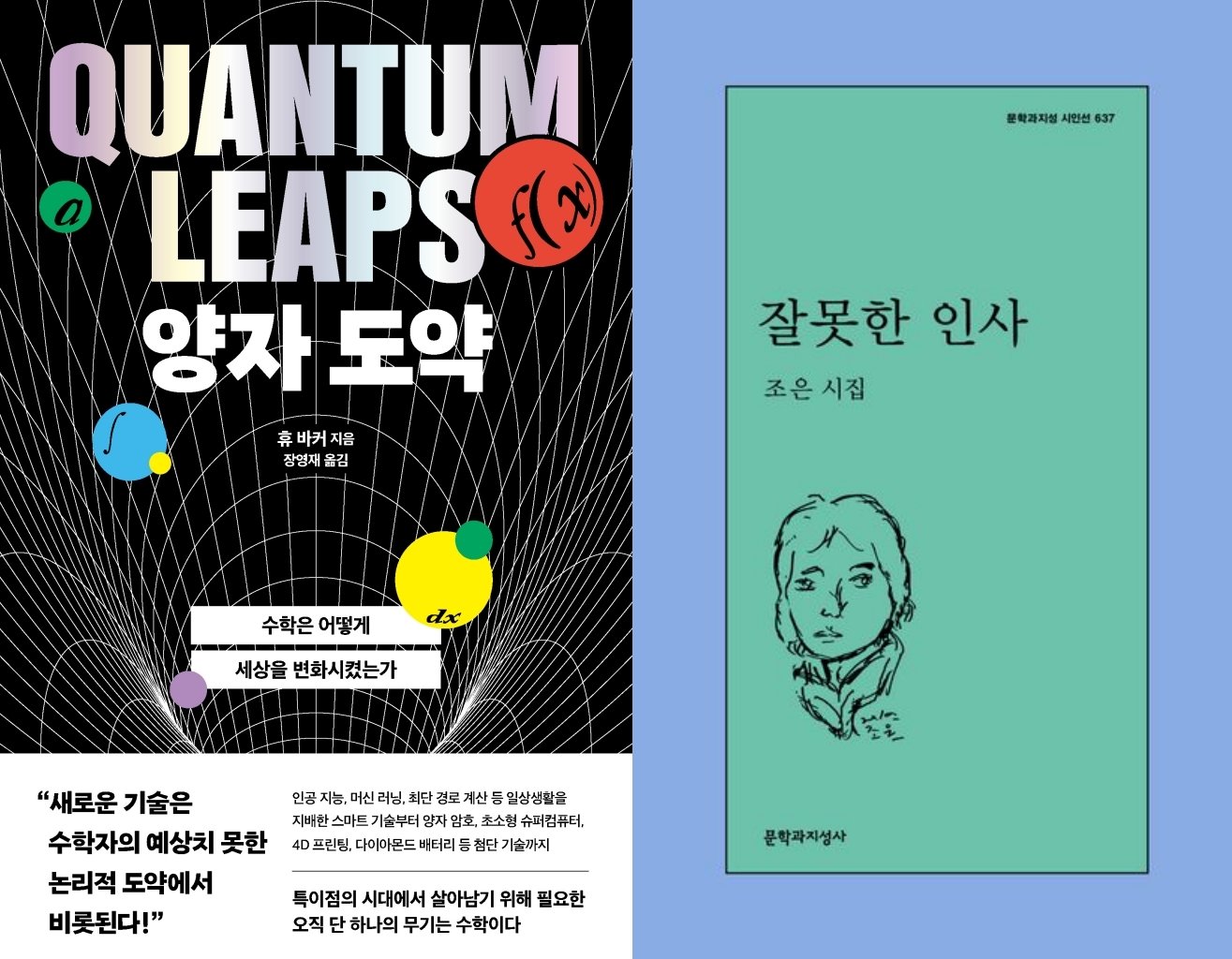
The Unseen Architects: Exploring the Math Behind Algorithms in 'Quantum Leap'
Translated from Korean, summarized and contextualized by DistantNews.
At a glance
In-depth
Sources not specified
Context piece
- A new book, 'Quantum Leap,' explores the hidden mathematical language behind algorithms that govern daily life, from search engine results to navigation apps.
- Author Hugh Barker presents mathematics not as rigid formulas but as a tool for imagination, driving technological advancement for millennia.
- The book aims to make complex mathematical concepts accessible through storytelling, suitable for readers of all backgrounds, including those who struggle with math.
Algorithms, the unseen architects of our digital world, are driven by a language many find intimidating: mathematics. A new book, 'Quantum Leap' by Hugh Barker, delves into this hidden mathematical foundation, revealing how it shapes everything from personalized online ads to the navigation systems guiding our journeys.
Barker, a popular science writer and 'math communicator,' positions mathematics not as a collection of dry formulas but as a powerful engine for imagination. He argues that mathematical thinking has been the silent force behind technological progress for thousands of years, a fact often overlooked due to its complexity. The book highlights how mathematical principles are evident in fields like climate science, autonomous driving, and artificial intelligence.
Mathematical imagination has driven technological progress for thousands of years, yet it is easy to forget that fact.
Despite the potentially daunting subject matter, 'Quantum Leap' is designed for broad accessibility. The author minimizes the use of equations, opting instead to explain concepts through engaging narratives. This approach makes the book suitable for a wide audience, including those with no prior background in mathematics or who identify as 'math-phobes.'
The book encourages readers to see mathematics as a tool that expands possibilities, rather than a barrier. By tracing the influence of mathematical concepts through history and into modern applications, Barker aims to demystify the subject and showcase its profound impact on our lives and the advancement of technology.
We see the fruits of mathematics every day. Climate science that measures cloud movements and precipitation, autonomous driving that navigates without a hand's touch, and artificial intelligence that learns to think from data sets.
DistantNews Editorial
Originally published by Dong-A Ilbo in Korean. Translated, summarized, and contextualized by our editorial team with added local perspective. Read our editorial standards.
More Stories


From Our Blog

What Gets Lost (and Found) When News Is Translated

The Critical Role of Diaspora Media in Global News

What Travellers Should Know About Countries with Restricted Press

A Digital Nomad's Guide to Following Local News

How the Same Story Looks Different in Different Countries
