


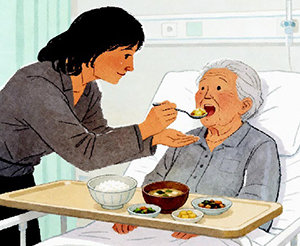
The Value of Filial Piety Recognized in Inheritance Distribution
Translated from Korean, summarized and contextualized by DistantNews.
At a glance
Analysis
Named sources
Context piece
- South Korea's inheritance law has evolved to protect vulnerable family members, moving beyond the traditional eldest son inheritance.
- Recent legal changes, including the "Goo Hara Law," aim to prevent inheritance by abusive family members.
- A new civil law amendment recognizes contributions to caregiving, allowing for adjustments in inheritance distribution based on filial piety.
South Korea's inheritance laws have undergone significant shifts, moving from a patriarchal system favoring the eldest son to a more equitable distribution that recognizes contributions to parental care. The introduction of the "reserved share" (유류분) provision in the 1977 inheritance law aimed to ensure a minimum inheritance for direct heirs, addressing the historical practice of leaving all assets to the eldest son, often leaving other children or second wives in difficult financial situations.
However, the system faced challenges with "unfilial families." A notable case involved the biological mother of a deceased female firefighter appearing 30 years later to claim inheritance compensation, leading to public outrage and the subsequent push for the "Goo Hara Law." This law introduced a "forfeiture of inheritance rights" system to prevent inheritance by those who have committed grave offenses against the deceased.
A paradigm shift occurred in March with a civil law amendment recognizing "filial piety contributions" (효도, 봉양). This amendment allows for the value of caregiving to be considered in inheritance distribution. In a recent Supreme Court ruling, an individual who cared for their mother for 27 years, receiving approximately 200 million won in gifts during that time, was involved in a dispute with a sibling. The sibling claimed their share of the reserved inheritance, but the Supreme Court, applying the revised law, ruled that the funds received as compensation for caregiving should be excluded from the reserved share calculation.
Japan has also adapted its inheritance laws, introducing a "special contribution system" in 2019. This system expands the scope of recognized contributions to include caregiving by daughters-in-law or sons-in-law, allowing them to be compensated in cash for their services. While both South Korea and Japan now acknowledge the value of caregiving in inheritance, South Korea prioritizes reflecting caregiving contributions during inheritance distribution, whereas Japan allows for post-inheritance claims. The concept of a "filial piety premium" is similar, though the legal frameworks differ.
Despite these legal advancements, monetizing traditional values like filial piety remains complex. Legal experts advise securing concrete evidence, such as receipts, bank transfer records, and medical or caregiving logs, to substantiate claims for caregiving contributions. The legal system, while evolving, remains a pragmatic framework, necessitating tangible proof to recognize the value of "filial piety" beyond mere sentiment.
DistantNews Editorial
Originally published by Dong-A Ilbo in Korean. Translated, summarized, and contextualized by our editorial team with added local perspective. Read our editorial standards.
More Stories



From Our Blog

What Gets Lost (and Found) When News Is Translated

The Critical Role of Diaspora Media in Global News

What Travellers Should Know About Countries with Restricted Press

A Digital Nomad's Guide to Following Local News

How the Same Story Looks Different in Different Countries
