


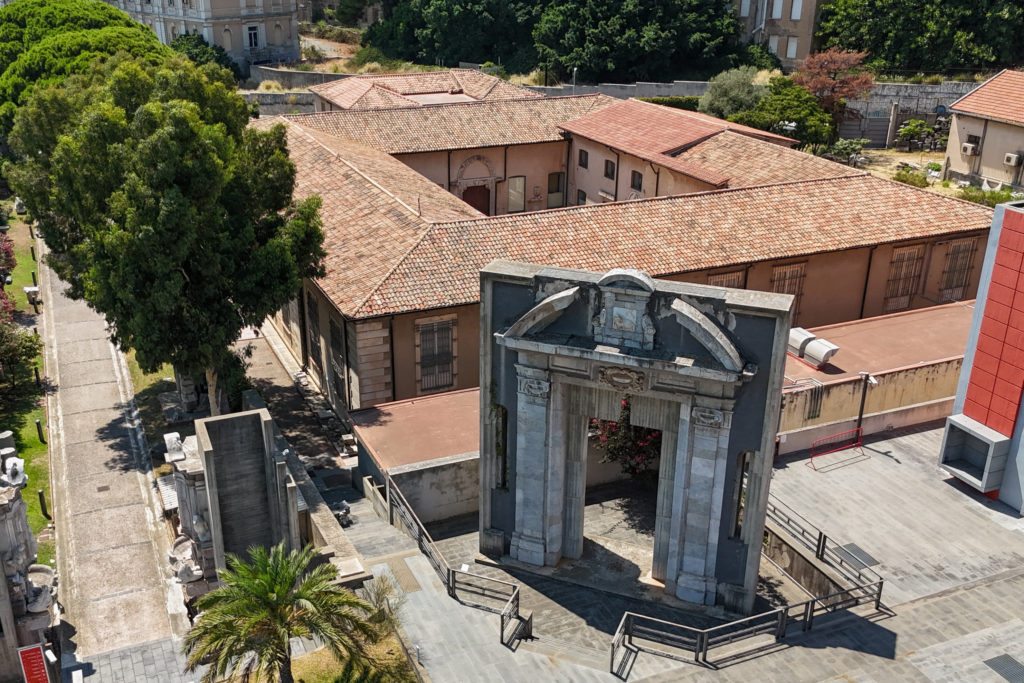
Thieves steal 4 Renaissance artworks in Sicilian museum heist
Translated from English, summarized and contextualized by DistantNews.
At a glance
News
Named sources
New plan
- Thieves stole four artworks attributed to Renaissance painter Antonello da Messina from Sicily's MuMe museum.
- The heist occurred Saturday evening during traditional Assumption holiday celebrations.
- Art experts estimate the stolen works, including panels from the San Gregorio Polyptych, are worth millions.
Four valuable artworks attributed to Renaissance master Antonello da Messina were stolen from the MuMe museum in Messina, Sicily, during a daring heist on Saturday evening. The theft occurred while the city was celebrating the traditional Assumption holiday.
We are devastated by what happened. They were two of Antonello da Messina's most important and best-known works. It is a tremendous loss for the museum, the city, the community and the art world.
Thieves managed to bypass the museum's alarm and security systems. They made off with three panels from the 1473 San Gregorio Polyptych and a double-sided panel depicting the Virgin Mary and the dead Christ in Pietà. The latter was removed from an armored display case. Although the thieves removed all five panels of the polyptych, they abandoned two behind a wall as they fled.
Art expert Alberto Fiz estimated the value of the stolen pieces at between 70 million euros ($81 million) and 80 million euros ($92 million). MuMe director Marisa Mercurio expressed devastation, calling it a "tremendous loss" for the museum, the city, and the art world. She emphasized the works' significance to the region's heritage and identity.
These are not merely works by Antonello da Messina. They are works that hold considerable significance in terms of our identity, as well as, of course, their artistic and cultural value, because they are works by our very own Antonello da Messina.
Messina's top culture official, Enzo Caruso, described the theft as a "disaster," stating that the city is deprived of the essence of its greatest Renaissance artist. The theft follows increased international interest in Antonello da Messina, particularly after Italy's Culture Ministry acquired his painting "Ecce Homo" earlier this year.
Messina without Antonello is deprived of the very essence of the greatest artist of the European Renaissance.
Art-crime analyst Lynda Albertson noted that Antonello da Messina's works are highly recognizable, making them difficult to sell through legitimate channels. She suggested that ordinary thieves would likely face significant challenges trying to profit from such famous artworks.
Stealing an Antonello may be far easier than selling one. If these are ordinary thieves, they will soon discover that, to their cost.
DistantNews Editorial
Originally published by PBS NewsHour in English. Translated, summarized, and contextualized by our editorial team with added local perspective. Read our editorial standards.
More Stories


From Our Blog

How the Same Story Looks Different in Different Countries

What Gets Lost (and Found) When News Is Translated

The Critical Role of Diaspora Media in Global News

What Travellers Should Know About Countries with Restricted Press

A Digital Nomad's Guide to Following Local News
