


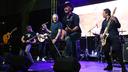
Thompson Concerts in Vukovar Ignite Debate Over Political Influence
Translated from Croatian, summarized and contextualized by DistantNews.
At a glance
News
Sources not specified
Context piece
- Marko Perković Thompson's concerts continue to stir passions, particularly regarding his song "Bojna Čavoglave."
- Milorad Pupovac argues that a single singer cannot alter a country's political nature, yet his opposition to Thompson's concerts suggests otherwise.
- The debate questions whether artists should be banned for their political or historical views, drawing parallels to other controversial figures.
Marko Perković Thompson's concerts remain a potent source of public debate in Croatia, with his song "Bojna Čavoglave" at the center of the controversy. Despite avoiding the song at national team events, Thompson retains his idol status, leading to questions about his influence.
Milorad Pupovac, a prominent figure, contends that no single singer possesses the power to change a country's political landscape. However, his vocal opposition to Thompson's performances, especially a planned concert in Vukovar, implies a belief that such events can indeed sway political sentiment. This opposition is seen by some as indirectly acknowledging Thompson's significant cultural and political impact.
Can one singer have such magical power to change the political nature of a country?
The discussion extends to broader implications, with comparisons drawn to former Serbian President Boris Tadić, who reportedly deemed a Thompson concert in Zagreb a "great shame for Croatia and the EU." The core of the debate revolves around whether artists should face performance bans due to their political and historical stances. This raises complex questions about artistic freedom versus societal values and historical interpretations, with some commenters expressing uncertainty about where to draw the line.
It is not the song 'Bojna Čavoglave' that is disputed, quite the opposite, that song was very welcome when it was created. Disputed are Thompson's views on WW2 and because of them he is banned in a large number of EU countries.
DistantNews Editorial
Originally published by Večernji List in Croatian. Translated, summarized, and contextualized by our editorial team with added local perspective. Read our editorial standards.
More Stories



From Our Blog

What Gets Lost (and Found) When News Is Translated

The Critical Role of Diaspora Media in Global News

What Travellers Should Know About Countries with Restricted Press

A Digital Nomad's Guide to Following Local News

How the Same Story Looks Different in Different Countries
