


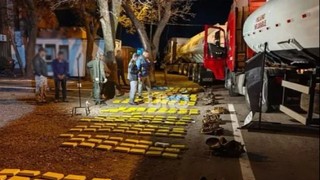
Three Bolivians arrested in Argentina with 388 kilos of cocaine hidden in tanker trucks
Translated from Spanish, summarized and contextualized by DistantNews.
At a glance
News
Named sources
Outcome reported
- Argentine police arrested three Bolivian nationals with 388 kilograms of cocaine hidden in tanker trucks.
- The drug was concealed in backpacks inside the tanks of two trucks intercepted on National Route 34.
- Authorities seized the cocaine, trucks, and suspects' phones, with investigations ongoing for alleged drug trafficking.
Argentine authorities have arrested three Bolivian citizens found with 388 kilograms of cocaine. The drugs were discovered during a National Gendarmerie operation on National Route 34. Agents found backpacks filled with cocaine hidden inside the tanks of two tanker trucks.
During the initial inspection, agents detected backpacks hidden inside the cisterns, so the vehicles were transferred to the Rafaela Vial Security Squadron for a more exhaustive review.
The trucks were moved to the Rafaela Vial Security Squadron for a thorough inspection. There, officers removed the backpacks and found 370 bricks of cocaine. A drug test confirmed the substance, and an official weighing revealed a total of 388 kilograms. The drugs were seized and placed under custody.
This method of concealment aims to hide drugs within fuel trucks, using the strong smell of hydrocarbons to deter detection, even by trained drug-sniffing dogs. The Gendarmerie's Strategic Criminal Intelligence Desk noted this tactic.
This modality seeks to hide the drug in trucks that transport fuel to take advantage of the strong smell of hydrocarbons and make detection difficult, even by dogs trained to identify narcotics.
Following instructions from federal prosecutor Federico Grimm, the three Bolivian nationals were detained. Investigations into alleged drug trafficking are ongoing. Authorities also ordered the seizure of the two tanker trucks, the suspects' mobile phones, and the confiscated cocaine.
the three Bolivian citizens were detained while investigations into alleged drug trafficking advance.
DistantNews Editorial
Originally published by El Deber in Spanish. Translated, summarized, and contextualized by our editorial team with added local perspective. Read our editorial standards.
More Stories



From Our Blog

What Gets Lost (and Found) When News Is Translated

The Critical Role of Diaspora Media in Global News

What Travellers Should Know About Countries with Restricted Press

A Digital Nomad's Guide to Following Local News

How the Same Story Looks Different in Different Countries
