

Three unusual things about the King's tax bill
Summarized and contextualized by DistantNews.
At a glance
News
Named sources
New plan
- King Charles III has made history by voluntarily disclosing his £12.9 million tax bill, a move detailed in the Royal Household's annual financial report.
- Unlike regular taxpayers, the King is not legally obligated to pay income, capital gains, or inheritance taxes, but does so voluntarily under a 1993 agreement.
- The report's transparency is questioned, as the exact calculation of the King's tax bill remains unclear, despite the voluntary payments covering personal income and private property sales.
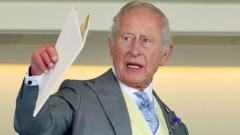
King Charles III has broken with tradition by revealing his £12.9 million tax bill, a significant announcement accompanying the Royal Household's annual financial report. This disclosure marks a historic moment, shedding light on the monarch's unique financial situation.
Central to the revelation is the fact that King Charles voluntarily pays certain taxes, including income tax, capital gains tax, and inheritance tax. This arrangement stems from a 1993 Memorandum of Understanding with the government, updated in 2023 following Queen Elizabeth II's death. This voluntary nature distinguishes his tax payments from those of ordinary citizens, leading some to question if it constitutes a true tax, as HMRC defines tax as a legally required payment.
If it's voluntary, it's not tax.
While the Royal Household frames the publication of the tax bill as a commitment to transparency, the precise method used to calculate the £12.9 million remains obscure. Although it is known that the King agrees to pay tax on personal income, income from the Privy Purse not used for official duties, and capital gains from private property sales, the proportion each contributes to the total bill is not specified. The Privy Purse, largely funded by the Duchy of Lancaster, provides private income to the monarch.
Historians and financial experts offer varying interpretations of this move. Historian Anna Whitelock views it as a sign of the times, an attempt by the monarchy to proactively demonstrate responsiveness. Conversely, tax and financial planning expert Shaun Moore suggests the report offers limited detailed insight.
I do think this is very much a sign of the times, and it's an attempt by the monarchy to try and get on the front foot and before they were absolutely pushed to try and show they are responsive and not reactive.
DistantNews Editorial
Originally published by BBC News. Summarized and contextualized by our editorial team with added local perspective. Read our editorial standards.
More Stories


From Our Blog

What Gets Lost (and Found) When News Is Translated

The Critical Role of Diaspora Media in Global News

What Travellers Should Know About Countries with Restricted Press

A Digital Nomad's Guide to Following Local News

How the Same Story Looks Different in Different Countries
