


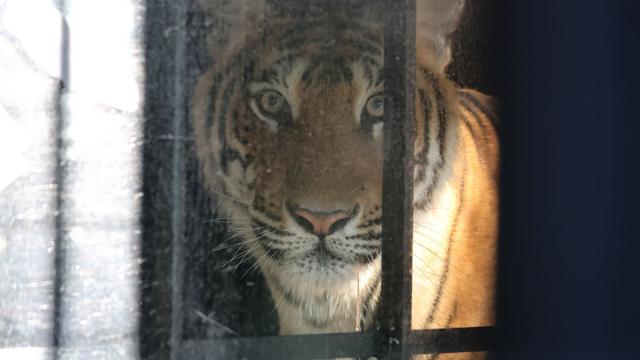
Tigers from German Enclosure Breakout Arrive in Spain
Translated from German, summarized and contextualized by DistantNews.
At a glance
News
Named sources
Outcome reported
- Six tigers from Schkeuditz, Germany, have arrived at an animal sanctuary in southern Spain.
- The tigers, previously kept in private ownership, will undergo a mandatory four-week quarantine.
- The sanctuary, run by AAP, houses 40 large cats and provides extensive enclosures for rescued animals.
Six tigers previously held in private ownership in Schkeuditz, Germany, have arrived at the 'Primadomus' sanctuary in Villena, Spain. The animals were handed over to the Dutch animal welfare organization 'Animal Advocacy and Protection' (AAP) by authorities.
The animals are now just arriving, the loading process from the trucks into the quarantine station is currently taking place.
Upon arrival, the tigers will enter a mandatory four-week quarantine period as per import regulations for animals. During this time, they will be closely monitored by veterinarians for any health issues, including parasites, infections, or behavioral problems. "The animals are now just arriving, the loading process from the trucks into the quarantine station is currently taking place," said Patrick Müller, spokesperson for AAP.
There, they must spend four weeks in isolation in quarantine according to current import regulations for animals.
The 'Primadomus' sanctuary, located in the Alicante province, currently cares for 40 large cats, many of whom come from private collections and circus closures. Müller noted that some owners voluntarily surrender animals when they realize the difficulty of caring for increasingly large and dangerous predators, while others, like the Schkeuditz case, are transferred by official order.
Are they carrying any parasites? Are there any intestinal infections? Do they have any behavioral disorders?
After completing their quarantine, the six tigers will move into significantly larger enclosures, spanning 3,000 to 3,500 square meters. These spaces will feature varied terrain, pools, and climbing structures, offering a much-improved environment compared to their previous conditions. The sanctuary has been in operation since 2009 and is primarily funded by private donations.
Many owners suddenly realize that it wasn't such a good idea after all.
DistantNews Editorial
Originally published by Die Zeit in German. Translated, summarized, and contextualized by our editorial team with added local perspective. Read our editorial standards.
More Stories



From Our Blog

What Gets Lost (and Found) When News Is Translated

How the Same Story Looks Different in Different Countries

The Critical Role of Diaspora Media in Global News

What Travellers Should Know About Countries with Restricted Press

A Digital Nomad's Guide to Following Local News
