

TMMOB Criticizes Global Capitalism and Turkey's Economic Crisis
Translated from Turkish, summarized and contextualized by DistantNews.
At a glance
News
Named sources
Context piece
- The Union of Chambers of Turkish Engineers and Architects (TMMOB) released its 49th Ordinary General Assembly resolution.
- The resolution criticizes deepening global capitalist crises, neoliberal policies, and growing inequality, poverty, and war.
- It highlights Turkey's own crisis, attributing it to policies that have moved the country away from production and towards rent and debt.
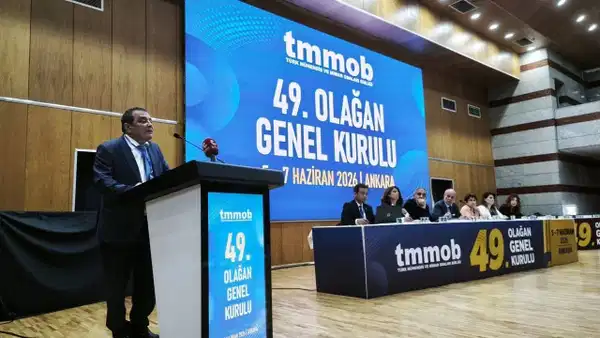
The Union of Chambers of Turkish Engineers and Architects (TMMOB) has issued a strong statement following its 49th Ordinary General Assembly, held from June 5-7. The resolution criticizes the current global state, asserting that the world is experiencing a period of deep crisis and instability within the capitalist system. It argues that neoliberal policies, implemented since the 1980s, have led to the dismantling of public services, devaluation of labor, and unchecked exploitation of nature, resulting in global stagnation.
The TMMOB's statement contends that the promises of "growth, prosperity, and freedom" once offered by capitalism have been replaced by widening inequality, widespread poverty, conflicts, and authoritarian governance. This situation, the union argues, represents not just a crisis of neoliberalism but a historical shift where imperialism is restructuring itself through new means. Beyond military actions, imperialism now operates as a complex system of domination utilizing digital technologies, data monopolies, global supply chains, financial mechanisms, and ideological tools.
The resolution notes a global power shift, with the relative weakening of U.S. hegemony and the rise of new power centers, particularly China. This multipolar evolution intensifies a struggle for dominance over technology, energy, raw materials, and strategic geographies. The fragmentation of global production through "value chains" confines developing countries to low-value-added manufacturing, while high-tech industries and profits concentrate in imperialist centers, perpetuating dependency and inequality.
Parallel to global trends, the TMMOB describes Turkey's situation as dire. The period since the May 2023 elections has seen the country plunged into a deeper political, economic, and social crisis. Instead of advancing, Turkey has seen its accumulated gains eroded, its public structures weakened, and its social life pushed backward. The union attributes this decline to 24 years of AKP government policies that have steered the country away from production and towards a model based on rent-seeking and debt.
DistantNews Editorial
Originally published by Cumhuriyet in Turkish. Translated, summarized, and contextualized by our editorial team with added local perspective. Read our editorial standards.
More Stories

From Our Blog

What Gets Lost (and Found) When News Is Translated

The Critical Role of Diaspora Media in Global News

What Travellers Should Know About Countries with Restricted Press

A Digital Nomad's Guide to Following Local News

How the Same Story Looks Different in Different Countries
