

/nginx/o/2026/08/03/17826312t1h03ba.jpg)
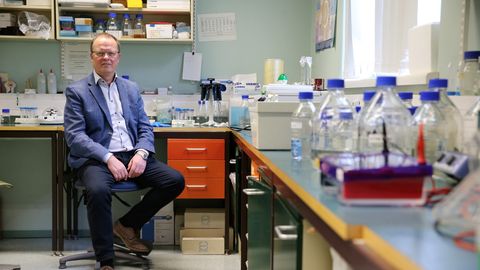
Toivo Maimets: A scientist must understand precisely where their knowledge ends
Translated from Estonian, summarized and contextualized by DistantNews.
At a glance
News
Sources not specified
Context piece
- Professor Toivo Maimets argues that scientific credibility cannot be measured solely by article counts and citation indexes.
- He emphasizes that science should be based on evidence-based doubt, and scientists must speak publicly about complex issues, even when inconvenient for decision-makers.
- Maimets is exploring how to measure science effectively without numbers overshadowing its substance, considering lottery-based grants and the publishing industry's influence.
Toivo Maimets, a professor of cell biology at the University of Tartu, asserts that the true measure of scientific credibility extends beyond mere article counts and citation indexes. He believes that science must be rooted in evidence-based doubt, and a scientist's role transcends laboratory work. Scientists have a responsibility to openly discuss complex and politically uncomfortable issues, even when decision-makers are unwilling to listen.
Maimets is actively engaged with colleagues in seeking ways to measure scientific output without allowing quantitative metrics to obscure its actual substance. This global challenge is being grappled with by universities and funding agencies worldwide. The discussion encompasses various aspects, including the role of lottery-based grants and the significant influence of the publishing industry.
Furthermore, Maimets highlights the importance of a scientist's ability to admit uncertainty. He suggests that knowing when to say "I don't know" can, paradoxically, make a scientist one of the most trusted voices in society. This approach underscores the commitment to rigorous inquiry and intellectual honesty, crucial elements in maintaining public trust in scientific endeavors.
DistantNews Editorial
Originally published by Postimees in Estonian. Translated, summarized, and contextualized by our editorial team with added local perspective. Read our editorial standards.
More Stories
/nginx/o/2026/08/07/17832519t1h867a.jpg)
/nginx/o/2026/08/06/17830459t1h084c.jpg)

From Our Blog

What Gets Lost (and Found) When News Is Translated

The Critical Role of Diaspora Media in Global News

What Travellers Should Know About Countries with Restricted Press

A Digital Nomad's Guide to Following Local News

How the Same Story Looks Different in Different Countries
