


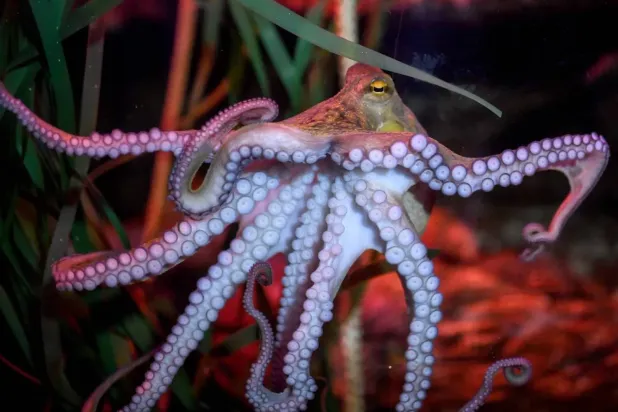
Too Smart to Eat... Why an Octopus is Difficult to Farm
Summarized and contextualized by DistantNews.
At a glance
News
Named sources
Outcome reported
- Nueva Pescanova abandoned its €65 million industrial octopus farm project near Spain's Canary Islands.
- The company cited "business and regulatory" reasons for shelving the plans, which faced opposition from activists and scientists.
- Challenges in farming octopuses, particularly their delicate larvae and picky eating habits, are significant hurdles for the industry.
Spanish fisheries giant Nueva Pescanova has shelved plans for the world's first industrial octopus farm, a €65 million project near the Canary Islands' port of Las Palmas. The company had predicted it would produce 3,000 tons of octopus annually by 2025, despite the creatures' notoriously difficult nature to farm.
Social, scientific and political pressure has borne fruit, faced with this ethical and environmental atrocity.
The project, which began attracting controversy years ago, faced condemnation from activists and scientists who highlighted the octopus's intelligence and its near-celebrity status following the documentary "My Octopus Teacher." Animal rights group Pacma celebrated the decision, calling it a victory against an "ethical and environmental atrocity."
The truth is that we’re finding the mood to be a bit more hostile than expected.
However, Nueva Pescanova cited "business and regulatory" reasons for withdrawing, according to a letter sent to the Canary Islands' port authority. A journalist covering the story suggested that the farm's failure was more likely due to economic non-viability than widespread public protest, noting that demonstrations rarely attracted more than a few dozen people.
I believe the reality is that the farm didn’t go ahead because it wasn’t viable, not because of popular protest.
Marine biologists point to significant challenges in octopus farming. Octopuses have delicate larvae that spend weeks floating in the water, making the transition to the next farming phase difficult. Hatchlings are also extremely fragile, and their picky eating habits, particularly their aversion to processed fish paste, pose further feeding problems. These biological hurdles have made large-scale octopus farming virtually impossible to date, a challenge echoed by similar failed ventures in Japan.
The same thing happened here in Japan with the fisheries company Nissui. The company said they’d cracked it and were going to be producing massive amounts of octopus but it never happened.
DistantNews Editorial
Originally published by Asharq Al-Awsat. Summarized and contextualized by our editorial team with added local perspective. Read our editorial standards.
More Stories



From Our Blog

What Gets Lost (and Found) When News Is Translated

The Critical Role of Diaspora Media in Global News

What Travellers Should Know About Countries with Restricted Press

A Digital Nomad's Guide to Following Local News

How the Same Story Looks Different in Different Countries
