

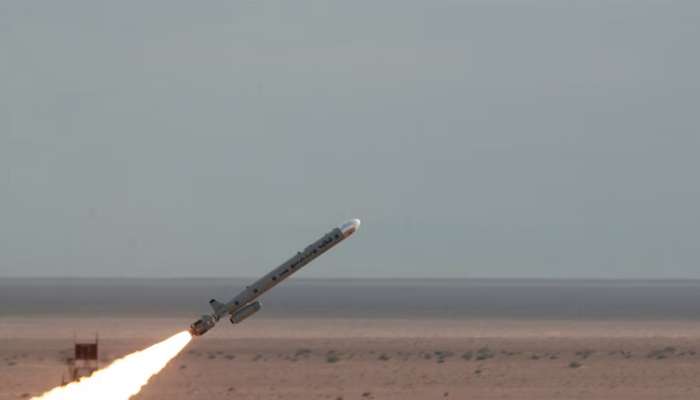

Top US General warns Pentagon he lacks enough naval forces to protect Israel from Iranian attacks: Report
Summarized and contextualized by DistantNews.
At a glance
News
Named sources
Ongoing story
- A top US general warned the Pentagon that current naval assets are insufficient to protect Israel from Iranian missile attacks.
- The US faces hard decisions on missile defense resources due to pressure on military stockpiles from the conflict with Iran.
- Depleted missile stocks raise concerns about the US's ability to defend itself and allies in future conflicts.
A senior U.S. military commander in Europe has alerted the Pentagon that Washington may soon face difficult choices regarding missile defense resources. The ongoing conflict with Iran is placing significant strain on American military stockpiles, according to a report by The Washington Post.
General Alexus Grynkewich, chief of U.S. European Command, reportedly informed Pentagon officials that the United States lacks sufficient naval assets to continuously intercept Iranian ballistic missile strikes targeting Israel. This warning comes amid growing concerns about the depletion of advanced U.S. interceptor missiles following months of military activity in the Middle East.
According to The Washington Post, General Grynkewich cautioned that without the deployment of an additional U.S. Navy destroyer to the region, European Command might be forced to prioritize between protecting American interests and maintaining missile defense operations for Israel against Iranian attacks. The Pentagon has declined to comment on the report, and U.S. European Command did not respond to requests for comment. An Israeli embassy spokesperson in Washington was also unavailable for immediate comment.
the United States lacks adequate naval assets to continue intercepting Iranian ballistic missile strikes on Israel.
Concerns about diminishing missile stocks are not new. Earlier this month, The New York Times reported that a primary reason President Donald Trump halted strikes on Iran was the risk of severely depleting U.S. air defense supplies in the Middle East. That report cited General Dan Caine, Chairman of the Joint Chiefs of Staff, who advised that while expanding military operations against Iran was operationally feasible, it could critically reduce interceptor missile stocks available to U.S. Central Command.
An internal Department of Defense assessment obtained by CNN indicated that the military has significantly drawn down several classes of precision-guided missiles during the conflict with Iran. Officials described this as a "near-term risk" should another major conflict erupt in the coming years. CNN, citing sources familiar with the assessment and defense experts, reported that replenishing many of these systems could take several years. An analysis by the Center for Strategic and International Studies, also cited by CNN, estimated that the U.S. military has expended substantial portions of its advanced missile inventory over the past seven weeks of fighting. The analysis estimates that the United States has used approximately 45 percent of its Precision Strike Missile inventory, at least half of its THAAD interceptor missiles, around 50 percent of its Patriot interceptor missiles, roughly 30 percent of its Tomahawk cruise missile stockpile, more than 20 percent of its Joint Air-to-Surface Standoff Missiles, and approximately 20 percent of its SM-3 and SM-6 interceptor missiles. The Washington Post further revealed that the United States has fired substantially more advanced interceptor missiles than previously disclosed.
without the deployment of another US Navy destroyer to the region, European Command would eventually be forced to decide between protecting American interests and sustaining missile defence operations for Israel against Iranian attacks.
DistantNews Editorial
Originally published by Times of Oman. Summarized and contextualized by our editorial team with added local perspective. Read our editorial standards.
More Stories

From Our Blog

What Gets Lost (and Found) When News Is Translated

The Critical Role of Diaspora Media in Global News

What Travellers Should Know About Countries with Restricted Press

A Digital Nomad's Guide to Following Local News

How the Same Story Looks Different in Different Countries
