

Torn flag
Translated from Hungarian, summarized and contextualized by DistantNews.
At a glance
News
Sources not specified
Context piece
- This article appears to be a placeholder or contains minimal content, possibly related to a historical event or a symbolic representation of freedom.
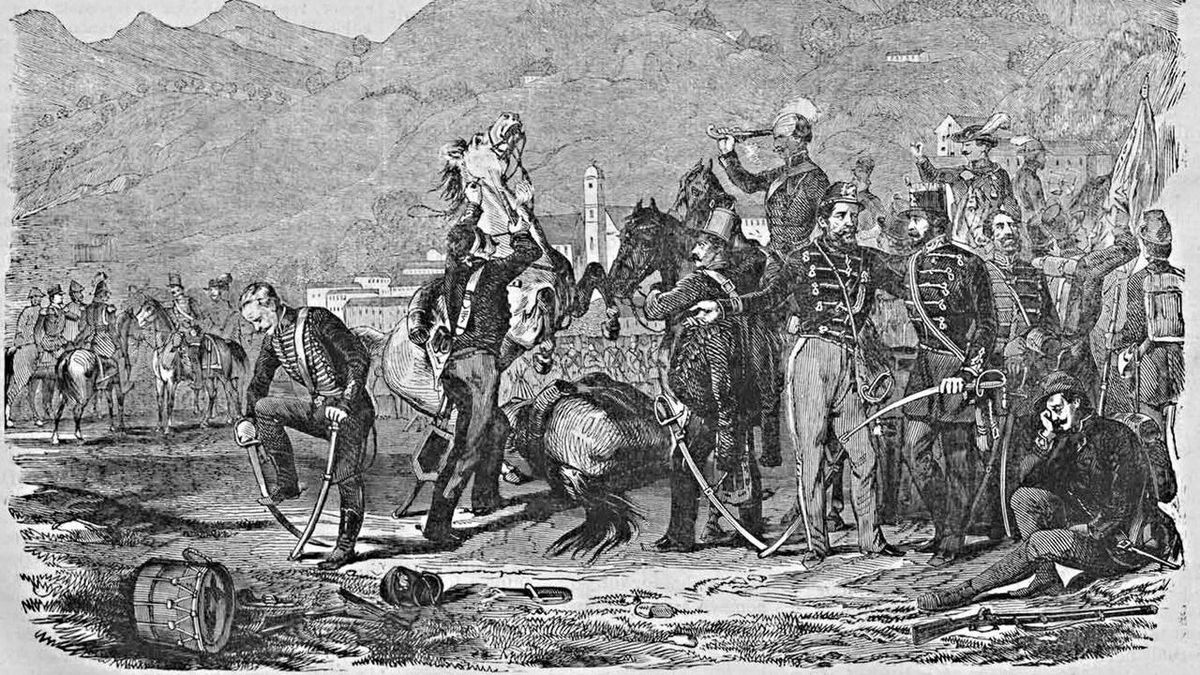
- The provided text includes a title "Darabokra vágott lobogó" (Torn flag) and a caption referencing the "world's surrender of arms" in 1849.
- Further details or context are not available in the provided source material.
The Hungarian article, titled "Darabokra vágott lobogó" (Torn flag), presents a stark image, possibly symbolizing a loss of freedom or a significant historical defeat. The accompanying text, "Ennyi maradt a szabadságból" (This is all that remains of freedom), directly evokes a sense of national grievance or lament.
A poignant question is posed: "Máig visszhangzik a kérdés: mit vétettünk, Magyarok Nagyasszonya?" (To this day, the question echoes: what did we sin against, Great Mother of Hungarians?). This rhetorical question suggests a deep-seated historical trauma and a search for understanding or justification for past suffering.
The article includes a reference to a historical event: the "világosi fegyverletétel" (surrender of arms at Világos) on August 13, 1849. This event marked a critical turning point in the Hungarian Revolution of 1848-1849, leading to its suppression by Austrian and Russian forces. The accompanying image is a contemporary engraving based on a drawing from the time, sourced from "Vasárnapi Újság" (Sunday Journal) in 1869 and further referenced via Wikipedia.
DistantNews Editorial
Originally published by Magyar Nemzet in Hungarian. Translated, summarized, and contextualized by our editorial team with added local perspective. Read our editorial standards.
More Stories
From Our Blog

Countries Without a Free Press: What You Need to Know

What Press Freedom Means for the News You Read

What Gets Lost (and Found) When News Is Translated

The Critical Role of Diaspora Media in Global News

What Travellers Should Know About Countries with Restricted Press
