


Total Solar Eclipse on August 12: How Long Will the Astronomical Phenomenon Last?
Translated from Spanish, summarized and contextualized by DistantNews.
At a glance
News
Sources not specified
New plan
- A total solar eclipse will occur on August 12, 2026, captivating astronomy enthusiasts.
- The phenomenon will be visible in parts of Greenland, Iceland, Russia, Spain, Portugal, and the Atlantic Ocean, with totality lasting over two minutes for those in the path of totality.
- Due to safety concerns, NASA recommends using specialized eclipse glasses or indirect viewing methods, as regular sunglasses are insufficient for protection.
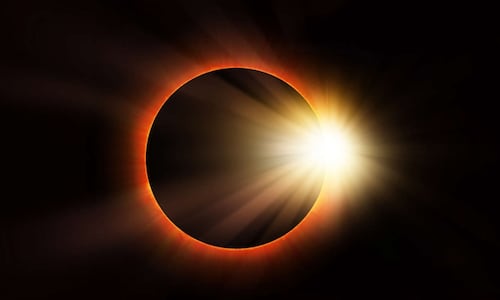
Astronomy lovers are buzzing about the total solar eclipse set to occur on August 12, 2026. The celestial event promises a spectacular display as the Moon passes in front of the Sun.
the phenomenon complete will develop over several hours as the Moon's shadow travels through different regions of the planet
For those fortunate enough to be in the path of totality, the Sun's light will be completely obscured for a few minutes. While the entire event unfolds over several hours as the Moon's shadow traverses the globe, the peak of totality is expected around 13:30 Central Mexico Time. Observers near the path's centerline can anticipate over two minutes of complete darkness.
The eclipse's path of totality will stretch across Greenland, Iceland, northern Russia, and Spain, with a small portion of Portugal and the Atlantic Ocean also experiencing the phenomenon. Other parts of Europe, Africa, and North America will witness a partial solar eclipse, with visibility varying by location. Unfortunately, Mexico will not see the eclipse, either totally or partially, requiring interested individuals in the country to tune into live broadcasts, such as those provided by NASA.
for those who are in a region where the eclipse can be observed, ocular safety is fundamental, since during the partial phases, one should never look directly at the Sun without adequate protection.
Safety is paramount for anyone planning to view the eclipse. NASA strongly advises against looking directly at the Sun during any phase of the eclipse without proper eye protection. Standard sunglasses are inadequate; specialized eclipse glasses or solar viewers are essential. Alternatively, indirect viewing methods, like a pinhole projector, offer a safe way to observe the Sun's projected image without direct exposure.
use special glasses to observe eclipses, as well as manual solar viewers or other filters specifically designed for solar observation. Conventional sunglasses are not sufficient.
DistantNews Editorial
Originally published by El Universal in Spanish. Translated, summarized, and contextualized by our editorial team with added local perspective. Read our editorial standards.
More Stories



From Our Blog

What Press Freedom Means for the News You Read

What Gets Lost (and Found) When News Is Translated

The Critical Role of Diaspora Media in Global News

What Travellers Should Know About Countries with Restricted Press

A Digital Nomad's Guide to Following Local News
