

Tourist feeding pushed Japan's Rabbit Island beyond ecological limits, study finds
Translated from English, summarized and contextualized by DistantNews.
At a glance
News
Named sources
Context piece
- Unregulated tourist feeding has pushed Japan's Rabbit Island beyond its ecological limits, according to a new study.
- The excessive food has led to environmental damage, including plant life destruction and wild boars hunting rabbits.
- Researchers suggest this artificial population boom, driven by tourism, has altered animal behavior and island ecosystems.
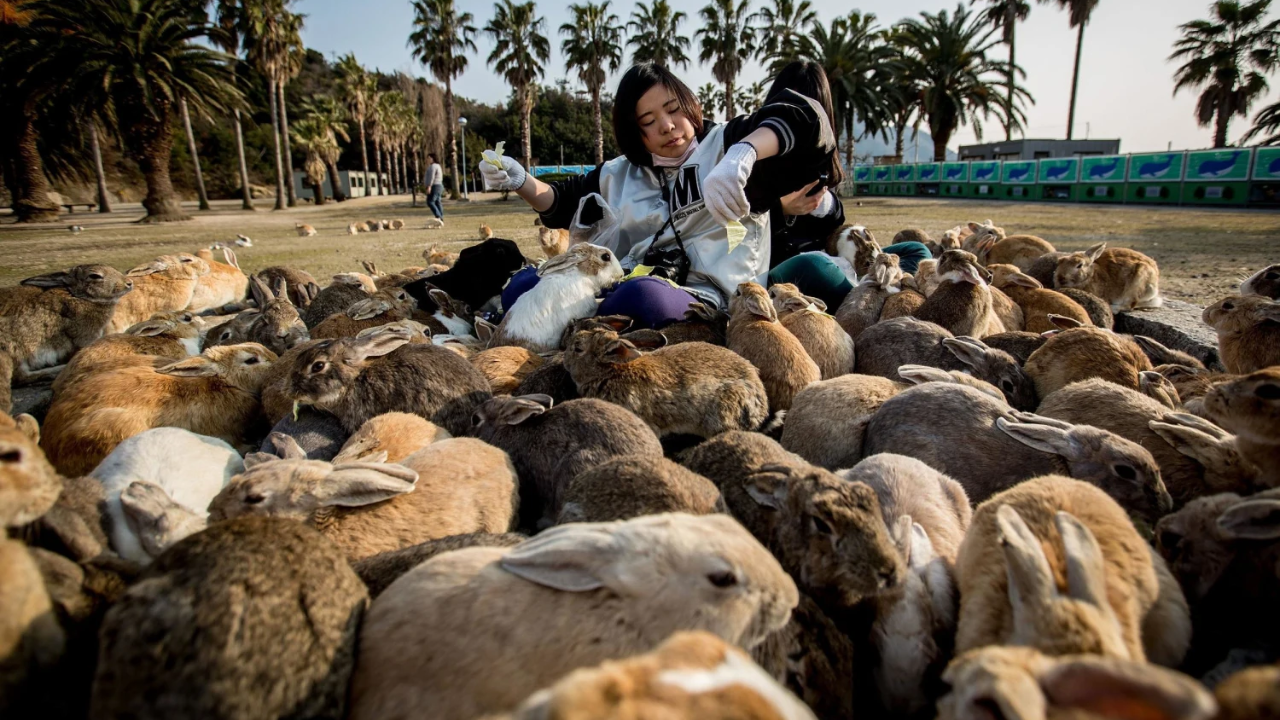
Japan's famed "Rabbit Island" is suffering from ecological damage due to unregulated tourist feeding, a new study reveals. Okunoshima, an island in Hiroshima Prefecture, has seen its rabbit population swell far beyond the environment's natural carrying capacity, driven by constant handouts from visitors.
The study, published in the Journal of Ecotourism, highlights how this influx of food has reshaped animal behavior. Researchers observed wild boars, typically scavengers, actively hunting live rabbits. This unusual behavior is attributed to the easy availability of leftover food drawing boars into rabbit-populated areas, leading to frequent encounters and the development of new predatory habits.
When we first heard that a wild boar had preyed on a live rabbit, we were surprised. Wild boars are known to scavenge animal carcasses, but they are not generally regarded as animals that actively hunt live prey.
Beyond altered animal interactions, the island's plant life has been severely impacted. Overeating by the rabbits has created a distinct "rabbit line" across the landscape, with low-growing vegetation and lower tree branches completely stripped bare. The rabbit population, which consists of European domestic rabbits introduced to the island, experienced a surge with pre-pandemic tourism levels, followed by a sharp decline during lockdowns, underscoring their reliance on human intervention.
Researchers from Fukushima University and Kure College collaborated on the project, which was initiated after creators of a children's book inquired about the animals' origins and health. Their findings paint a stark picture of an ecosystem pushed to its limits by well-intentioned but ultimately harmful human interaction.
At the same time, during our fieldwork, we were struck by how closely wild boars, rabbits and humans were interacting on the island. Within this isolated environment, events unlike those we usually observe elsewhere appeared to be occurring throughout the island.
DistantNews Editorial
Originally published by Times of India in English. Translated, summarized, and contextualized by our editorial team with added local perspective. Read our editorial standards.
More Stories


From Our Blog

What Press Freedom Means for the News You Read

What Gets Lost (and Found) When News Is Translated

The Critical Role of Diaspora Media in Global News

What Travellers Should Know About Countries with Restricted Press

A Digital Nomad's Guide to Following Local News
