


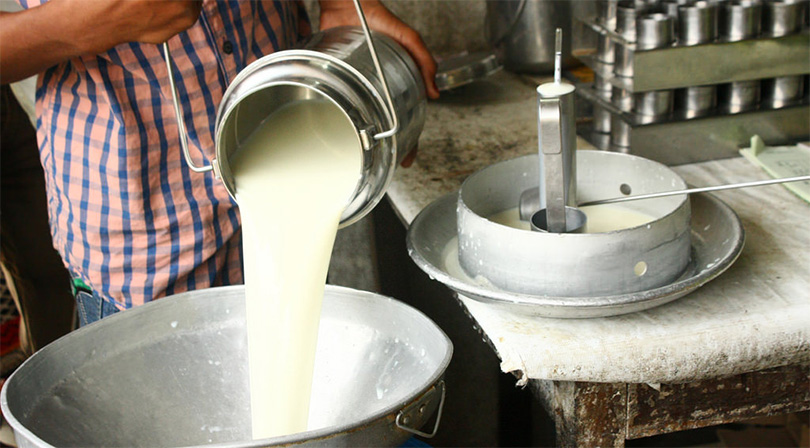
Toxic additives in milk raise alarm over public health risks
Summarized and contextualized by DistantNews.
At a glance
News
Official statement
Under investigation
- Authorities in Nepal are investigating the adulteration of milk with toxic substances, raising public health concerns.
- Dairy operators are allegedly using artificial ingredients like dextrose monohydrate and maltodextrin to extend shelf life and increase profits.
- Inspections uncovered counterfeit milk production, with some batches found unfit for consumption and destroyed.
Concerns are mounting over the potential health risks posed by toxic additives found in milk sold in Nepal. While milk is widely consumed as a source of nutrition, recent findings suggest that some dairy operators and collectors are compromising public health by adulterating the product.
Investigations by government agencies and laboratory tests have revealed the presence of "slow poison" in milk, allegedly used by some operators to prolong shelf life and maximize profits. In a significant discovery on May 14, the Department of Food Technology and Quality Control inspected a dairy industry in Bhaktapur. Officials seized large quantities of dextrose monohydrate, maltodextrin, and bakery shortening, substances reportedly used to create counterfeit milk.
Authorities found that the dairy was supplying this adulterated milk to both the state-owned Dairy Development Corporation (DDC) and the open market. Further investigations by the DDC in early June detected serious irregularities in milk collected from Kavrepalanchok. The corporation destroyed over 3,000 liters of milk found unfit for consumption due to added sugar, an abnormal odor, and failure to meet quality standards.
Following widespread complaints about declining milk quality and public trust, the DDC has intensified its monitoring of milk collection and distribution processes. Similar issues have been reported in Butwal Sub-Metropolitan City, where milk from several vendors was found to contain adulterants and fail quality standards. Authorities suspect potential collusion by DDC employees in the procurement process, highlighting a systemic issue within the dairy supply chain.
DistantNews Editorial
Originally published by OnlineKhabar English. Summarized and contextualized by our editorial team with added local perspective. Read our editorial standards.
More Stories



From Our Blog

What Gets Lost (and Found) When News Is Translated

The Critical Role of Diaspora Media in Global News

What Travellers Should Know About Countries with Restricted Press

A Digital Nomad's Guide to Following Local News

How the Same Story Looks Different in Different Countries
