


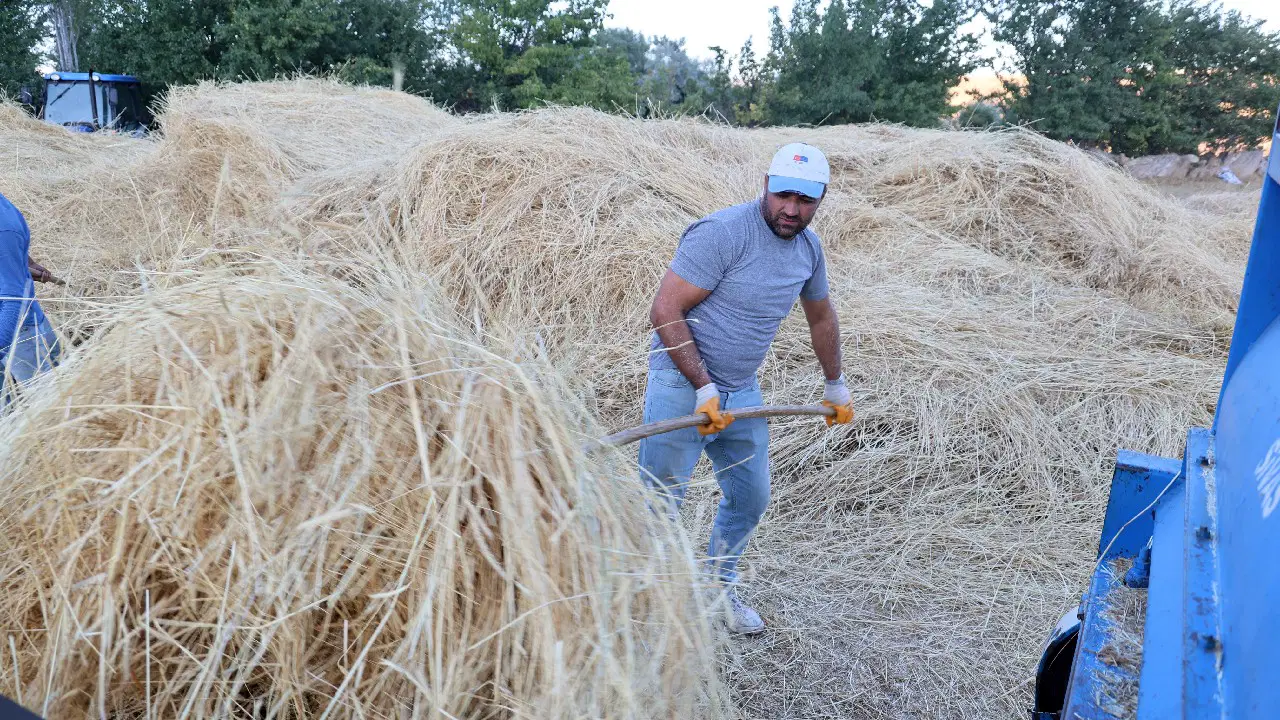
Traditional harvest continues day and night in Sivas, Turkey
Translated from Turkish, summarized and contextualized by DistantNews.
At a glance
In-depth
Sources not specified
Context piece
- Farmers in Sivas, Turkey, are working long hours, often until 10 p.m., to harvest and process their wheat crops.
- Despite high temperatures, they use traditional methods like the "patoz" to separate wheat from straw for animal feed.
- This year's harvest is described as abundant due to spring rains, leading to a satisfying season for the farmers.
In the Sivas region of Turkey, farmers are engaged in the demanding harvest season, working diligently from early morning until late at night. Even amidst high temperatures, many are continuing the traditional "patoz" process, a method used to separate wheat from straw, which is then stored as winter feed for their animals. The wheat itself will be processed into flour, forming a staple for local consumption.
We brought the crop we harvested from the field and we are doing our patoz. The purpose of our patoz process is to separate the wheat from the stalk, turn the stalk into straw, and give it to our animals. We use the wheat ourselves.
Halis Naçar, a farmer from Olukman village, explained the labor-intensive nature of the work. "We brought the crop we harvested from the field and we are doing our patoz," he said. "The purpose of our patoz process is to separate the wheat from the stalk, turn the stalk into straw, and give it to our animals. We use the wheat ourselves."
Naçar described the challenging conditions, noting, "The work we do is hard. Today it's 32 degrees Celsius, but we are doing our job under these conditions. We came at 7 in the morning, it's now 7 in the evening, and we are still at our work. We have to do it for our livelihood." He added that the process can extend until 10 p.m., depending on the amount of crop, with work resuming the following day.
The work we do is hard. Today it's 32 degrees Celsius, but we are doing our job under these conditions. We came at 7 in the morning, it's now 7 in the evening, and we are still at our work. We have to do it for our livelihood.
Despite the arduous labor, the farmers express satisfaction with the season's yield. Yüksel Ağca, the village's former headman, attributed the abundance to favorable spring rains. "This year has been very fruitful. We are very pleased with the rains; we hope it will be like this from now on," Ağca stated. The successful harvest ensures a vital food source for both animals and humans in the region.
This year has been very fruitful. We are very pleased with the rains; we hope it will be like this from now on.
DistantNews Editorial
Originally published by Cumhuriyet in Turkish. Translated, summarized, and contextualized by our editorial team with added local perspective. Read our editorial standards.
More Stories

From Our Blog

What Gets Lost (and Found) When News Is Translated

The Critical Role of Diaspora Media in Global News

What Travellers Should Know About Countries with Restricted Press

A Digital Nomad's Guide to Following Local News

How the Same Story Looks Different in Different Countries
