


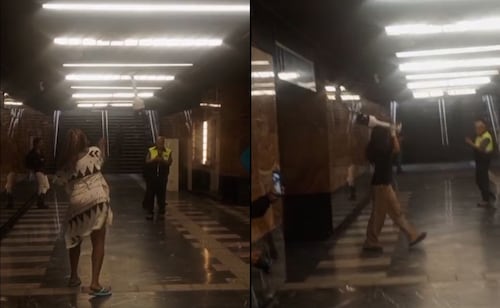
Trans collective members damage Hidalgo and Bellas Artes Metro stations, breaking lights and surveillance cameras
Translated from Spanish, summarized and contextualized by DistantNews.
At a glance
News
Sources not specified
Outcome reported
- Transgender collective members caused damage at the Hidalgo and Bellas Artes Metro stations in Mexico City during a protest.
- The demonstration was over an alleged lack of dialogue with city authorities regarding a meeting with the Secretary of Government.
- The damaged stations had recently undergone modernization, including the installation of decorative lighting and cameras.
Activists from a transgender collective caused damage to facilities at the Hidalgo and Bellas Artes stations on Line 2 of the Mexico City Metro. The protest stemmed from an alleged failure by city authorities to engage in dialogue, specifically citing a canceled meeting with the Secretary of Government, César Cravioto.
Demonstrators entered the Bellas Artes station, where they damaged surveillance cameras, lighting fixtures, and recently renovated materials. At the Hidalgo station, they reportedly broke lamps and chandeliers that had been installed as part of the station's aesthetic upgrades. This occurred just days after the head of government, Clara Brugada, inaugurated the comprehensive modernization of these stations, along with Allende station on the same line.
Details of the investment in the station's renovations were highlighted, with four chandeliers at Hidalgo station costing 56,000 pesos each, totaling 224,000 pesos for that element alone. The other lamps and lighting fixtures at the station ranged from 3,000 to 4,000 pesos each. The overall renovation of Line 2's 16 stations involved an investment of 782 million pesos, with 65% allocated to maintenance.
The modernization efforts included renewing 8,480 square meters of flooring, painting 21,148 square meters, installing 1,304 linear meters of signage, and incorporating marble and Venetian mosaic finishes. Mural restoration and the addition of green walls, chandeliers, and lamps were also part of the project to enhance the architectural identity of the spaces.
DistantNews Editorial
Originally published by El Universal in Spanish. Translated, summarized, and contextualized by our editorial team with added local perspective. Read our editorial standards.
More Stories



From Our Blog

What Press Freedom Means for the News You Read

What Gets Lost (and Found) When News Is Translated

The Critical Role of Diaspora Media in Global News

What Travellers Should Know About Countries with Restricted Press

A Digital Nomad's Guide to Following Local News
