

Tropical Storm Cristina Threatens Guatemala Amidst Existing Emergencies and Poor Infrastructure
Translated from Spanish, summarized and contextualized by DistantNews.
At a glance
News
Named sources
Ongoing story
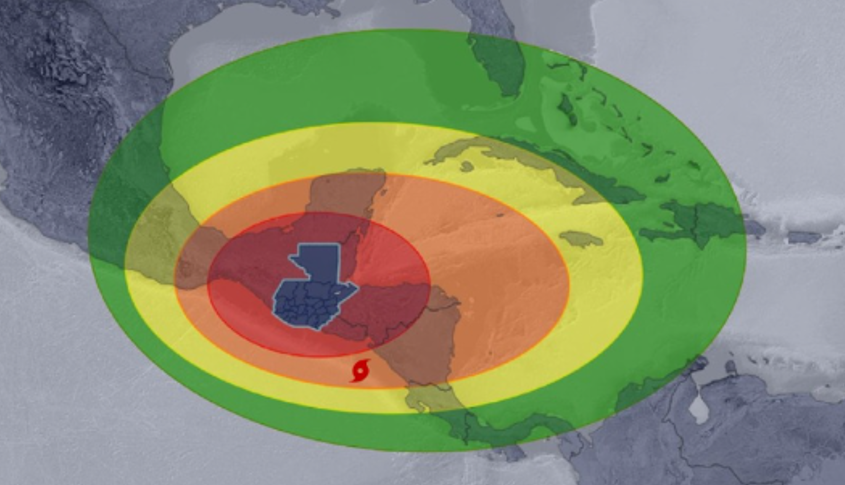
- Guatemala is on orange alert due to Tropical Storm Cristina, which arrives as the country faces 270 emergencies from recent rains.
- The storm is expected to bring significant moisture and increased rainfall, with Wednesday and Thursday projected to have the most intense precipitation.
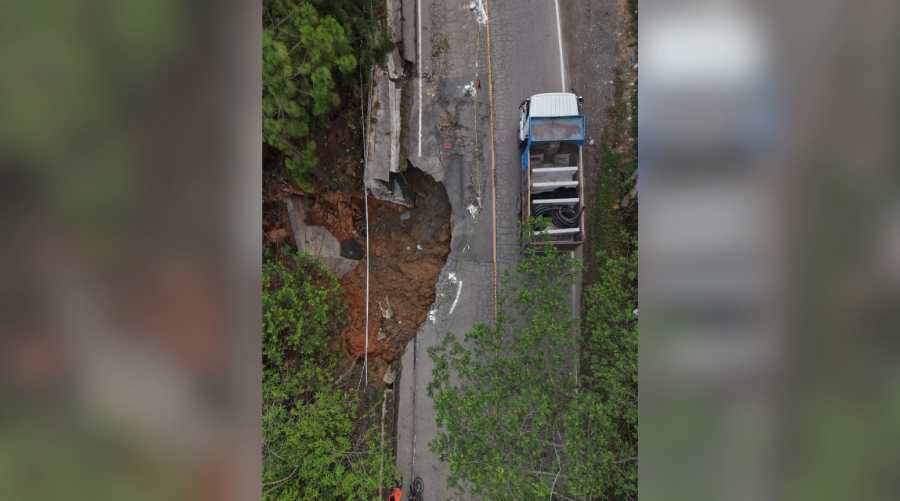
- Recent infrastructure failures, including two sinkholes collapsing road sections, highlight the country's vulnerability and poorly maintained road network.
Guatemala is currently under an orange alert as Tropical Storm Cristina strengthens and alters its trajectory. The storm arrives at a critical juncture, with the country already grappling with 270 national emergencies attributed to recent rainfall. This situation underscores a high level of vulnerability and a road network suffering from a lack of timely maintenance.
The current emergencies are just the beginning of a critical scenario caused by insufficient infrastructure that is already operating under excessive daily pressure.
According to forecasts from the National Institute of Seismology, Volcanology, Meteorology, and Hydrology (Insivumeh), Cristina is expected to bring a massive influx of moisture and a gradual increase in rainfall over the coming hours. Wednesday and Thursday are projected to experience the most intense precipitation across the country.
The existing risks have already manifested in emergencies, including two sinkholes that caused road collapses over the past weekend. One occurred at kilometer 38 of the Atlantic Highway in San Antonio, El Progreso, and another at kilometer 132.5 of National Route 17 in San Jerónimo, Baja Verapaz. The Directorate for the Coordination of National Disasters Reduction (Conred) reports Alta Verapaz as the most critical department with 67 incidents, followed by Guatemala with 36, Chiquimula with 32, Sacatepéquez with 26, and Baja Verapaz with 15.
The damage is suffered when water seeps into old, unpatched asphalt. This is the result of a perfect formula: bad construction, zero supervision, lack of adequate maintenance, and infrastructure that no longer supports the country's demands.
Alejandro Maldonado, former director of Conred, described the current emergencies as merely the "tip of the iceberg." He warned of a critical scenario stemming from insufficient infrastructure already operating under excessive daily pressure. Maldonado asserted that these initial emergencies reveal hidden structural damage, resulting from a combination of poor construction, lack of supervision, inadequate maintenance, and an infrastructure unable to meet the nation's demands. He emphasized that the recurrence of these crises is due to a lack of preventive policies, attributing the situation to years of neglect, corruption, and a short-sighted approach. International studies suggest that every quetzal invested in prevention yields savings of 7 to 12 quetzales in emergency response.
Unfortunately, prevention is not attractive to politicians; response is. Any political entity will receive more applause for a good response, while investment in prevention is invisible. If the bridge doesn't fall, no one comes to thank the risk management team.
DistantNews Editorial
Originally published by Prensa Libre in Spanish. Translated, summarized, and contextualized by our editorial team with added local perspective. Read our editorial standards.
More Stories

From Our Blog

What Gets Lost (and Found) When News Is Translated

The Critical Role of Diaspora Media in Global News

What Travellers Should Know About Countries with Restricted Press

A Digital Nomad's Guide to Following Local News

How the Same Story Looks Different in Different Countries
