


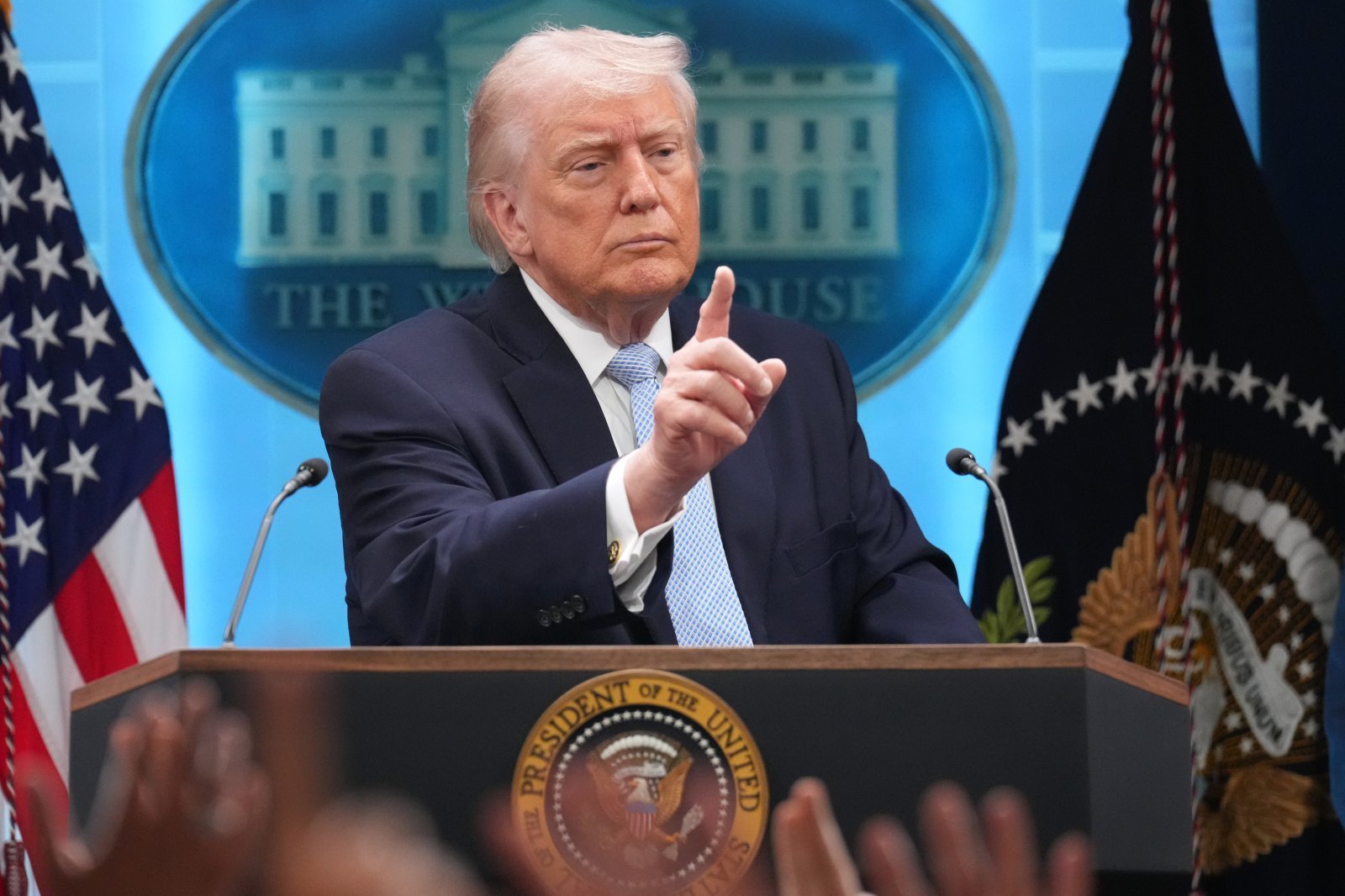
Trump administration proposes requiring parents’ status documents for children’s passport applications
Translated from Korean and summarized by DistantNews. Read the original for the full story.
At a glance
News
Documents & data
In the courts
- The Trump administration has proposed requiring parents or legal guardians to provide citizenship or immigration documents when applying for a child’s U.S. passport.
- The draft guideline would implement an executive order targeting birth tourism and expanding restrictions on birthright citizenship.
- The policy faces legal challenges after the Supreme Court rejected an earlier version as unconstitutional, while a federal judge considers whether to suspend the new order.
A new State Department draft would make parents’ immigration status part of the paperwork for a child’s U.S. passport, turning a routine application into a test of birthright citizenship eligibility.
The draft, obtained by Reuters, outlines how the department would implement an executive order President Donald Trump issued on Aug. 6. The order targets so-called birth tourism and seeks to widen restrictions on citizenship acquired at birth.
Under the proposed guidance, parents or legal guardians would have to submit a valid U.S. passport, a birth certificate, an I-94 entry and exit record, a green card, or other documents proving citizenship or immigration status. The government would use that information to decide whether the child qualifies for U.S. citizenship.
Current passport applications for children born in the United States require parents to prove their relationship to the child and provide photo identification. Although the form asks whether a parent is a U.S. citizen, applicants do not currently have to submit separate evidence supporting that claim.
President Trump has made clear his position that he will protect the meaning and value of U.S. citizenship. This includes ensuring that these standards are fully reflected in the passport adjudication process.
The order could deny citizenship to children whose parents work for a foreign government in the United States, or who allegedly engage in fraud or commercial transactions to obtain citizenship for a child. It also covers cases in which a parent is classified as an enemy alien.
Tommy Pigott, a State Department spokesman, said, "President Trump has made clear his position that he will protect the meaning and value of U.S. citizenship. This includes ensuring that these standards are fully reflected in the passport adjudication process."
The policy is already facing court challenges. A federal judge in Maryland expressed skepticism about what she described as an unprecedented executive order and allowed plaintiffs to amend their complaint while she considers whether to halt its effect. The Justice Department argues that an injunction would be premature because federal agencies have not yet issued final implementation guidance.
The State Department will require information about the applicant's parents and documents proving their citizenship or immigration status to determine whether the applicant is subject to Executive Order 14118.
About this summary
Originally published by Dong-A Ilbo in Korean. Translated, summarized, and contextualized automatically by DistantNews, with a note on how the source frames the story. Not individually reviewed before publishing. How this works.
More Stories

From Our Blog

What Gets Lost (and Found) When News Is Translated

The Critical Role of Diaspora Media in Global News

What Travellers Should Know About Countries with Restricted Press

A Digital Nomad's Guide to Following Local News

How the Same Story Looks Different in Different Countries
