

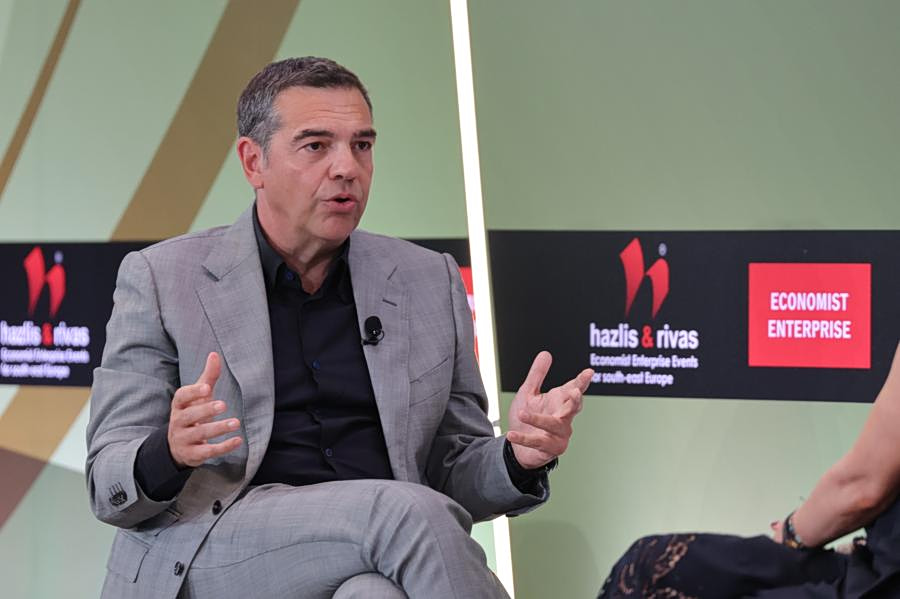

Trump and NATO: A relationship of love and hate
Translated from Greek, summarized and contextualized by DistantNews.
At a glance
Analysis
Named sources
Context piece
- Donald Trump's critical stance on NATO dominated discussions at the Ankara summit, creating tension.
- Despite his criticism, the summit resulted in billions of dollars for new military procurements and support for Ukraine.
- Analysts suggest NATO will survive Trump's presidency but face difficult times due to differing political philosophies and U.S. reliance on the alliance.
Donald Trump's forceful criticisms of NATO cast a shadow over the alliance's Ankara summit, creating a tense atmosphere that was only partially eased by subsequent concessions. The U.S. president's direct attacks on the alliance were met with a display of "enormous love," according to Trump himself, which translated into significant financial commitments. Billions of dollars were pledged for new military equipment, and support for Ukraine was bolstered, including U.S. approval for Patriot missile production within the war-torn country.
NATO will survive with Trump, but this will often be unpleasant. For two main reasons: first, admittedly with some validity, Trump believed and believes that the 500 million Europeans and Canadians of NATO relied too much on America and spent too little on defense – Greece, Turkey, and the northeastern NATO states are the exception that proves the rule. Second, Trump and the movement he represents have fundamental political and philosophical differences with the mentality of the European political class, which is not considered populist and nationalist enough, but rather too focused on the refugee embrace and the environment.
However, the underlying friction remains. Trump attended the summit primarily out of respect for President Erdoğan, not out of enthusiasm for NATO itself. This dynamic highlights a fragile coexistence between allies with diverging interests. "NATO will survive with Trump, but it will often be unpleasant," noted James Jeffrey, former U.S. Special Envoy to Syria. He cited two main reasons: Trump's belief that European and Canadian allies were overly reliant on American defense spending and his fundamental political and philosophical differences with the European political establishment.
Jeffrey elaborated that Trump and his movement clash with European leaders over issues like immigration and environmental policies, which Trump views as too populist and nationalistic. Despite these tensions, public support for NATO in the United States remains high, with a recent Chicago Council poll showing record levels of backing for the alliance. This suggests that even Trump, despite his rhetoric, must acknowledge the significant benefits and necessity of NATO and its European partners for the U.S.
However, the regime of basic understanding between sworn allies does not negate Trump's statements, according to which he attended the Ankara summit out of respect for President Erdogan and not out of enthusiasm for NATO itself.
From the European perspective, the question of assuming a more autonomous leadership role within NATO is complex. While Europe can contribute significantly, it struggles to replicate the full scope of U.S. capabilities, including command structures, intelligence sharing, and advanced defense systems like tactical nuclear weapons and air defense. Furthermore, European nations hold differing views on increased autonomy, with France and Canada favoring a stronger European pillar, while countries like Germany, Poland, and Turkey prefer maintaining a robust U.S. presence. This divergence complicates efforts to forge a unified path forward, even as defense budgets increase across the continent.
On the other hand, is Europe in a position to play an autonomous leadership role in NATO? To a certain extent. They cannot easily replicate what the US offers the Alliance at this level: command capabilities, intelligence, tactical nuclear weapons, air defense.
DistantNews Editorial
Originally published by Kathimerini in Greek. Translated, summarized, and contextualized by our editorial team with added local perspective. Read our editorial standards.
More Stories
From Our Blog

What Gets Lost (and Found) When News Is Translated

The Critical Role of Diaspora Media in Global News

What Travellers Should Know About Countries with Restricted Press

A Digital Nomad's Guide to Following Local News

How the Same Story Looks Different in Different Countries
