


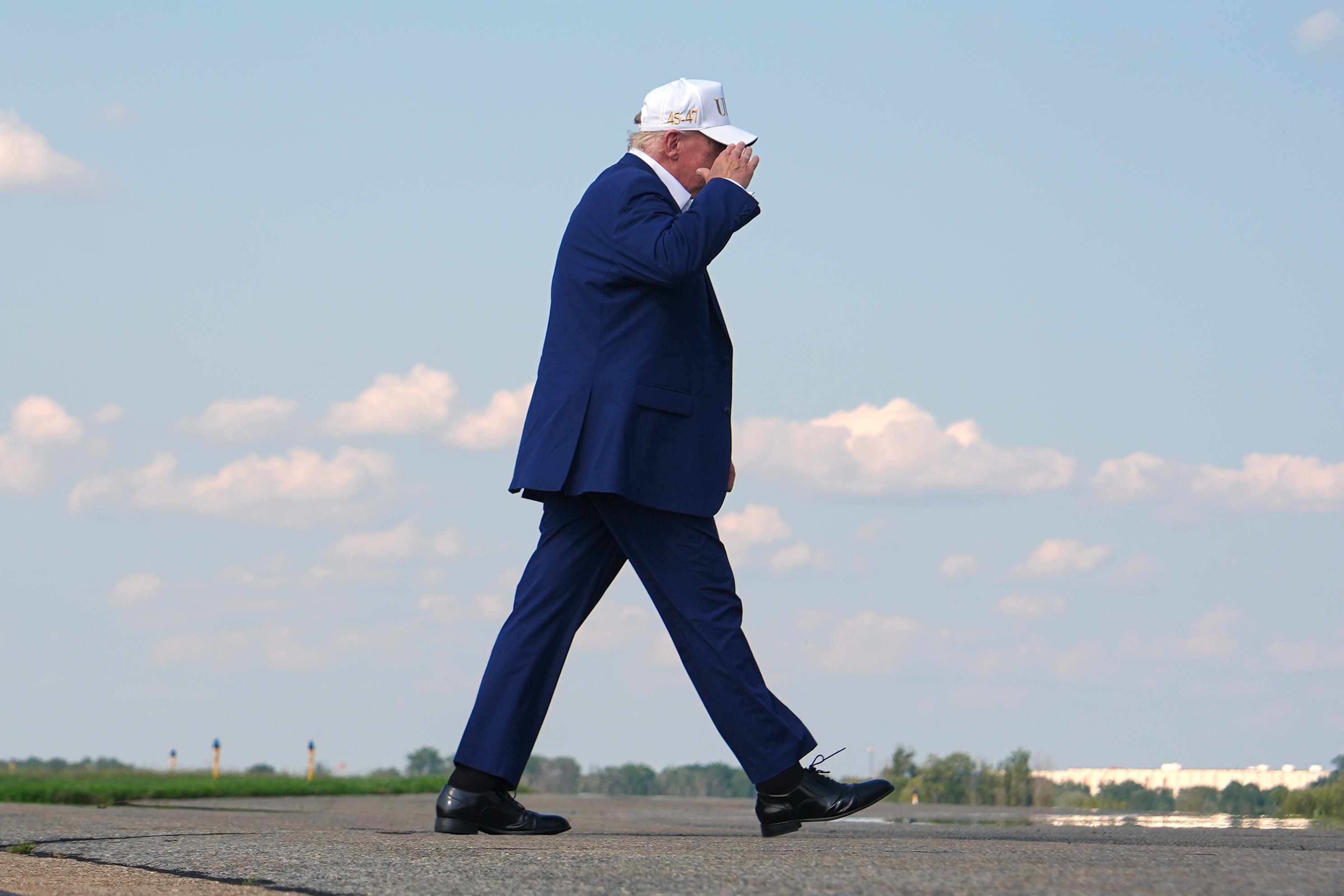
Trump claims U.S. controls Strait of Hormuz, demands compensation from Iran
Translated from English, summarized and contextualized by DistantNews.
At a glance
News
Named sources
Context piece
- President Trump claimed the U.S. controls the Strait of Hormuz and that Iran's economy is suffering due to the ongoing war.
- Trump also demanded compensation from Iran for alleged killings and wounded individuals, mirroring Iran's own demands for war damages.
- Oil prices surged 5% amid market uncertainty about the Strait of Hormuz reopening, while Trump secretly changed planes in Turkey due to a missile threat from Iran.
President Trump asserted U.S. control over the Strait of Hormuz and stated Iran's economy is faltering due to the war, which began February 28. He also echoed Iran's demands for compensation, claiming Iran owes reparations for the deaths and injuries inflicted by its actions.
Trump's statements followed a significant surge in oil prices, with Brent crude and U.S. benchmark crude both rising 5% on Monday. Markets showed little confidence that the vital shipping lane would reopen soon, contributing to price volatility that saw oil swing between $72 and $102 last month.
I am likewise demanding compensation from Iran, for all of the people that they have killed and gravely wounded with their roadside bombs and many conflicts.
Separately, CBS News reported that President Trump secretly switched planes during his trip from Turkey at the end of last month's NATO summit. U.S. intelligence had detected a credible plot to fire a missile at Air Force One. The president had previously acknowledged his status as Iran's "number one target."
On his Truth Social platform, Trump detailed his compensation demands, including for 17 U.S. sailors killed in the 2000 USS Cole bombing and "thousands of others killed in combat." He also called for Iran to pay compensation to families of protestors killed over the past 50 years, and specifically mentioned 52,000 killed in the last five months. Trump stated he has instructed his representatives to include these demands in future negotiations.
The president had expressed awareness of the risks posed by the U.S.-Iran war, calling himself Iran's "number one target" during the NATO summit.
DistantNews Editorial
Originally published by CBS News in English. Translated, summarized, and contextualized by our editorial team with added local perspective. Read our editorial standards.
More Stories

From Our Blog

How the Same Story Looks Different in Different Countries

What Gets Lost (and Found) When News Is Translated

The Critical Role of Diaspora Media in Global News

What Travellers Should Know About Countries with Restricted Press

A Digital Nomad's Guide to Following Local News
