

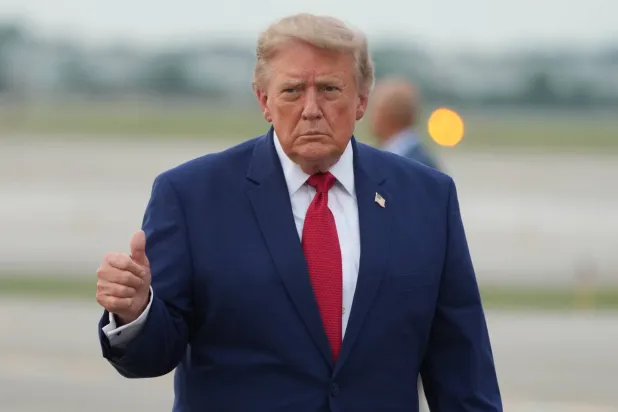

Trump favors economic pressure over strikes in Iran conflict
Translated from English, summarized and contextualized by DistantNews.
At a glance
News
Named sources
Context piece
- President Trump favors an economic pressure strategy over diplomacy or new strikes in the conflict with Iran, emphasizing sanctions.
- Trump claims Iran is experiencing high inflation and has no money, stating the U.S. has control over the Strait of Hormuz.
- Experts note Iran's economic struggles due to sanctions and port blockades, questioning the impact on its leadership's resolve.
President Donald Trump is adopting a "low-key" strategy in the conflict with Iran, prioritizing economic pressure through sanctions over diplomacy or military action. "We are low-keying it," Trump told news site Axios, adding, "We're only semi-negotiating with them. We are just watching Iran with its huge inflation and the fact they have no money."
We are low-keying it. We're only semi-negotiating with them. We are just watching Iran with its huge inflation and the fact they have no money.
Trump has repeatedly stated that Iran is facing severe economic hardship, with inflation exceeding 300 percent and a lack of funds to pay its soldiers. He asserts that the United States maintains "total control" over the Strait of Hormuz, a vital oil trade route and a key point of geopolitical tension.
Iran is broke, totally broke and they're not paying their soldiers.
However, experts suggest a more complex reality. Michael O'Hanlon of the Brookings Institution noted that Iran is economically "in terrible shape," unable to ship oil meaningfully and facing restrictions on overseas assets. He questioned whether Iranian leaders would prioritize economic pain, suggesting they might not care significantly.
Iran is in terrible shape economically. It can't ship oil at any meaningful level. And it still labors under sanctions and still can't access its overseas assets.
Iran's foreign ministry spokesman, Esmaeil Baqaei, characterized the renewed push for sanctions as a "retreat" by Washington. He stated that Iran has endured U.S. sanctions for decades and that the U.S. resorts to sanctions when diplomacy fails, only to increase their intensity when those sanctions prove ineffective. Baqaei warned of the risk that American politicians might "strangle their own remainin" by adhering to this pattern.
The question is, do its leaders really care? I think they care some, but not a lot.
DistantNews Editorial
Originally published by Asharq Al-Awsat in English. Translated, summarized, and contextualized by our editorial team with added local perspective. Read our editorial standards.
More Stories


From Our Blog

What Gets Lost (and Found) When News Is Translated

The Critical Role of Diaspora Media in Global News

What Travellers Should Know About Countries with Restricted Press

A Digital Nomad's Guide to Following Local News

How the Same Story Looks Different in Different Countries
