


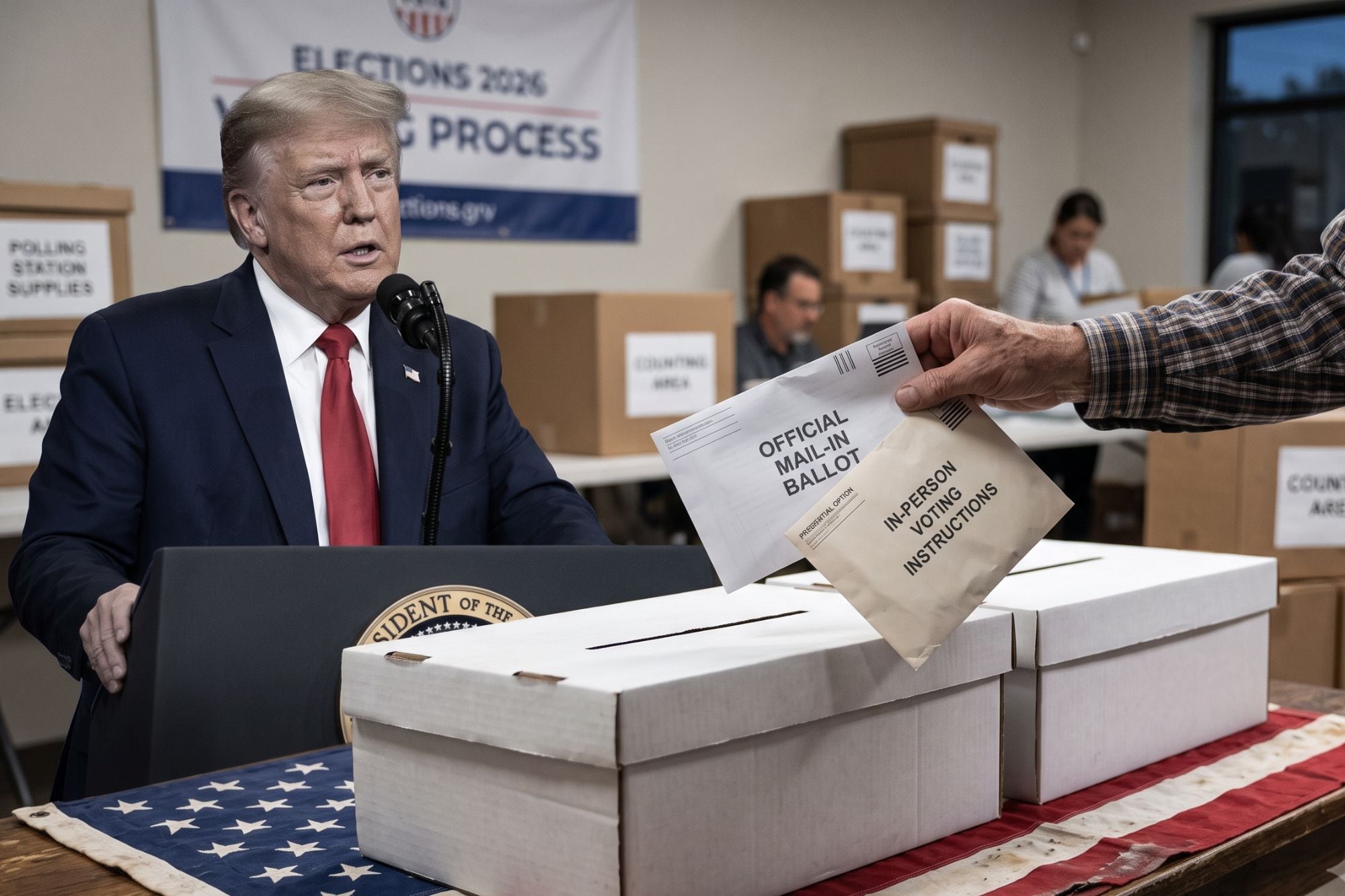
Trump pushes 'Save America Act' for voter ID, mail-in voting ban ahead of 2026 US elections
Translated from Spanish, summarized and contextualized by DistantNews.
At a glance
News
Sources not specified
New plan
- Donald Trump is advocating for the "Save America Act," which would require voter identification and suspend mail-in voting.
- The proposed legislation aims to prevent election fraud, though a Republican senator doubts it can pass before the 2026 elections.
- If enacted, the law would require U.S. citizens to present official identification to vote in federal elections.
Donald Trump is pushing for the "Save America Act," a legislative proposal that would mandate voter identification and halt mail-in voting, which he claims will prevent election fraud. Trump announced his support for the bill during his July 4th speech, stating it would help maintain the nation's status as a "winner's nation."
Our country has come back and we want to keep it great. We will do this by passing the Save America Act.
"No more cheating in elections, it's very simple," Trump said regarding the suspension of mail-in voting, with exceptions to be determined. The "Save America Act" was sent to the Senate's Rules and Administration Committee in January. Despite Trump's efforts, Senator Thom Tillis, a Republican from North Carolina, expressed skepticism about the bill's viability, telling News & Observer that there is insufficient time for it to take effect before the 2026 midterm elections unless it secures 60 votes.
No more cheating in elections, it's very simple.
Under the proposed "Save America Act," U.S. citizens would need to provide official documentation, such as a passport or birth certificate, to register and vote in federal elections. The White House stated that "only U.S. citizens should decide on elections," indicating the bill's intent to prevent non-citizens from participating in federal elections.
Unless you do the work necessary to get the 60 votes, you know it's dead, so this is all a charade.
DistantNews Editorial
Originally published by La Nación in Spanish. Translated, summarized, and contextualized by our editorial team with added local perspective. Read our editorial standards.
More Stories



From Our Blog

What Gets Lost (and Found) When News Is Translated

The Critical Role of Diaspora Media in Global News

What Travellers Should Know About Countries with Restricted Press

A Digital Nomad's Guide to Following Local News

How the Same Story Looks Different in Different Countries
