

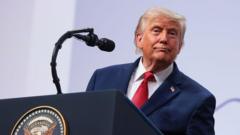

Trump’s Iran deal is result of unrealistic ambitions for an untenable war
Summarized and contextualized by DistantNews.
At a glance
Analysis
Named sources
Outcome reported
- The U.S. war with Iran began with maximalist goals: eliminating Iran's nuclear and ballistic missile programs and ending support for regional groups.
- The conflict concluded with Iran agreeing not to build a bomb and to hold further nuclear discussions, but without written commitments on missiles or support for proxies.
- Facing global economic pain and Iran's control over the Strait of Hormuz, the U.S. was forced to compromise on its initial objectives.
The war initiated by Donald Trump against Iran, driven by ambitious goals, has concluded with concessions and a departure from the initial objectives.
Trump's administration entered the conflict aiming to dismantle Iran's nuclear and ballistic missile programs and halt its support for regional military groups like Hezbollah and Hamas. However, the outcome sees Iran agreeing not to pursue nuclear weapons and to engage in further discussions, while the memorandum of understanding (MOU) notably lacks written commitments regarding its ballistic missile program or its regional alliances.
The US rapidly found that overmatching an adversary that has spent four decades honing its asymmetrical warfighting doctrine and skills would not be the war it had prepared for. And the rapid escalation of economic pain globally that eventually came to American consumers made the war all the more untenable.
Furthermore, the MOU instituted a ceasefire in Lebanon, where Israel had established a buffer zone. Hezbollah declared a "victory," highlighting the shift in dynamics. Iran's strategic leverage, particularly its control over the Strait of Hormuz, a waterway critical for global trade, proved decisive. The potential for Iran to cut off this passage forced the U.S. administration to reconsider its broader aims, fearing a "worldwide depression."
He doesn’t want to go back to warfighting. But he’s tossed away so much of the leverage he might have had if the war had ended in the first or second week.
Barbara Leaf, a former U.S. assistant secretary of state, criticized the war's outset, stating the U.S. began with "disastrously unrealistic assessments of the regime's resilience" and its capacity for asymmetrical warfare. She noted that the global economic repercussions, including impacts on American consumers, made the war "untenable."
Trump now faces a difficult situation, having potentially diminished his leverage by ending the war without achieving all stated objectives. The administration's reluctance to release the MOU's text suggests internal dissent, with some U.S. senators, like Bill Cassidy, condemning the deal as a "blunder" that allows Iran to threaten the Strait of Hormuz in the future. Senator Thom Tillis also expressed reservations, finding the published points "not sufficient."
Reagan is rolling over in his grave. Iran’s nuclear ambitions were not curbed, and they have learned that threatening the strait of Hormuz works and will undoubtedly leverage it in the future. Now, Iran gets to build brand-new infrastructure under this deal.
DistantNews Editorial
Originally published by The Guardian. Summarized and contextualized by our editorial team with added local perspective. Read our editorial standards.
More Stories


From Our Blog

What Gets Lost (and Found) When News Is Translated

The Critical Role of Diaspora Media in Global News

What Travellers Should Know About Countries with Restricted Press

A Digital Nomad's Guide to Following Local News

How the Same Story Looks Different in Different Countries
