

Trump Says Iran Deal Set for Sunday Signing, Tehran Skeptical
Translated from English, summarized and contextualized by DistantNews.
At a glance
News
Named sources
Ongoing story
- President Trump announced a deal with Iran is scheduled for signing Sunday, though Tehran expressed skepticism.
- The agreement could reopen the Strait of Hormuz in exchange for lifting US sanctions on Iranian shipping.
- Technical details are still being worked out regarding the destruction of Iran's enriched uranium stockpiles.
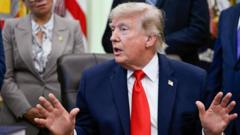
President Donald Trump has stated that a deal between the US and Iran is scheduled to be signed on Sunday, a claim met with skepticism by Tehran regarding the timing.
We will have to wait and see about the exact date of the signing of the memorandum of understanding, although it will not be tomorrow.
Prior to Trump's announcement, Iran's foreign ministry spokesman Esmaeil Baghaei indicated that while a memorandum of understanding was anticipated, the exact signing date remained uncertain. The potential agreement could lead to the reopening of the Strait of Hormuz, with the US lifting its blockade on Iranian shipping as a reciprocal measure.
Officials suggest the deal will also involve the destruction and removal of Iran's enriched uranium stockpiles, a critical component for nuclear weapons. However, the precise technical details of this process are still under negotiation. If finalized, the agreement will likely be compared to the 2015 nuclear deal, the Joint Comprehensive Plan of Action (JCPOA), which Trump abandoned during his first term.
If we make a deal now we're friendly, we'll all go together. It'll be our equipment. We'll take it out and destroy it, whether it's onsite or whether we take it offsite.
The fate of Iran's uranium stockpile was a central issue in the 2015 JCPOA, which imposed strict limits on Iran's enrichment activities. The deal allowed Iran to retain only a small amount of monitored, low-enriched uranium, sufficient for power plant fuel but not for weapons-grade material, which requires enrichment to at least 90%. Former JCPOA lead negotiator Baroness Ashton noted that the primary concern at that time was Iran's potential pursuit of nuclear weapons. The JCPOA also stipulated the lifting of sanctions against Iran in exchange for these limitations.
The number one issue that was running at that time was whether Iran was going to go for building a nuclear weapon.
Kelsey Davenport from the Arms Control Association described the 2015 deal as "remarkably successful," asserting that any move towards nuclear weapons or deviation from the JCPOA's terms would have been detected. Both the IAEA and US intelligence repeatedly assessed Iran's compliance with the agreement. However, in May 2018, President Trump withdrew the US from the deal, calling it a "horrible, one-side deal."
The deal was remarkably successful. Any move to nuclear weapons, any deviation from the JCPOA's terms would have been detected.
DistantNews Editorial
Originally published by BBC News in English. Translated, summarized, and contextualized by our editorial team with added local perspective. Read our editorial standards.
More Stories


From Our Blog

What Gets Lost (and Found) When News Is Translated

The Critical Role of Diaspora Media in Global News

What Travellers Should Know About Countries with Restricted Press

A Digital Nomad's Guide to Following Local News

How the Same Story Looks Different in Different Countries
