

Trump says US-Iran talks to begin Monday after shelving planned strike
Summarized and contextualized by DistantNews.
At a glance
News
Sources not specified
New plan
- US President Donald Trump announced that negotiations with Iran, to be conducted through intermediaries, are scheduled to begin Monday.
- Trump stated that diplomatic engagements involving Saudi Arabia, the UAE, Qatar, and Iran led him to halt a planned strike on Friday.
- Mediators are working to revive a memorandum of understanding to ensure the Strait of Hormuz remains open, though Iranian military leaders have rejected Trump's characterization of progress.
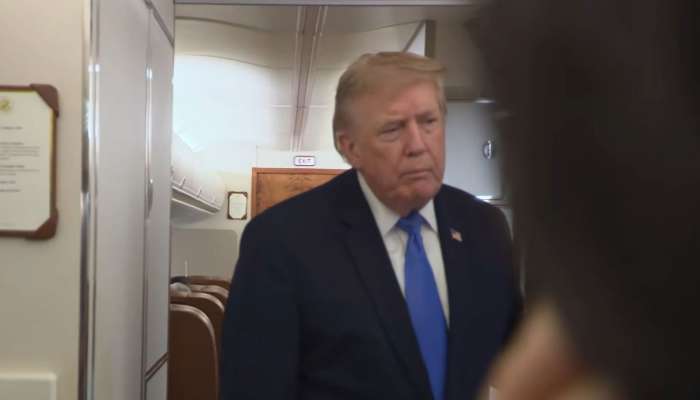
US President Donald Trump announced Monday that negotiations with Iran, to be conducted through intermediaries, are scheduled to begin.
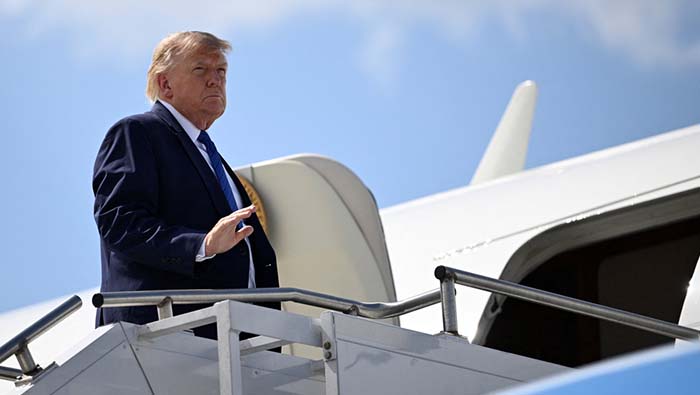
Speaking to reporters on Air Force One, Trump confirmed that discussion channels were active. "We are talking to them [the Iranians] in the form of a negotiation; it begins tomorrow afternoon, and we'll see how it goes. I'd love to do that. It'll save a lot of lives, a lot of unnecessary power, to be honest with you," Trump said.
We are talking to them [the Iranians] in the form of a negotiation; it begins tomorrow afternoon, and we'll see how it goes. I'd love to do that. It'll save a lot of lives, a lot of unnecessary power, to be honest with you.
The US President revealed that diplomatic engagements involving Saudi Arabia, the United Arab Emirates, Qatar, and Iran led him to halt what was originally planned as a "massive attack" on Friday. Trump further indicated that an agreement could be reached regarding the management of the Strait of Hormuz, while asserting that an accord would be established concerning the denuclearisation of Iran.
So they asked us, Iran specifically, but the other three, they asked us
The sudden turn towards diplomacy comes as mediators race to reactivate a dynamic framework between Washington and Tehran. According to Israeli media reports on Sunday, regional intermediaries are attempting to revive a memorandum of understanding signed last month to ensure the strategic waterway remains open, fee-free, for 60 days. Iranian state media similarly indicated that discussions between Iran and Oman concerning a joint operational mechanism to govern the maritime corridor were in their final stages.
Behind-the-scenes diplomatic pressure over the weekend played a pivotal role in averting immediate conflict. Qatari officials engaged in intensive talks with Iran, the US, and Oman, ultimately informing Trump on Saturday that Tehran had accepted a proposal regarding the strait. Concurrently, Saudi Crown Prince Mohammed bin Salman held a telephone call with Trump to urge against military action. Following these exchanges, Trump announced on Truth Social that he was halting the planned strikes, citing progress on the shipping route and nuclear discussions. Although no military strikes were recorded overnight into Sunday, Iranian military leaders rejected Trump's characterisation as a "lie," while a source tied to Tehran's delegation told the semi-official Fars News Agency that no formal accord on the strait had yet been reached. Meanwhile, opinions among Gulf allies remain sharply divided over how Washington should handle Tehran. The Wall Street Journal reported on Sunday that while Saudi Arabia counselled restraint, the United Arab Emirates lobbied Washington for more assertive military action, arguing that the Islamic Republic's provocations required a stronger response.
lie
DistantNews Editorial
Originally published by Times of Oman. Summarized and contextualized by our editorial team with added local perspective. Read our editorial standards.
More Stories
From Our Blog

What Gets Lost (and Found) When News Is Translated

The Critical Role of Diaspora Media in Global News

What Travellers Should Know About Countries with Restricted Press

A Digital Nomad's Guide to Following Local News

How the Same Story Looks Different in Different Countries
