


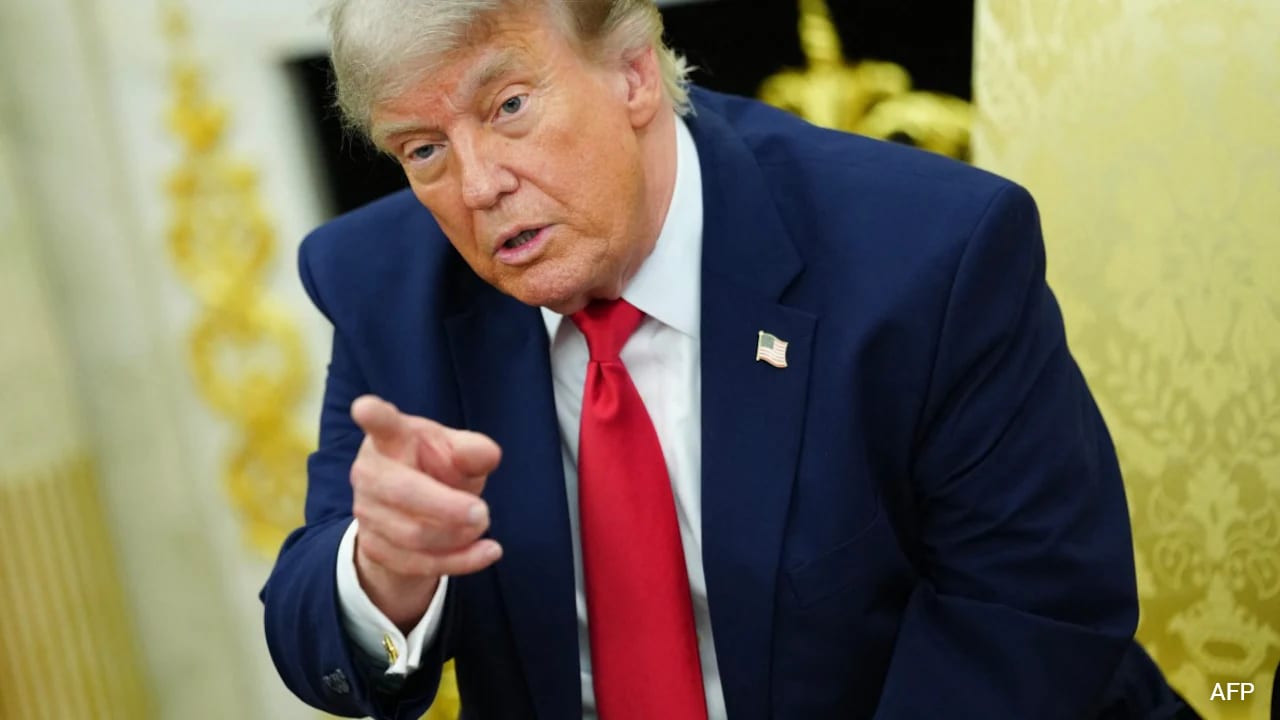
Trump threatens 100% tariff on countries charging digital services tax: Will India be affected?
Summarized and contextualized by DistantNews.
At a glance
News
Named sources
Context piece
- U.S. President Donald Trump has threatened to impose a 100% tariff on goods from countries that charge a digital services tax.
- Trump argues this tax unfairly targets major American tech companies like Alphabet and Meta.
- The article questions whether India will be affected by this potential U.S. trade action.
President Donald Trump has declared his intention to impose a 100% tariff on products from any country implementing a digital services tax. Trump contends that these taxes unfairly single out and disadvantage prominent American technology firms, specifically naming Alphabet Inc. and Meta Platforms, Inc.
The U.S. administration views these digital services taxes as discriminatory, arguing they place an undue burden on American companies that are global leaders in the digital economy. The proposed tariff represents a significant escalation in trade tensions, signaling a willingness to use broad economic measures to counter policies perceived as hostile to U.S. business interests.
This threat raises questions about the potential impact on various countries that have introduced or are considering digital services taxes. Among them, India's own digital services tax, which targets revenue generated from online advertising, e-commerce, and digital services provided by non-resident companies, is a key point of consideration. The article prompts an examination of whether India's digital tax policies could make it a target for these threatened U.S. tariffs.
The implications of such tariffs could extend beyond the tech sector, potentially affecting broader trade relations and supply chains. The effectiveness and scope of these threatened measures remain to be seen, as does the response from the international community and the targeted nations.
DistantNews Editorial
Originally published by Hindustan Times. Summarized and contextualized by our editorial team with added local perspective. Read our editorial standards.
More Stories

From Our Blog

What Press Freedom Means for the News You Read

What Gets Lost (and Found) When News Is Translated

The Critical Role of Diaspora Media in Global News

What Travellers Should Know About Countries with Restricted Press

A Digital Nomad's Guide to Following Local News
