


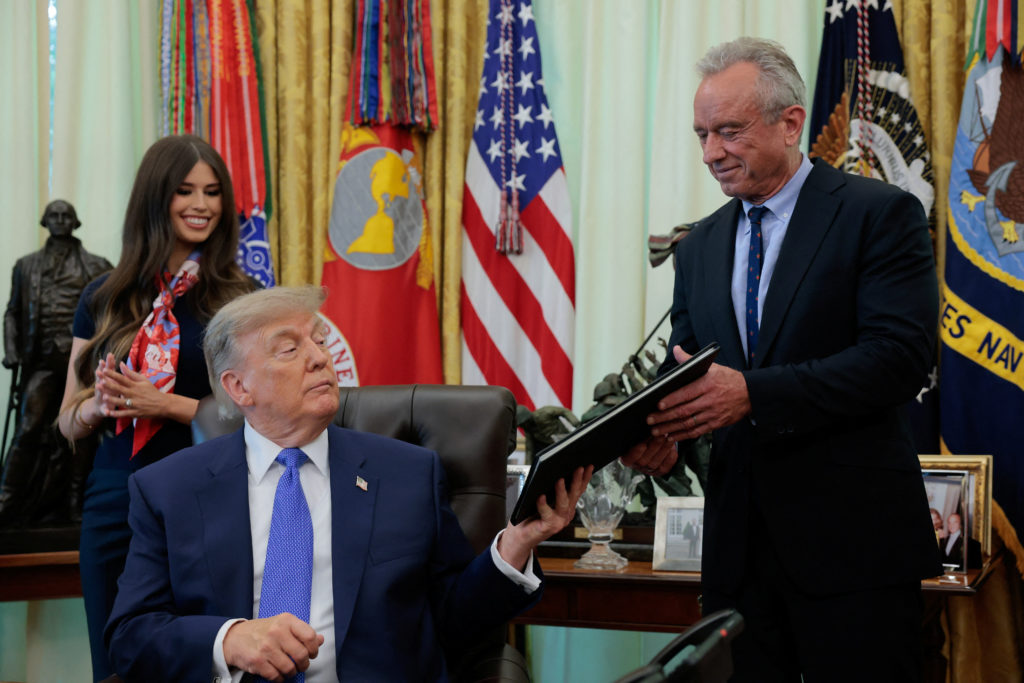
Trump vaccine order faces hurdles over logistics, cost, expert criticism
Translated from English, summarized and contextualized by DistantNews.
At a glance
News
From a news agency
New plan
- President Donald Trump signed an executive order to separate childhood vaccines into individual shots and space them out.
- Public health experts and former regulators condemn the order, citing significant financial and logistical challenges for parents, providers, and drugmakers.
- The order would require drug companies to revive decades-old individual vaccines and build new manufacturing facilities, a process likely to take years and cost tens of millions of dollars.
President Donald Trump's executive order mandating the separation of childhood vaccines into individual shots and spacing them out has drawn sharp criticism from public health experts. The order, signed Monday, calls for unbundling combination vaccines like the measles, mumps, and rubella (MMR) shot and administering them separately over longer periods.
Experts argue there is no scientific basis for this change. Dr. Anna Durbin of Johns Hopkins Bloomberg School of Public Health stated, "There is no good justification for this. I think it's very bad public health policy." Combination vaccines have been shown to increase the likelihood of children being fully protected before starting school.
We do things that are less convenient and more expensive if there's a good reason to do it. There is no good justification for this. I think it's very bad public health policy.
The biggest hurdles appear to be the unprecedented financial and logistical demands. Drugmakers would need to revive individual vaccines not widely used in decades and build new manufacturing plants, a process experts estimate could take years and cost tens of millions of dollars. Parents would face more frequent doctor visits, straining pediatricians and increasing costs for supplies.
Federal officials have 90 days to develop plans for these changes. However, pharmaceutical scientists and former regulators believe the overhaul would be a lengthy and costly undertaking. Currently, no individual vaccines for measles, mumps, or rubella exist in the U.S.; only combination shots have been approved since the 1970s. Former FDA vaccine chief Dr. Jesse Goodman noted that companies might need to conduct extensive studies to prove the efficacy of new individual shots, raising questions about FDA approval.
The question is how much has changed since then and how comfortable will the FDA and the companies be relying on those comparisons?
DistantNews Editorial
Originally published by PBS NewsHour in English. Translated, summarized, and contextualized by our editorial team with added local perspective. Read our editorial standards.
More Stories


From Our Blog

How the Same Story Looks Different in Different Countries

What Gets Lost (and Found) When News Is Translated

The Critical Role of Diaspora Media in Global News

What Travellers Should Know About Countries with Restricted Press

A Digital Nomad's Guide to Following Local News
