


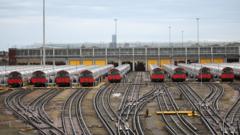
Tube strike usage higher than Tuesday, TfL says
Summarized and contextualized by DistantNews.
At a glance
News
Sources not specified
Context piece
- Public transport usage in London on Thursday's strike day reached 86% of normal levels, according to Transport for London (TfL).
- Underground travel decreased by 43%, but other lines like the Overground, Elizabeth line, and DLR saw increased usage.
- The RMT union is striking over plans for a voluntary 35-hour, four-day work week for drivers, which TfL states is misleading.
Journeys across London's public transport network on Thursday, amidst a strike by RMT members, reached 86% of typical levels, Transport for London (TfL) reported.
Data from Oyster and contactless payments revealed mixed trends compared to the same day last year. While London Underground travel dropped by 43%, usage on the London Overground rose by 12%. The Elizabeth line saw an 18% increase, and the Docklands Light Railway (DLR) experienced a 9% rise in passengers.
The strike action by RMT members is in protest against proposed plans for a voluntary 35-hour, four-day work week for drivers. TfL stated that approximately 60% of Tube drivers reported for duty on Thursday morning, a slight increase from Tuesday's strike. Staffing levels varied across different lines, with the Jubilee line reporting 91% of drivers at work, followed by the Bakerloo line at 80% and the Metropolitan line at 75%.
We have committed, a number of times and in a number of ways, including in writing before this most recent industrial action, to these proposals being voluntary. "Any suggestion otherwise is misleading the public in order to justify strike action over proposals that would give Tube drivers more time off and create a more modern, efficient Tube service.
The RMT union described the previous strike on Tuesday as "strongly supported" with well-attended picket lines. However, a TfL spokesperson apologized for the disruption and refuted the union's claims. "Any suggestion otherwise is misleading the public in order to justify strike action over proposals that would give Tube drivers more time off and create a more modern, efficient Tube service," the spokesperson said, emphasizing that the proposals are voluntary.
Despite the industrial action, TfL reported that services were running on most lines, with a good service maintained on the Jubilee line for much of the day. The transport authority reiterated its commitment to providing as much service as possible.
was strongly supported by RMT members with well attended picket lines at Tube stations and depots
DistantNews Editorial
Originally published by BBC News. Summarized and contextualized by our editorial team with added local perspective. Read our editorial standards.
More Stories


From Our Blog

What Gets Lost (and Found) When News Is Translated

The Critical Role of Diaspora Media in Global News

What Travellers Should Know About Countries with Restricted Press

A Digital Nomad's Guide to Following Local News

How the Same Story Looks Different in Different Countries
