

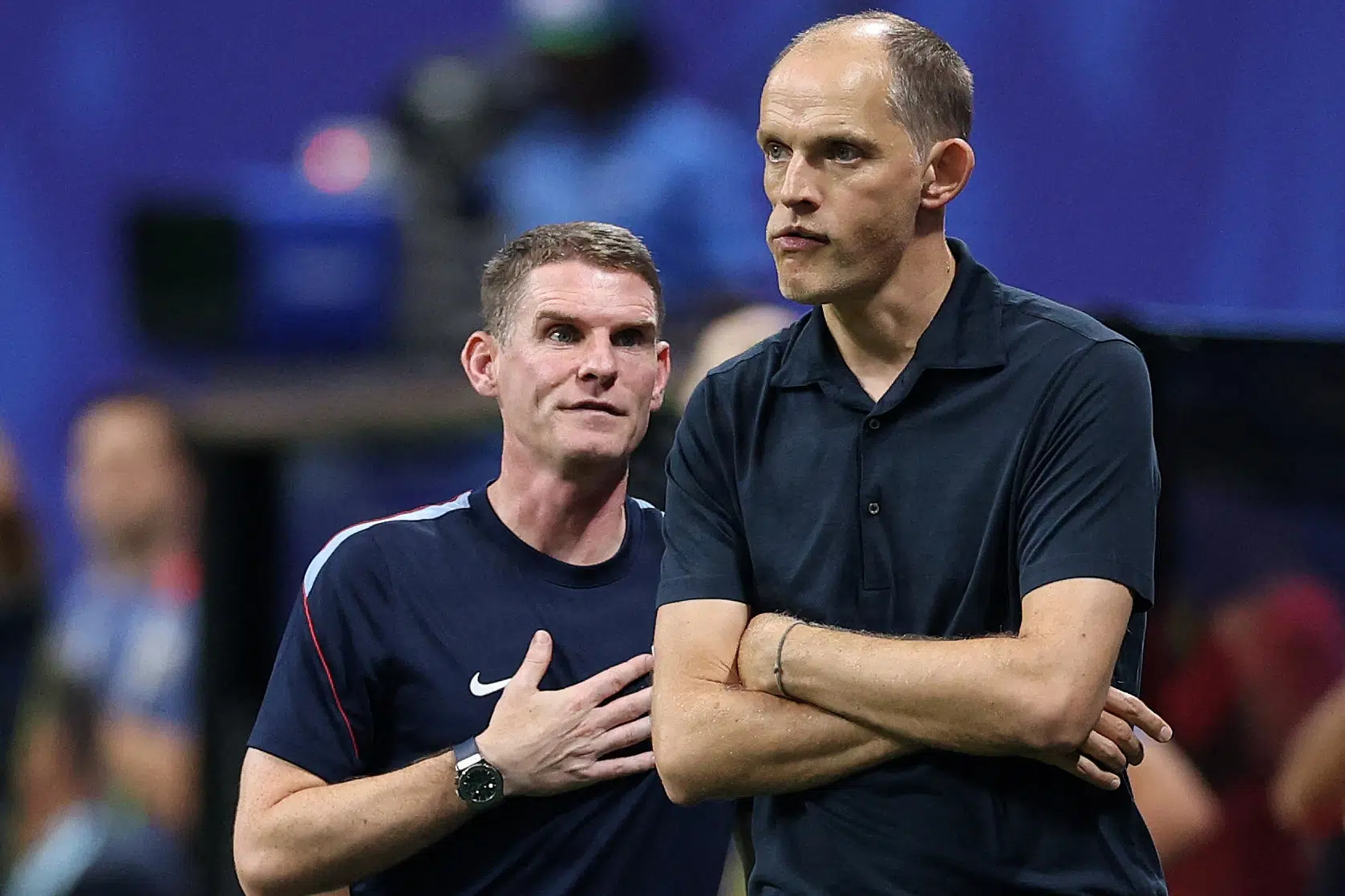
Tuchel Defends Tactics After England's World Cup Exit
Translated from Danish, summarized and contextualized by DistantNews.
At a glance
News
Named sources
Outcome reported
- England's national football team coach Thomas Tuchel expressed disappointment after a 1-2 loss to Argentina, which ended their World Cup final hopes.
- Tuchel attributed the defeat to the team becoming "too passive" after taking a 1-0 lead early in the second half.
- He defended his tactical decision to maintain a defensive formation rather than pushing for a second goal, stating the team lost possession and control.
England's World Cup journey has ended in disappointment after a late surge by Argentina secured a 2-1 victory, dashing hopes of reaching the final against Spain. Coach Thomas Tuchel lamented the team's performance, particularly their inability to maintain momentum after taking the lead.
We are disappointed. We were so close, but we became too passive after the goal and gave away too many chances.
"We are disappointed. We were so close, but we became too passive after the goal and gave away too many chances," Tuchel told the BBC. He noted that despite having possession after scoring the opening goal ten minutes into the second half, England failed to control the game and allowed Argentina to create numerous opportunities.
We managed not to turn the game around, even though we had possession, and then we allowed too many crosses, chances, and shots. We were close, but couldn't maintain the level after our goal.
Tuchel explained his tactical approach, opting to reinforce the defense rather than introducing offensive substitutions to pursue a second goal. "Of course, we wanted to go for the second goal, but I didn't feel that offensive substitutions would help. We stayed in our 4-4-2 system, but we became passive – more and more passive," he said.
Of course, we wanted to go for the second goal, but I didn't feel that offensive substitutions would help. We stayed in our 4-4-2 system, but we became passive - more and more passive.
The coach felt the issue was not structural but rather a shift in the team's mindset and execution on the field. "We couldn't win any balls, we couldn't hold onto the ball, so I don't think it was a structural problem. We didn't change anything, but the game changed completely," Tuchel added, reflecting on the critical moments that led to the defeat.
We couldn't win any balls, we couldn't hold onto the ball, so I don't think it was a structural problem. We didn't change anything, but the game changed completely.
DistantNews Editorial
Originally published by Berlingske in Danish. Translated, summarized, and contextualized by our editorial team with added local perspective. Read our editorial standards.
More Stories

From Our Blog

What Gets Lost (and Found) When News Is Translated

The Critical Role of Diaspora Media in Global News

What Travellers Should Know About Countries with Restricted Press

A Digital Nomad's Guide to Following Local News

How the Same Story Looks Different in Different Countries
