

Tupac Shakur's accused killer was out for 'revenge', jury hears
Summarized and contextualized by DistantNews.
At a glance
News
Named sources
In the courts
- Duane "Keffe D" Davis is on trial for the 1996 murder of rapper Tupac Shakur, accused of orchestrating the killing as revenge.
- Prosecutors allege Davis ordered the shooting after his nephew was beaten by a rival gang member, with Shakur publicly participating in the assault.
- Davis has confessed to his involvement in multiple interviews over the years, but his defense claims prosecutors lack concrete proof and points to a flawed investigation.
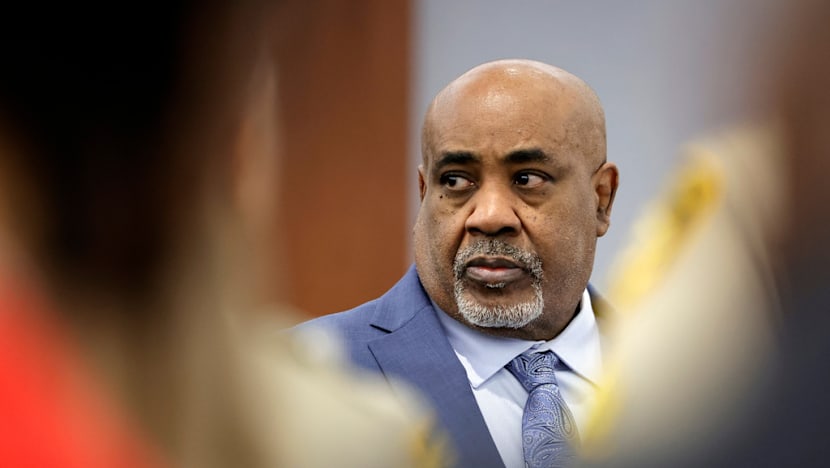
Thirty years after the murder of rapper Tupac Shakur, a Las Vegas jury has begun hearing the case against Duane "Keffe D" Davis, accused of orchestrating the fatal shooting. Prosecutors presented their opening arguments Monday, detailing a motive of revenge for a public assault on Davis's nephew.
Duane Davis, described as a former leader of the South Side Compton Crips, allegedly ordered the hit on Shakur on September 7, 1996. The prosecution contends that Shakur had publicly, and on camera, participated in the humiliation and beating of Davis's nephew, Orlando Anderson, just hours before the drive-by shooting.
On September 7, 1996, Tupac Shakur publicly, on camera, participated in a humiliating beating of Duane Davis's nephew, Orlando Anderson. Then, two and a half hours later ... Tupac is gunned down in a drive-by shooting from a white Cadillac in an act of revenge.
"On September 7, 1996, Tupac Shakur publicly, on camera, participated in a humiliating beating of Duane Davis's nephew, Orlando Anderson," prosecutor Binu Palal told the court. "Then, two and a half hours later... Tupac is gunned down in a drive-by shooting from a white Cadillac in an act of revenge."
Over the years, in private interviews, in public statements, and even in private calls, Duane Davis has repeatedly told us over and over again about the anger he felt, and his own role in the revenge drive-by shooting of Tupac Shakur. And now, nearly 30 years later, we're going to ask you to finally hold Duane Davis accountable.
Palal stated that while Davis did not fire the weapon himself, he handed the gun to a passenger in his car and instructed them to shoot Shakur. The prosecutor highlighted that Davis has repeatedly confessed to his role in the murder across various interviews with law enforcement, media, and in his autobiography, urging the jury to hold him accountable.
However, Davis's defense attorney, Michael Sanft, argued that the prosecution's case is built on fiction rather than fact. He suggested that the police investigation was flawed and lacked definitive evidence linking Davis to the murder, urging the jury to scrutinize the presented information. Davis, 63, denies murder and faces a potential life sentence without parole if convicted.
What they are telling you, they're representing to be a fact when it really is a fiction, and it's up to you to determine what the facts are.
DistantNews Editorial
Originally published by CNA. Summarized and contextualized by our editorial team with added local perspective. Read our editorial standards.
More Stories


From Our Blog

What Gets Lost (and Found) When News Is Translated

The Critical Role of Diaspora Media in Global News

What Travellers Should Know About Countries with Restricted Press

A Digital Nomad's Guide to Following Local News

How the Same Story Looks Different in Different Countries
