


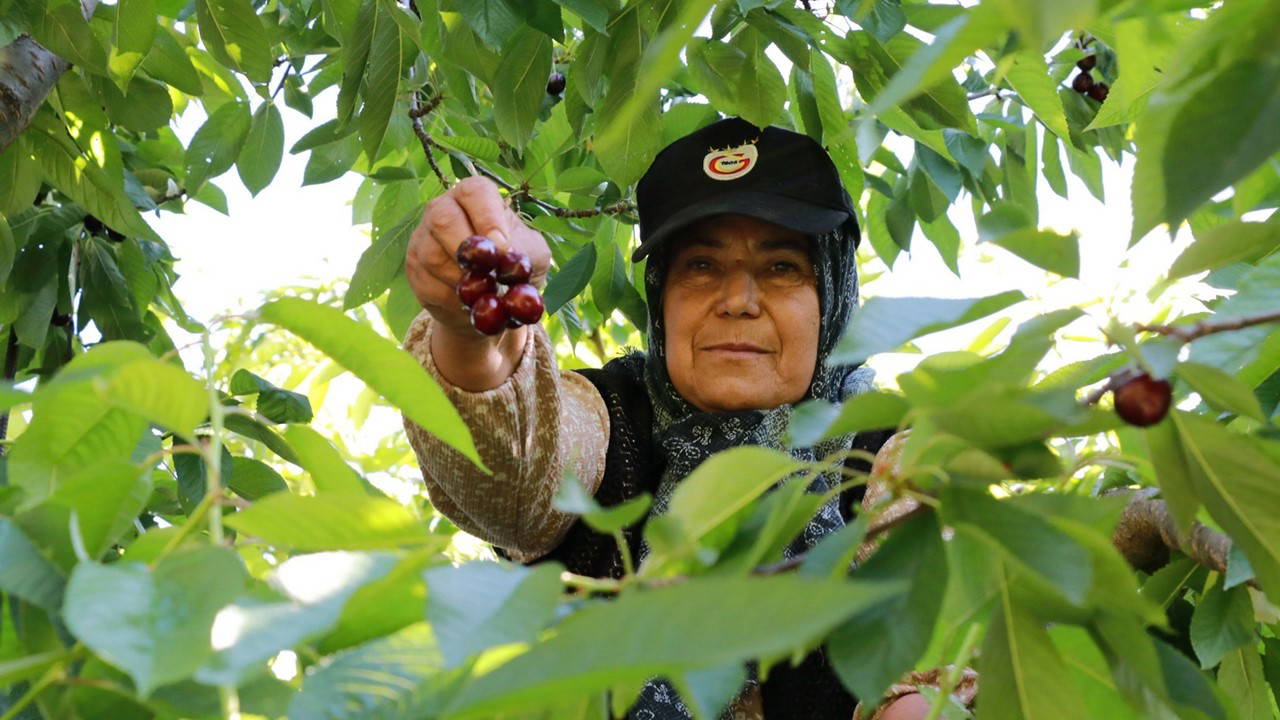
Turkey: High cherry yields contrast with low prices, frustrating farmers
Translated from Turkish, summarized and contextualized by DistantNews.
At a glance
News
Sources not specified
Context piece
- Cherry harvests have begun in Bilecik, Turkey, known for its early-ripening varieties, with yields reportedly high this year.
- Producers are dissatisfied with prices, which range from 20-80 lira at the farm but surge to 120 lira in local markets and up to 250-300 lira in Istanbul and chain stores.
- Despite a significant price increase compared to last year's frost-affected crop failure, farmers feel the current prices do not adequately compensate for their labor and rising costs.
Cherry farmers in Bilecik, Turkey, are experiencing a high-yield harvest this year, particularly with the early-ripening "erkenci" variety from Söğüt district. This follows a complete crop failure last year due to frost, making the current abundance a welcome sight for producers.
Prices were a bit higher, we would have been more satisfied, but we are not satisfied with the prices. Purchases are made at very low prices. I haven't seen the price reflect our effort. We started at 80, they dropped it to 20. It doesn't reflect our labor.
However, the joy of a plentiful harvest is tempered by dissatisfaction with the prices. While cherries fetch between 20 and 80 Turkish lira per kilogram directly from the farm, the price escalates dramatically in markets. Local markets in Söğüt and Bilecik see prices around 120 lira, while in Istanbul, consumers face prices as high as 250 lira. Some chain supermarkets are even selling the early cherries for 300 lira.
Cherries are abundant this year, but there is no quality. It produced a lot, but remained like it was during flowering. Prices are like that too, unfortunately. Our faces probably won't smile this year.
Producer Hüseyin Vural expressed his disappointment, stating, "Prices were a bit higher, we would have been more satisfied, but we are not satisfied with the prices. Purchases are made at very low prices. I haven't seen the price reflect our effort." He noted that prices started at 80 lira but dropped to 20 lira, feeling it doesn't cover their labor.
This year, the product is quite abundant, we expect the yield to be high. However, prices are shaped according to the abundance of the product, depending on the supply-demand balance, and do not meet expectations. The farmer is not satisfied with the prices.
Eyüp Seylan, the headman of Küre Village, confirmed the high yield but acknowledged the price issue, attributing it to the supply-demand balance. "Prices are shaped according to the abundance of the product, depending on the supply-demand balance, and do not meet expectations," he said. While Seylan mentioned that prices have increased by about 80% compared to last year, he cautioned that when inflation is considered, it doesn't fully meet the producers' expectations. The region primarily supplies the domestic market, with exports not being a significant factor.
Last year, due to frost, unfortunately, there were no cherries at all. However, this year, prices have increased by approximately 80% compared to the previous year. Despite this, when inflation is taken into account, it does not fully meet the producer's expectations.
DistantNews Editorial
Originally published by Cumhuriyet in Turkish. Translated, summarized, and contextualized by our editorial team with added local perspective. Read our editorial standards.
More Stories



From Our Blog

What Gets Lost (and Found) When News Is Translated

The Critical Role of Diaspora Media in Global News

What Travellers Should Know About Countries with Restricted Press

A Digital Nomad's Guide to Following Local News

How the Same Story Looks Different in Different Countries
