

Turkey's BBP leader: Pardoning terrorists unacceptable
Translated from Turkish, summarized and contextualized by DistantNews.
At a glance
News
Named sources
Context piece
- The leader of Turkey's Grand Unity Party (BBP), Mustafa Destici, criticized a proposed law aimed at strengthening national solidarity and social cohesion.
- Destici stated that pardoning members of terrorist organizations who have committed violent acts is unacceptable.
- He emphasized that the law should not grant legal privileges to groups like the PKK and its affiliates unless they are definitively disbanded and disarmed.
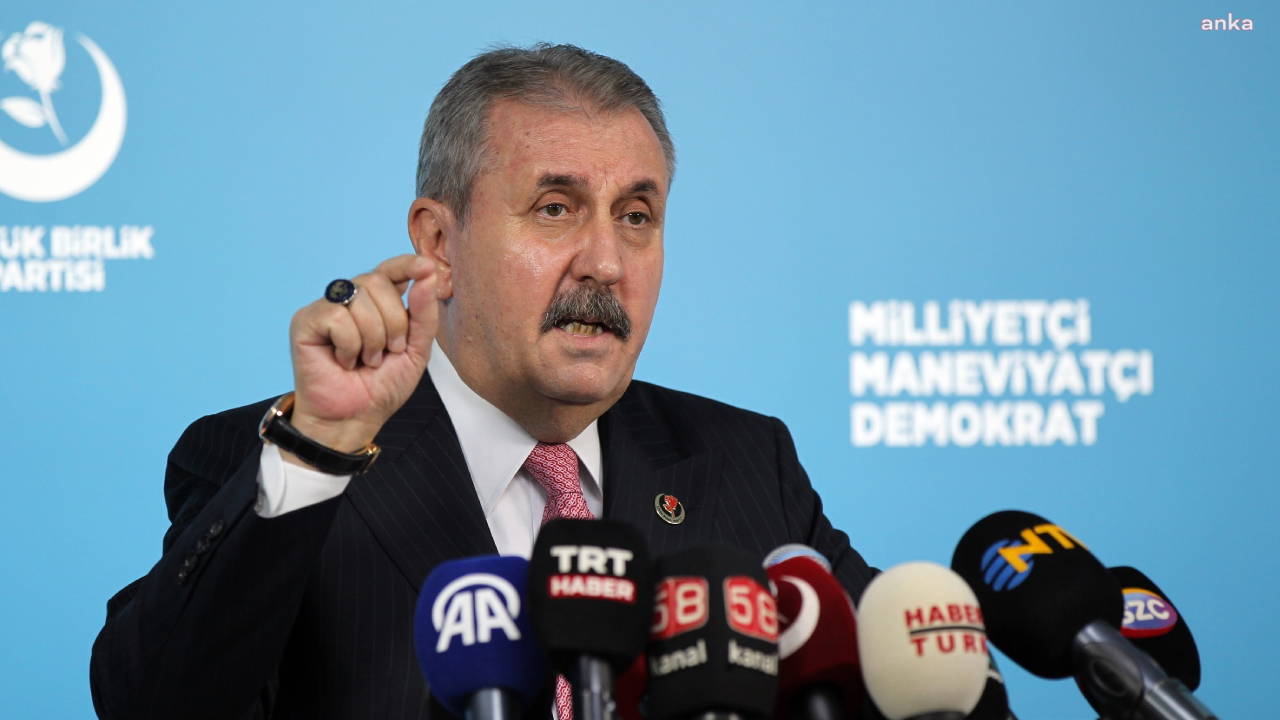
Mustafa Destici, leader of the Grand Unity Party (BBP), a component of Turkey's Cumhur Alliance, has voiced strong opposition to a proposed law intended to bolster national solidarity and social cohesion. Destici argued that accepting the law in its current form would be incorrect, stating that while ending terrorism is a national desire, the path to achieving it lies in rendering terrorist organizations powerless against the law, not in granting them legal concessions. He asserted that a terrorist organization's choices should not dictate the state's penal policy. "Pardoning any member of a terrorist organization who has fired a gun or detonated a bomb is unacceptable," Destici declared during a press conference at the BBP headquarters. Destici outlined his party's consistent stance on terrorism, emphasizing six core principles. These include the indivisible unity of the state, the rejection of negotiations with terrorists, the inviolability of martyr and veteran rights, the necessity of maintaining the deterrent effect of criminal justice, the primacy of the rule of law and judicial independence, and the requirement for unconditional and verifiable dissolution and remorse from terrorist groups. He specifically stated that no legal privileges should be granted, directly or indirectly, to the PKK and its affiliates unless they unequivocally declare their dissolution, complete disarmament, liquidation of all structures in Turkey and the region, and abandon any separatist objectives concerning the unitary structure of the Republic of Turkey, with tangible and verifiable proof on the ground. Destici also highlighted a fundamental principle of criminal law: individual responsibility for one's actions. He criticized the proposed law for linking an individual's legal status to the collective behavior of an organization.
Pardoning any member of a terrorist organization who has fired a gun or detonated a bomb is unacceptable.
DistantNews Editorial
Originally published by Cumhuriyet in Turkish. Translated, summarized, and contextualized by our editorial team with added local perspective. Read our editorial standards.
More Stories

From Our Blog

What Gets Lost (and Found) When News Is Translated

The Critical Role of Diaspora Media in Global News

What Travellers Should Know About Countries with Restricted Press

A Digital Nomad's Guide to Following Local News

How the Same Story Looks Different in Different Countries
