

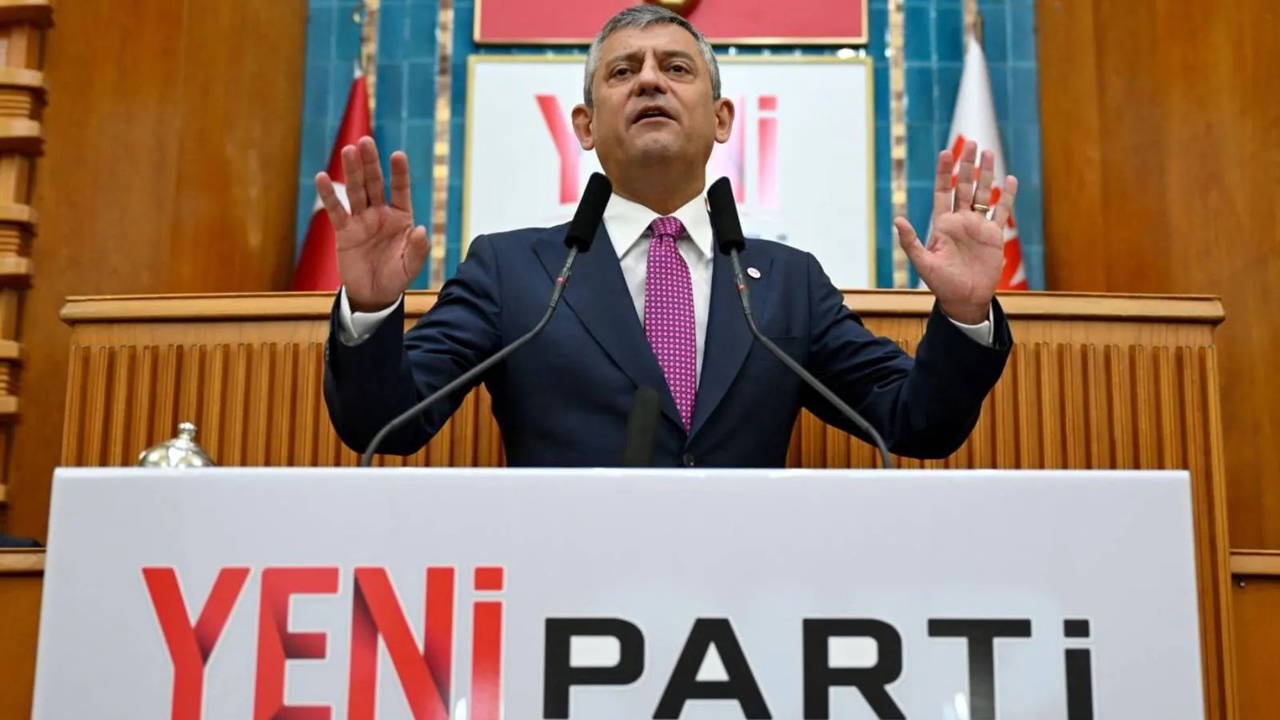
Turkey's 'New Party' leader explains its founding in Italian media
Translated from Turkish, summarized and contextualized by DistantNews.
At a glance
Opinion
Sources not specified
Context piece
- Özgür Özel, leader of Turkey's newly formed "New Party," explained its creation in an article for Italy's Corriere della Serra.
- He stated the party emerged from a need for a new understanding of democratic politics amid rising authoritarianism globally and in Turkey under President Erdoğan.
- Özel emphasized that the party aims to challenge the erosion of democratic institutions and political competition, drawing support from those seeking change.
A new political force has emerged in Turkey, aiming to redefine democratic politics in an era of increasing authoritarianism. Özgür Özel, the newly elected leader of the "New Party," articulated its mission in an article penned for the prominent Italian newspaper Corriere della Serra.
Özel described the "New Party" not merely as an addition to Turkey's crowded political landscape, but as a response to a fundamental need for a renewed approach to democracy. He highlighted a global trend where authoritarian regimes are hollowing out democratic institutions from within, rather than abolishing elections outright. This strategy, he explained, involves controlling institutions, weakening independent media, politicizing the judiciary, and intimidating opponents to convince voters that political change is either impossible or too costly.
The New Party was born out of a much more fundamental need: the need for a new understanding of democratic politics at a time when democracy is increasingly under pressure in Turkey and in the world.
Within Turkey, Özel pointed to the "democratic erosion" experienced since 2002 under President Recep Tayyip Erdoğan's leadership. He argued that the current system relies heavily on institutional control and pressure on the opposition. The situation, he noted, has become more alarming since March 2025, citing the investigations and detentions of prominent figures like Istanbul Mayor Ekrem İmamoğlu and the removal or arrest of numerous other mayors. Legal challenges against the main opposition party's legitimacy further underscore his concerns.
The issue is no longer just about who wins an election. The real issue is whether political competition in Turkey can remain truly free.
For Özel and the "New Party," the core issue transcends electoral victories; it is about whether political competition in Turkey can remain genuinely free. He asserted that the party was born from a refusal to accept the boundaries being imposed on democratic opposition. While separating from the Republican People's Party (CHP), Özel stressed that they are not abandoning Turkey's republican, democratic, and social democratic heritage. Instead, they believe this legacy necessitates forging a new path in politics.
The party draws its strength from millions who still hold onto hope for change: young people seeking futures abroad, workers facing declining living standards, farmers and retirees feeling neglected, women defending their freedoms, entrepreneurs seeking predictability, and citizens desiring a state that respects their dignity. Rooted in social democracy, equality, social justice, solidarity, and democracy, the "New Party" aims to unite democrats from various political traditions and even those who do not identify with any political label, believing that defending democracy and the rule of law is a shared responsibility.
We did not accept these boundaries that are being drawn for democratic opposition. The New Party was born out of this objection.
DistantNews Editorial
Originally published by Cumhuriyet in Turkish. Translated, summarized, and contextualized by our editorial team with added local perspective. Read our editorial standards.
More Stories

From Our Blog

What Gets Lost (and Found) When News Is Translated

The Critical Role of Diaspora Media in Global News

What Travellers Should Know About Countries with Restricted Press

A Digital Nomad's Guide to Following Local News

How the Same Story Looks Different in Different Countries
