

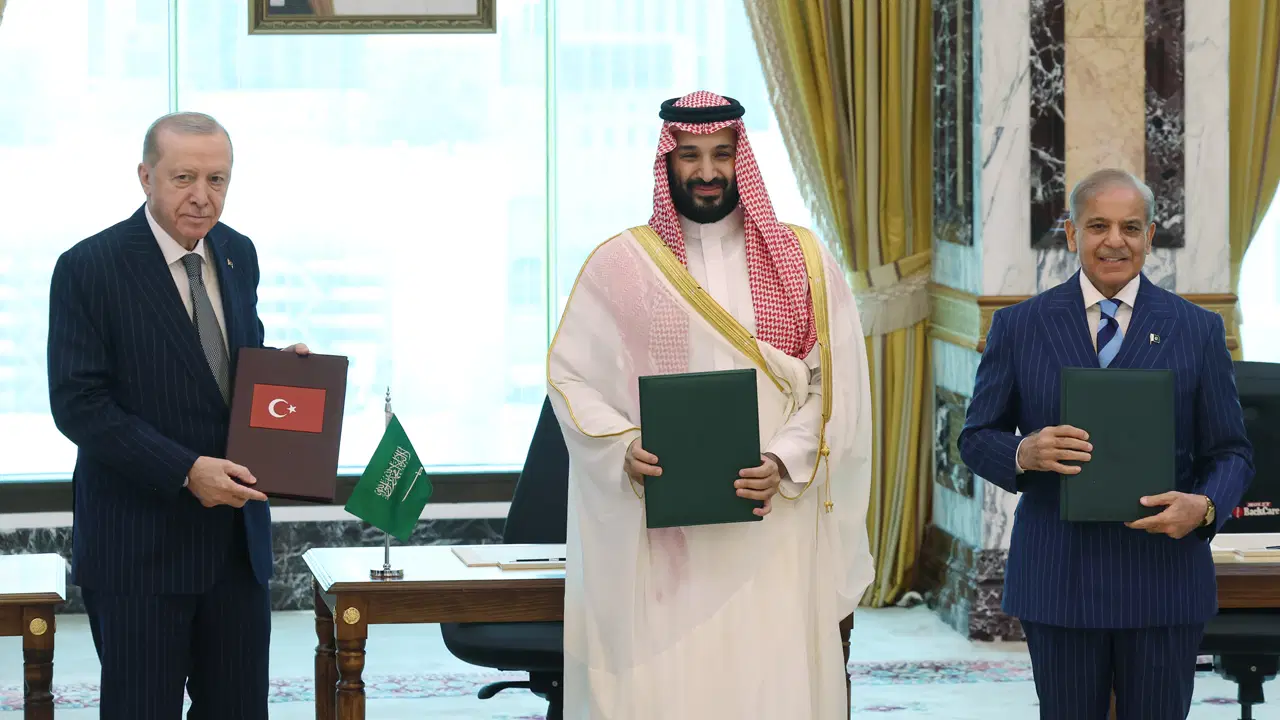
Turkey, Saudi Arabia, Pakistan Sign Joint Defense Pact in Mecca
Translated from Turkish, summarized and contextualized by DistantNews.
At a glance
News
Official statement
New plan
- Turkey, Saudi Arabia, and Pakistan signed a joint defense agreement in Mecca.
- The pact aims to strengthen regional peace, security, and stability.
- An armed attack on any one of the three nations will be considered an attack on all.
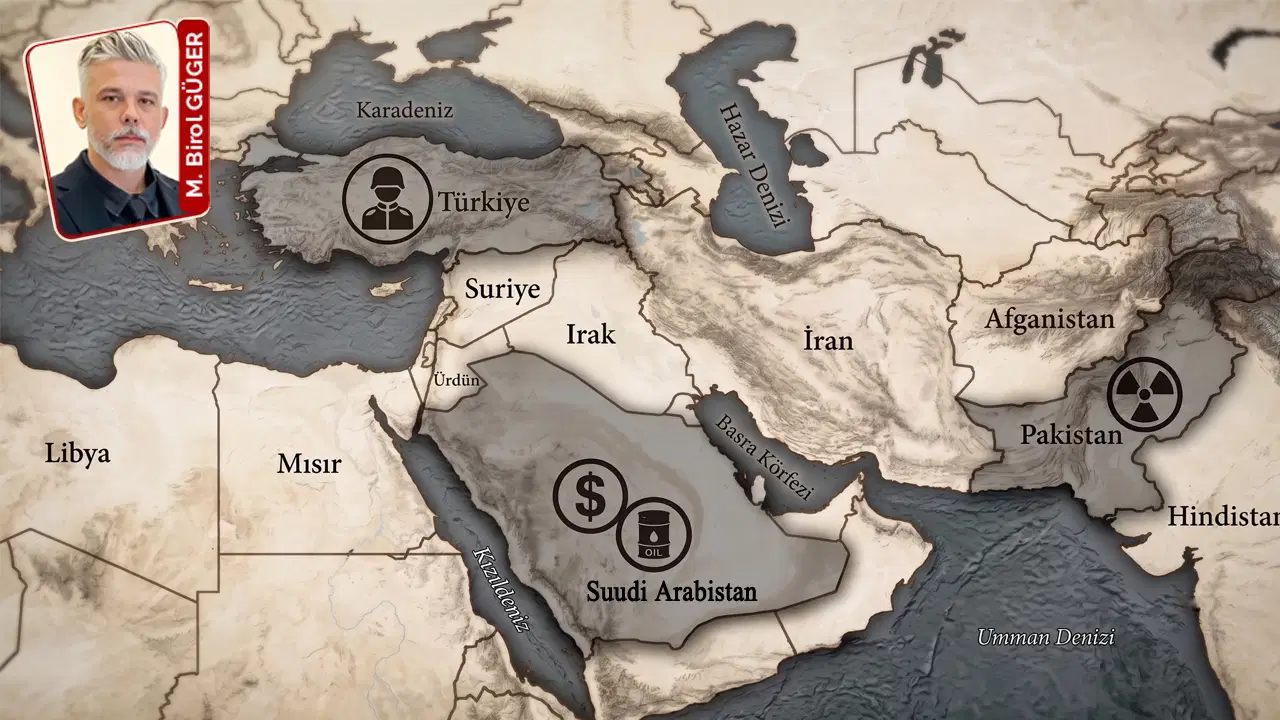
Turkey, Saudi Arabia, and Pakistan have formalized a joint defense agreement, signing the pact in the holy city of Mecca. The agreement signifies a deepening security cooperation among the three nations, aiming to bolster regional peace, security, and stability.
The agreement reflects the determination of the three countries to further strengthen their common security.
According to a statement from Pakistan's Ministry of Foreign Affairs, the defense pact reflects a shared commitment to enhancing the collective security of the signatory countries. It is designed to promote stability not only within the region but also on a global scale.
The agreement aims to promote regional and global peace, security, and stability.
A key provision of the agreement stipulates that an armed assault against any one of the three nations will be treated as a direct attack on all three. This mutual defense clause underscores the pact's intent to act as a significant deterrent against potential aggression.
An armed attack on any of the three countries will be considered an attack on all three countries.
The signing ceremony occurred amidst meetings between leaders, including Turkish President Recep Tayyip Erdoğan and Saudi Crown Prince and Prime Minister Mohammed bin Salman, who convened in Mecca. The discussions between Erdoğan and bin Salman, as noted in an official X account post, focused on their ongoing working visit to Saudi Arabia.
Our President met with Saudi Crown Prince and Prime Minister Mohammed bin Salman.
DistantNews Editorial
Originally published by Cumhuriyet in Turkish. Translated, summarized, and contextualized by our editorial team with added local perspective. Read our editorial standards.
More Stories
From Our Blog

What Gets Lost (and Found) When News Is Translated

The Critical Role of Diaspora Media in Global News

What Travellers Should Know About Countries with Restricted Press

A Digital Nomad's Guide to Following Local News

How the Same Story Looks Different in Different Countries
