


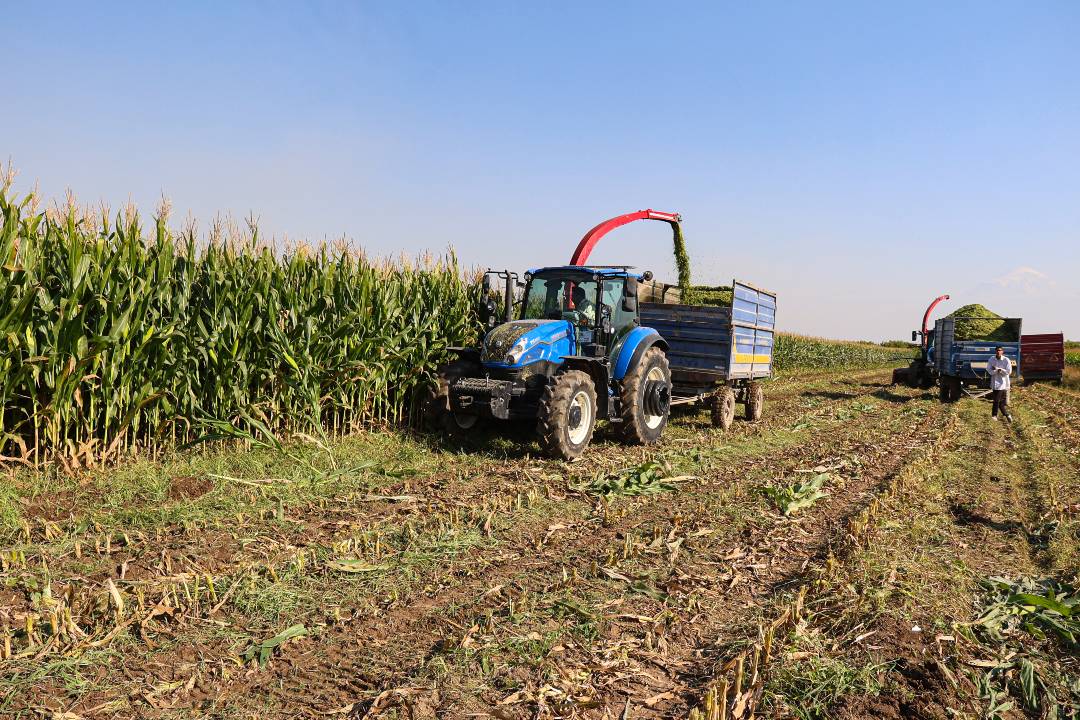
Turkish Agriculture Official: Corn Import Duty Cut Masks Deeper Production Issues
Translated from Turkish, summarized and contextualized by DistantNews.
TLDR
- A Turkish official criticized a government decision to reduce import duties on corn, arguing it highlights structural issues in Turkish agriculture.
- The official stated that despite Türkiye's corn production capacity, rising demand, particularly from the livestock sector, has led to supply shortages met by imports.
- He urged for increased domestic production through better farmer support, modern irrigation, and reduced input costs, calling the import duty cut a short-term fix.
Ankara, Turkey – Mehmet Akın Doğan, head of the Yüreğir Chamber of Agriculture, has voiced strong criticism regarding the recent government decision to slash import duties on corn, arguing that the move, while intended to stabilize the market, merely exposes deeper, unresolved structural problems within Türkiye's agricultural sector. This perspective from a key agricultural representative underscores a recurring tension between immediate market needs and the long-term sustainability of domestic farming.
The decision, published in the Official Gazette, which provides for the reduction of customs duty on corn imports from 130 percent to 5 percent for 3 million tons, is a step aimed at balancing the market in the short term, but it once again revealed the structural problems of Turkish agriculture.
Doğan pointed out the paradox of Türkiye possessing significant corn production capabilities yet struggling to meet escalating demand. He attributed this shortfall primarily to the burgeoning needs of the livestock sector, coupled with production levels that have not kept pace. The resulting deficit, he explained, necessitates imports, a situation exacerbated by climate change impacts like drought and irregular rainfall, which have particularly affected yields in regions with limited irrigation. This highlights a vulnerability that requires more than just tariff adjustments.
Although Türkiye is a country with corn production capacity, it struggles to meet the increasing demand.
From the perspective of Turkish farmers and agricultural bodies like the Yüreğir Chamber, the solution lies not in facilitating imports but in bolstering domestic production. Doğan stressed the critical role of government support, advocating for increased subsidies, the widespread adoption of modern irrigation systems, and a concerted effort to reduce the soaring costs of essential inputs such as fuel, fertilizer, and seeds. He argued that without adequate support, farmers are increasingly disincentivized, leading to reduced planting areas and lower overall output. The current import duty reduction is seen as a temporary palliative, failing to address the root causes of decreased domestic yield.
The demand for corn has increased with the rising feed needs, especially in the livestock sector, but production has not increased at the same rate, creating a supply gap that must be met through imports.
Doğan’s call for “planned production” emphasizes the need for a strategic, long-term approach to agriculture. He believes that a lack of sustainable planning regarding which crops to grow, where, and in what quantities leads to market volatility and recurrent reliance on imports. The ultimate goal, he asserts, should be for Türkiye to achieve self-sufficiency in agriculture, particularly in vital crops like corn. This requires a fundamental shift towards empowering producers with predictable incomes and the resources needed to increase output, thereby eliminating the need for imports and ensuring the sector's resilience against both market fluctuations and environmental challenges. This viewpoint resonates strongly within the agricultural community, which often feels overlooked in national economic policy.
Corn is one of the products most affected by the climate crisis as it is a water-intensive plant. Drought and irregular rainfall in recent years have negatively affected corn yields.
DistantNews Editorial
Originally published by Cumhuriyet in Turkish. Translated, summarized, and contextualized by our editorial team with added local perspective. Read our editorial standards.
More Stories
From Our Blog

What Gets Lost (and Found) When News Is Translated

The Critical Role of Diaspora Media in Global News

What Travellers Should Know About Countries with Restricted Press

A Digital Nomad's Guide to Following Local News

How the Same Story Looks Different in Different Countries
