


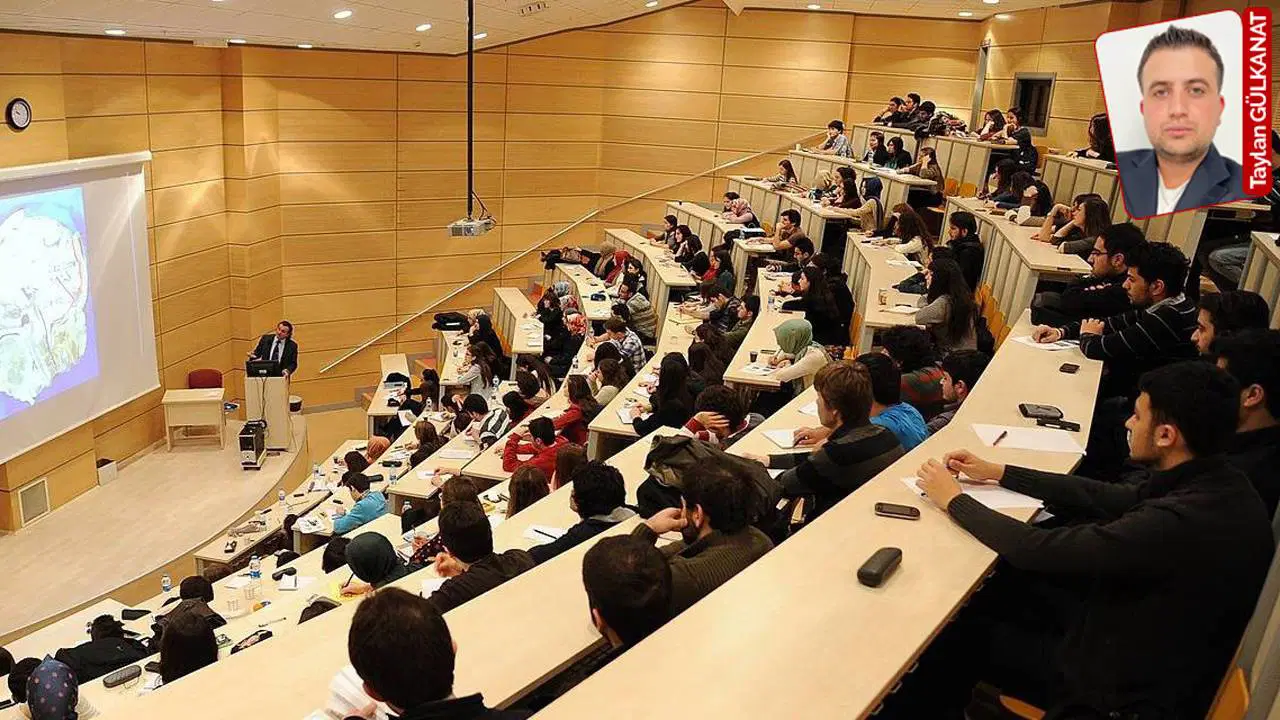
Turkish educators push back on claims of historic university enrollment
Translated from Turkish, summarized and contextualized by DistantNews.
At a glance
News
Sources not specified
Context piece
- Turkish education officials criticized the head of the Higher Education Council's claim of
Turkish education officials have voiced strong criticism of Erol Özvar, the head of the Higher Education Council (YÖK), who stated that state universities have reached a historic level of occupancy with almost no vacant spots. Education union representative Evrim Gülez argued that this perspective obscures the real challenges facing higher education.
Gülez pointed out that while the number of vacant positions in state universities has decreased from 5,503 last year to 2,292 this year, this figure is misleading. Many popular fields like law, pharmacy, dentistry, psychology, and teaching have had their quotas reduced. "Narrowing quotas and then filling them does not represent success in higher education," Gülez stated. "The real question is not how many spots are filled, but how many young people can truly access higher education."
The data reveals that approximately four out of ten young people who calculated their exam scores did not make any choices. Only 619,766 students were placed in undergraduate and associate degree programs at state and foundation universities. Gülez emphasized that hundreds of thousands of young people who did not take the exam despite applying, did not choose a program despite taking it, or did not enroll after being accepted, require serious consideration.
The narrowing of quotas and then ensuring the remaining quotas are filled is not a success for higher education. The real question that should be asked is not how many quotas are filled, but how many young people can truly access higher education.
These decisions are not solely based on individual preferences but are influenced by economic hardships, a sense of uncertainty about the future, fear of unemployment after graduation, low wages, precarious working conditions, and a weakening belief that a university degree guarantees a decent future. Young people are now asking not only "Which university can I get into?" but also "Will I find a job after finishing this program?" "Will I be unemployed after years of study?" "How will I survive in another city for four years?" and "How much of a burden will I be to my family?" The choice of university is shifting from an academic pursuit to an economic risk assessment.
Gülez further highlighted that while theoretically every student has the right to choose a university their score allows, in reality, the ability to study in another city is often determined by the family's income rather than the student's score. "Due to basic living expenses, many..." the article cuts off here.
The university choice is increasingly shifting from an educational choice based on academic interest, talent, and future dreams to an economic risk calculation.
DistantNews Editorial
Originally published by Cumhuriyet in Turkish. Translated, summarized, and contextualized by our editorial team with added local perspective. Read our editorial standards.
More Stories


From Our Blog

What Gets Lost (and Found) When News Is Translated

The Critical Role of Diaspora Media in Global News

What Travellers Should Know About Countries with Restricted Press

A Digital Nomad's Guide to Following Local News

How the Same Story Looks Different in Different Countries
