

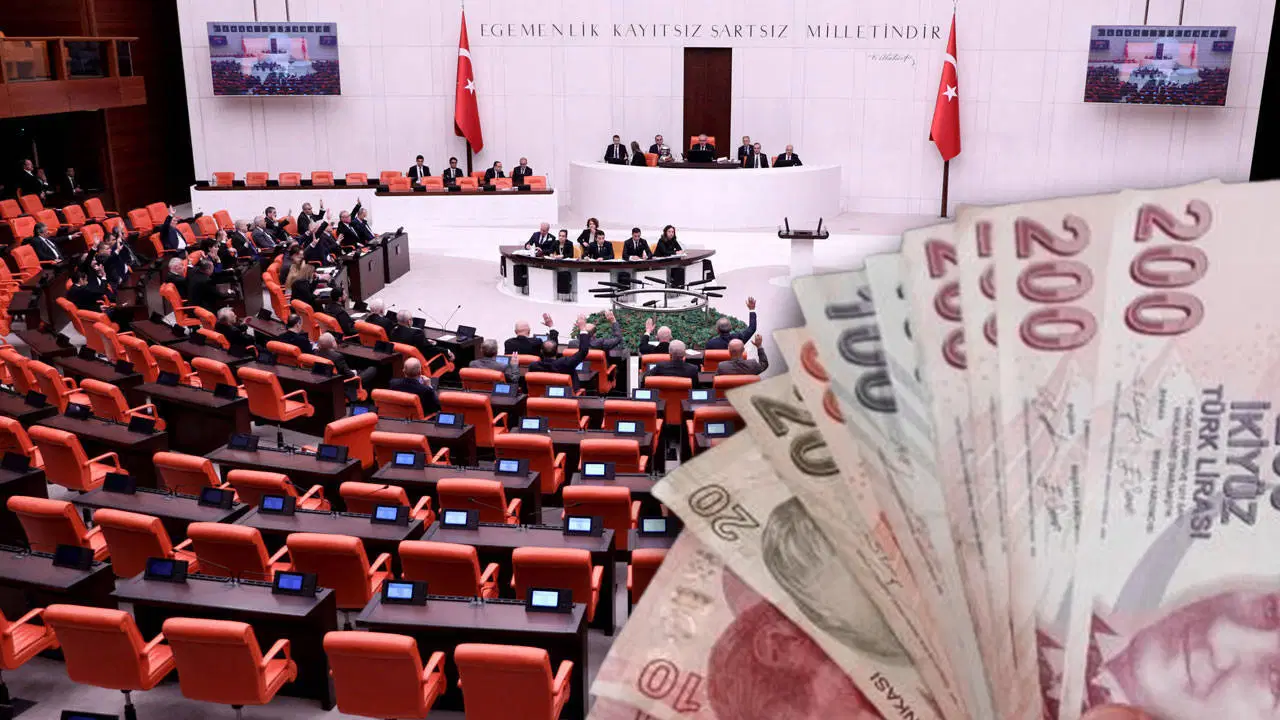

Turkish unions protest inflation-tied salaries, demand share in prosperity
Translated from Turkish, summarized and contextualized by DistantNews.
At a glance
News
Named sources
New plan
- Turkish public sector unions protested against inflation-indexed salary increases, arguing they only compensate for past losses, not future welfare.
- Unions demand that public employees share in prosperity, not just inflation, citing a high poverty line and significant consumer debt.
- They called for additional salary increases beyond the current inflation adjustments and urged the government to prioritize public worker wages over high interest payments.
Public sector unions in Turkey gathered outside the Turkish Statistical Institute (TÜİK) to criticize the government's approach to salary adjustments, which are tied to inflation figures. The unions argue that the current system, where salaries are increased based on past inflation, effectively means employees are merely getting back money that was already lost due to rising prices, rather than sharing in the nation's economic prosperity.
Inflation difference is not a raise. Inflation difference is just the delayed return of what was taken from our pockets in the last six months.
Following the announcement of June inflation data, which dictates salary increases for the second half of the year, unions representing civil servants and state pensioners expressed strong dissatisfaction. They contend that the inflation-linked raises are insufficient, especially with the poverty line reaching 116,000 Turkish lira. Millions of public employees and pensioners are struggling to make ends meet, while consumer debt, including loans and credit card balances, has surged.
Today, 3.5 million civil servants, 446,000 contract employees, and 17 million pensioners, widows, and orphans have their salaries determined according to the announced inflation rates. This means that every figure announced today directly affects the kitchens of millions of households, their children's education, and their future.
Speakers at the protest emphasized that the issue extends beyond economics, touching on income distribution and social justice. They pointed to the substantial interest payments made by the government, suggesting that funds allocated to interest could instead be used for more robust wage increases for public workers. The unions are demanding additional salary hikes beyond the current adjustments and a re-evaluation of budget priorities to better protect the labor of those serving the country daily.
The labor of public employees who serve their country day and night must be protected.
The unions also highlighted the stark contrast between Turkey's high inflation expectations and the single-digit inflation rates seen in many developed countries. They asserted that public employees should not be solely focused on the struggle for survival but should be able to plan for their children's futures. The collective call is for the state to recognize its workforce not as a burden but as a source of strength, arguing that a state cannot grow by impoverishing its own employees.
The public employee should share in prosperity, not inflation. The public employee should deal with their children's future, not the struggle for survival. The public employee should live with the reward of their labor, not with debt.
DistantNews Editorial
Originally published by Cumhuriyet in Turkish. Translated, summarized, and contextualized by our editorial team with added local perspective. Read our editorial standards.
More Stories



From Our Blog

What Gets Lost (and Found) When News Is Translated

The Critical Role of Diaspora Media in Global News

What Travellers Should Know About Countries with Restricted Press

A Digital Nomad's Guide to Following Local News

How the Same Story Looks Different in Different Countries
