


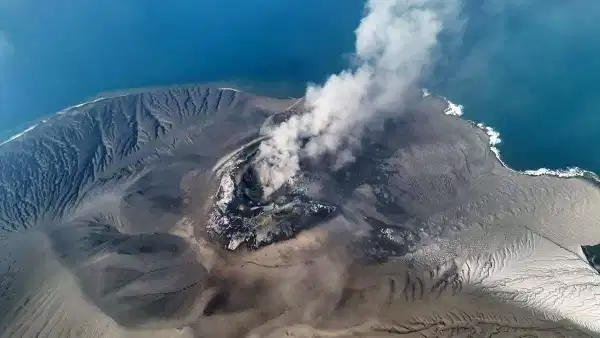

Türkiye expands earthquake monitoring network to 1,104 stations
Summarized by DistantNews. Read the original for the full story.
At a glance
News
Named sources
New plan
- Türkiye has expanded its earthquake monitoring network to 1,104 stations, the highest monitoring capacity in Europe, according to AFAD President Ali Hamza Pehlivan.
- Pehlivan made the announcement at a European seismology congress in Istanbul, which is bringing together nearly 1,000 participants from 60 countries.
- He said Türkiye’s disaster strategy focuses on scientific research, stronger buildings, resilient infrastructure and coordinated preparedness following the 1999 Marmara earthquake.
Türkiye now has 1,104 earthquake monitoring stations, giving the country Europe’s largest earthquake monitoring capacity, according to Disaster and Emergency Management Authority President Ali Hamza Pehlivan.
Pehlivan spoke in Istanbul as the city hosted the 40th General Assembly of the European Seismological Commission and the ESC2026 European Seismology Congress. Nearly 1,000 participants from 60 countries are attending, and about 800 scientific papers are expected to be presented.
Disasters are a shared global concern. Earthquakes and faults do not recognize borders.
He emphasized that earthquakes and other disasters do not stop at national borders. “Disasters are a shared global concern. Earthquakes and faults do not recognize borders,” Pehlivan said, calling for international cooperation and research that can be turned into practical measures. He said an earthquake in one country can affect others through structural damage and wider social and economic consequences.
The congress will bring together scientists, academics, engineers, professional organizations, AFAD and other institutions. Its scientific papers are expected to be compiled into a joint declaration. Pehlivan said the gathering will also highlight practical products and results emerging from research, rather than focusing only on theory.
Ultimately, natural events can turn into disasters when people or other living beings are involved.
Pehlivan stressed the need to strengthen buildings, improve infrastructure and develop cities that can withstand disasters. “Ultimately, natural events can turn into disasters when people or other living beings are involved,” he said. “The way to prevent this and reduce its impact is to identify and eliminate risks in a timely manner.”
He described the magnitude 7.4 Marmara earthquake of Aug. 17, 1999, as a turning point for Türkiye’s disaster management. The earthquake killed more than 17,000 people and caused extensive destruction, particularly in Kocaeli, Yalova and Sakarya. Measures introduced afterward included the creation of AFAD and a shift toward an Integrated Disaster Management approach covering preparedness, emergency response and recovery. AFAD continues to expand its scientific and technical capacity through cooperation with universities and research institutions.
The way to prevent this and reduce its impact is to identify and eliminate risks in a timely manner.
About this summary
Originally published by Daily Sabah. Summarized and contextualized automatically by DistantNews, with a note on how the source frames the story. Not individually reviewed before publishing. How this works.
More Stories


From Our Blog

News in Translation: What Gets Lost, and How We Keep the Framing

Diaspora Media: How Communities Follow News From Home

Traveling Where the Press Is Not Free: How to Read the News There

The Digital Nomad's Guide to Local News

The Same Story, Different Countries: How Coverage Changes at the Border
