



TV debate: Saxony-Anhalt's CDU leader outshines AfD rival
Translated from German and summarized by DistantNews. Read the original for the full story.
At a glance
News
Named sources
Ongoing story
- In a TV debate, Saxony-Anhalt's CDU Minister-President Sven Schulze performed better than AfD's Ulrich Siegmund, despite the AfD leading in polls.
- Siegmund struggled to articulate specific policy proposals, often deferring to decisions made in Berlin.
- Schulze effectively used the debate to counter Siegmund's points, appearing more prepared and statesmanlike.
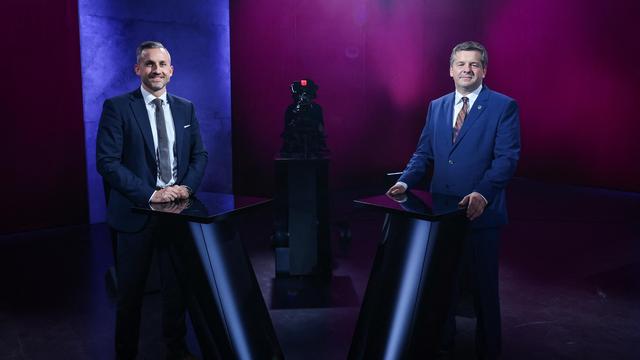
During a critical televised debate just eleven days before the Saxony-Anhalt state election, incumbent Minister-President Sven Schulze of the CDU demonstrated a more commanding presence than his AfD rival, Ulrich Siegmund. Despite the AfD's strong polling numbers, Siegmund struggled to articulate concrete policy plans for the state.
Siegmund repeatedly deflected questions about specific measures to advance Saxony-Anhalt, frequently citing the need for action from Berlin and suggesting that the state's role was merely a "first step." He implied that a victory for the AfD would serve the party's broader agenda rather than directly benefit the residents of Saxony-Anhalt. This stance contrasted sharply with Schulze's more grounded approach.
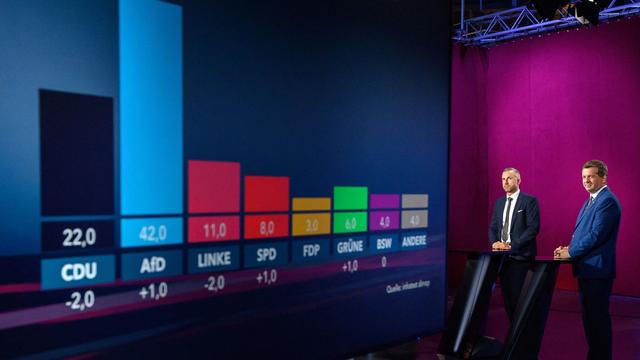
While both candidates adopted an aggressive tone, Schulze proved more adept at delivering effective attacks and rebuttals. The debate, hosted by MDR, covered a wide range of topics including migration, the economy, education, security, and energy prices. The urgency of the discussion was amplified by a recent poll showing the AfD at 42%, nearly double their result from five years prior, while the CDU lagged at 22%.
Despite the AfD's lead in the polls, the party's path to an outright majority appears unlikely due to the presence of other parties like The Left (11%), SPD (8%), and the Greens (6%), whose combined support could prevent the AfD from forming a government alone. This electoral landscape makes the performance of leaders like Schulze and Siegmund in debates particularly crucial for swaying undecided voters.
About this summary
Originally published by Der Spiegel in German. Translated, summarized, and contextualized automatically by DistantNews, with a note on how the source frames the story. Not individually reviewed before publishing. How this works.
More Stories
From Our Blog

What Gets Lost (and Found) When News Is Translated

How the Same Story Looks Different in Different Countries

The Critical Role of Diaspora Media in Global News

What Travellers Should Know About Countries with Restricted Press

A Digital Nomad's Guide to Following Local News
