


Typhoon Bavi Heads for China, Minimal Direct Impact Expected on Korean Peninsula
Translated from Korean, summarized and contextualized by DistantNews.
At a glance
News
From a news agency
Ongoing story
- Typhoon Bavi is currently a powerful storm moving west from the waters near Guam, maintaining its strength.
- The typhoon is projected to pass north of Taiwan and head towards eastern China, making a direct impact on the Korean Peninsula unlikely.
- However, changes in the East Asian atmospheric pressure system after the typhoon dissipates could lead to rainfall in South Korea late next week.
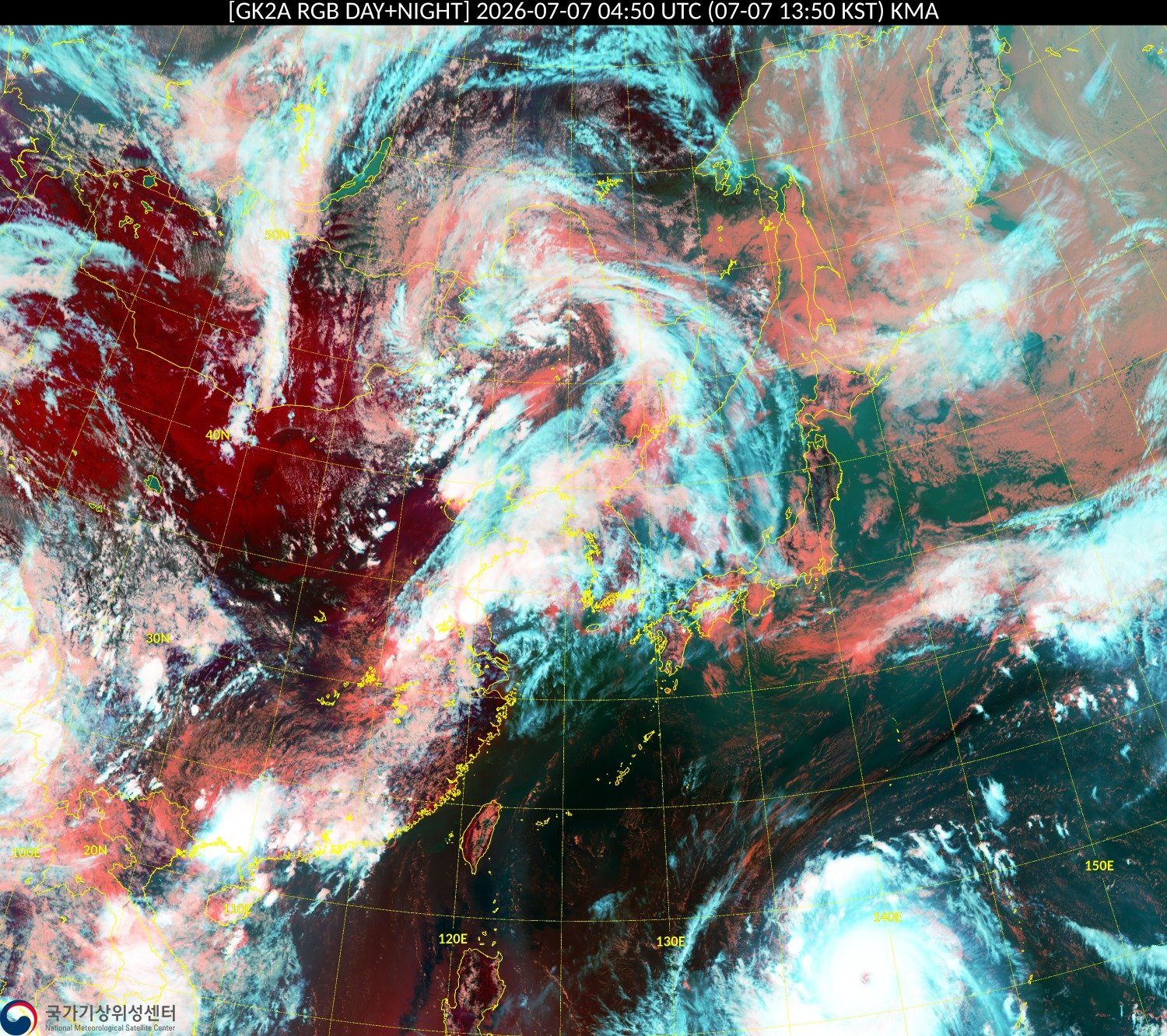
Typhoon Bavi, currently a powerful storm, is moving westward from the sea west of Guam. It is expected to maintain its strength as it travels towards eastern China, passing north of Taiwan. This trajectory suggests that the typhoon itself is unlikely to have a direct impact on the Korean Peninsula in terms of strong winds or heavy rain.
As of Tuesday morning, Bavi was located about 610 kilometers west-northwest of Guam, moving west at 21 km/h. The storm has a central pressure of 925 hPa, maximum sustained winds of 51 m/s (184 km/h), and a wind radius extending 500 km. The Korea Meteorological Administration (KMA) noted that the typhoon's eye is distinct and its spiral rain bands are well-developed.
Bavi is currently moving along the edge of the North Pacific High, with a distinct eye and well-developed spiral rain bands.
While Bavi is not expected to make landfall in South Korea, its passage could influence weather patterns. After the typhoon dissipates, the atmospheric pressure system in East Asia is predicted to rearrange. This shift may lead to increased precipitation in South Korea during the latter half of next week. KMA forecaster Lee Gwang-yeon stated that while Bavi's moisture may not directly affect Korea, the subsequent rearrangement of pressure systems could bring rain.
Although Bavi's moisture may not directly affect Korean weather, the pressure system will be rearranged after the typhoon dissipates, and there is a possibility of additional rainfall next week.
DistantNews Editorial
Originally published by Dong-A Ilbo in Korean. Translated, summarized, and contextualized by our editorial team with added local perspective. Read our editorial standards.
More Stories


From Our Blog

What Gets Lost (and Found) When News Is Translated

The Critical Role of Diaspora Media in Global News

What Travellers Should Know About Countries with Restricted Press

A Digital Nomad's Guide to Following Local News

How the Same Story Looks Different in Different Countries
