


Typhoon Bavi makes landfall in China, downgraded to severe tropical storm
Summarized and contextualized by DistantNews.
At a glance
News
From a news agency
Ongoing story
- Typhoon Bavi weakened to a severe tropical storm after making landfall in eastern China, with no immediate reports of damage or casualties.
- Nearly two million people were evacuated in China, while the storm had previously affected Taiwan and Japan.
- Heavy rains and potential floods are forecast for coastal regions, with transport disruptions and inundated farmland anticipated.
Typhoon Bavi made landfall in eastern China as a severe tropical storm on July 12, following its weakening from typhoon strength. The storm struck Zhejiang province with winds of 144 km/h, bringing fierce winds and heavy rain that uprooted trees. While authorities had evacuated nearly two million people, there were no immediate reports of damage or casualties.
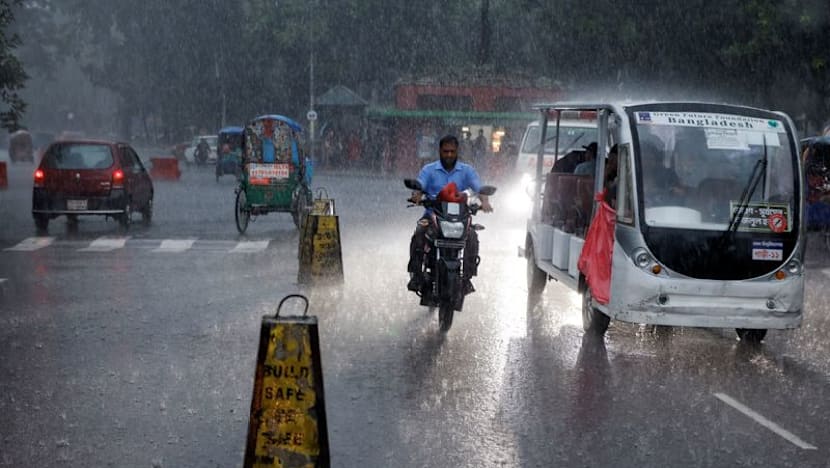
The core impact zone experienced fierce winds and heavy rain, with rapid runoff forming on the ground and roadside trees being uprooted.
Before reaching China, Bavi had lashed northern Taiwan and Japan’s remote southwestern islands, causing power outages and toppling trees. This comes after extreme weather in the past week caused at least 39 deaths and widespread flooding in southern and central China. The China Weather Administration reported that Bavi's intensity weakened further by July 12, with its eye near the commercial hub of Yiwu, and it is expected to move northwest.
The proactive, all-out mobilisation, which is sparing no effort or cost, is undertaken entirely to guard against the (worst-case) scenario.
Authorities in Zhejiang province forecast torrential rain, flash floods, and inundated farmland. In response to the threat, around 1.72 million people were evacuated by July 11. Activities such as classes, work, and transportation were suspended, and hundreds of flights and train services were canceled. The government in Wenzhou emphasized its "proactive, all-out mobilization" to guard against the worst-case scenario. Further north, heavy rains prompted the evacuation of over 100,000 people in Beijing due to increased water discharge from the Miyun Reservoir. Over 130,000 people also fled their homes in Fujian and approximately 34,000 from Shanghai's coastal areas.
The eye of the storm was near the major commercial hub of Yiwu and is now expected to head north-west, it added, warning of force 11 winds of around 108 kmh.
DistantNews Editorial
Originally published by The Straits Times. Summarized and contextualized by our editorial team with added local perspective. Read our editorial standards.
More Stories

From Our Blog

What Gets Lost (and Found) When News Is Translated

The Critical Role of Diaspora Media in Global News

What Travellers Should Know About Countries with Restricted Press

A Digital Nomad's Guide to Following Local News

How the Same Story Looks Different in Different Countries
