


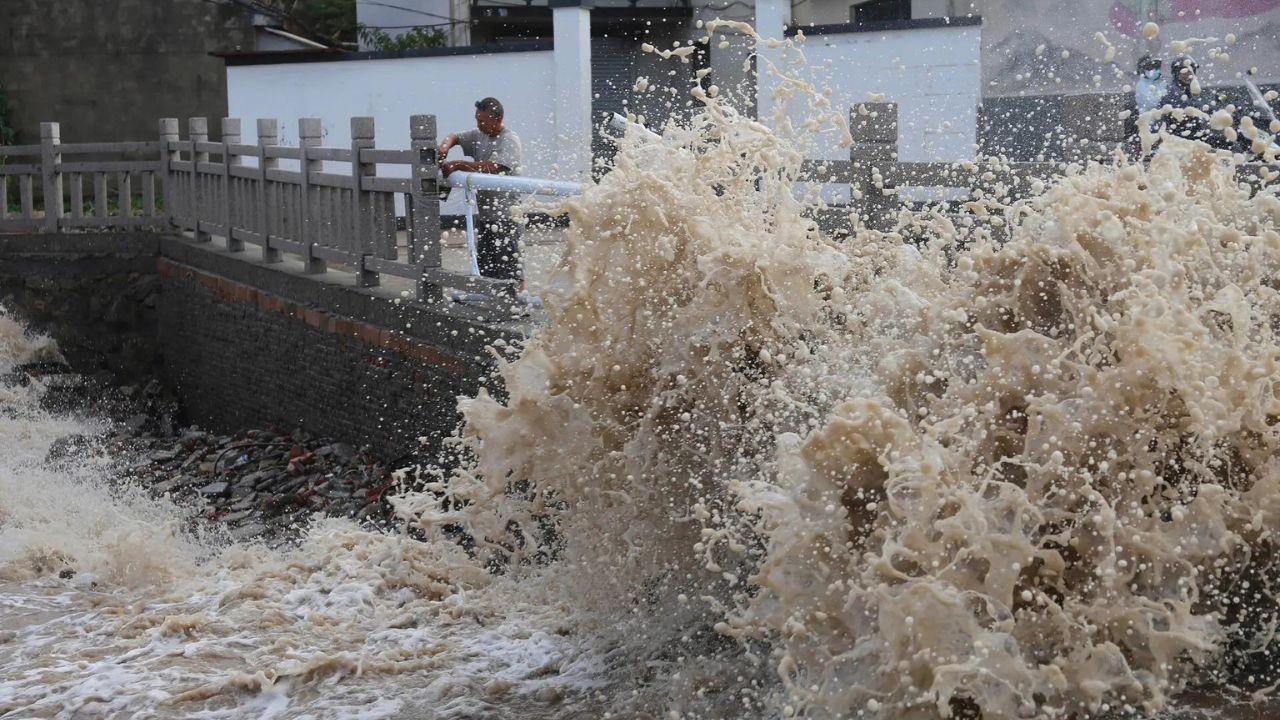
Typhoon Bavi makes landfall in eastern China, over 1 million evacuated
Summarized and contextualized by DistantNews.
At a glance
News
Sources not specified
New plan
- Typhoon Bavi made landfall in China's eastern Zhejiang province late Saturday, causing massive evacuations and disruptions.
- Over 1.7 million people were evacuated from vulnerable areas in China, with Shanghai relocating 34,000 residents.
- The typhoon, which previously hit Japan and Taiwan, also caused at least 17 deaths in the Philippines due to heavy rains and landslides.
Typhoon Bavi made landfall in China's eastern Zhejiang province late Saturday, prompting extensive evacuations and widespread disruptions. The storm followed a path that had already lashed Japan's southern islands and Taiwan with heavy rain and strong winds.
Chinese authorities evacuated more than 1.7 million people from areas deemed vulnerable ahead of the typhoon's arrival. Shanghai alone relocated approximately 34,000 residents from high-risk zones. Coastal cities in Fujian province also implemented emergency measures, moving thousands to safety and placing over 17,000 rescue personnel on standby.
The national meteorological center issued an orange typhoon alert, the second-highest level in China's four-tier warning system. In response, authorities suspended classes, halted ferry services, canceled hundreds of flights, and disrupted several high-speed rail operations across the affected regions.
Bavi, with maximum sustained winds of 144 kmph (89 mph) near its center, tracked north of Taiwan before hitting Zhejiang. Officials expect the storm to weaken as it moves inland. Before reaching China, the typhoon brought intense rainfall and powerful winds to Japan and Taiwan. In the Philippines, Bavi intensified seasonal monsoon rains, leading to at least 17 deaths, primarily from landslides triggered by the heavy downpours.
This is the second typhoon to strike China in just over a week, following Typhoon Maysak, which made landfall in the country's south the previous weekend. Disaster response agencies along the eastern coastline remain on high alert.
DistantNews Editorial
Originally published by Times of India. Summarized and contextualized by our editorial team with added local perspective. Read our editorial standards.
More Stories


From Our Blog

What Press Freedom Means for the News You Read

What Gets Lost (and Found) When News Is Translated

The Critical Role of Diaspora Media in Global News

What Travellers Should Know About Countries with Restricted Press

A Digital Nomad's Guide to Following Local News
