



Typhoon Bavi weakens but brings strong winds, rain to eastern China; millions evacuated
Translated from English, summarized and contextualized by DistantNews.
At a glance
News
From a news agency
Context piece
- Typhoon Bavi weakened to a severe tropical storm after making landfall in eastern China, bringing strong winds and heavy rain.
- Over 2.2 million people were evacuated in Zhejiang province, with Shanghai and Fujian also evacuating hundreds of thousands.
- The typhoon caused significant disruption, including the toppling of over 1,300 trees in one coastal city and hundreds of flight cancellations.
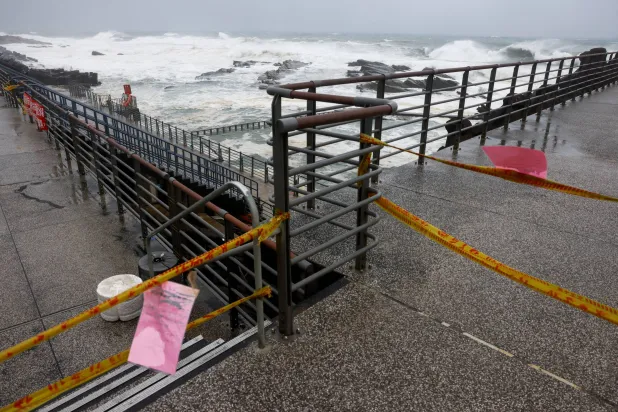
Typhoon Bavi made landfall in China's Zhejiang province as a severe tropical storm, unleashing strong winds and heavy rainfall across eastern China on Sunday. Although weakened from its initial intensity, the storm's passage prompted widespread evacuations and significant disruptions.
Authorities in Zhejiang province evacuated approximately 2.2 million residents from at-risk areas. Shanghai also took extensive measures, evacuating over 290,000 people, while Fujian province evacuated more than 180,000. These mass evacuations aimed to mitigate the impact of the storm's powerful winds and torrential rain.
The typhoon's impact was visible in the widespread damage. In the coastal city of Yueqing, Zhejiang province, over 1,300 trees were toppled, with at least 700 uprooted. Air travel faced severe disruption, with Shanghai's Pudong and Hongqiao International Airports expecting to cancel around 653 inbound and outbound flights.
While Bavi passed north of Taiwan on Saturday, it caused injuries on the island. Taiwan's fire department reported at least 134 people injured by Sunday morning, many sustaining harm from strong winds while riding motorcycles or bicycles on slippery surfaces. The storm is expected to continue its northwestward path across eastern China.
DistantNews Editorial
Originally published by Asharq Al-Awsat in English. Translated, summarized, and contextualized by our editorial team with added local perspective. Read our editorial standards.
More Stories


From Our Blog

What Gets Lost (and Found) When News Is Translated

The Critical Role of Diaspora Media in Global News

What Travellers Should Know About Countries with Restricted Press

A Digital Nomad's Guide to Following Local News

How the Same Story Looks Different in Different Countries
