


U.S. bans foreign-made humanoid robots, targeting China over national security
Summarized and contextualized by DistantNews.
At a glance
News
From a news agency
New plan
- The U.S. Federal Communications Commission has banned imports of new foreign-made humanoid robots and power inverters, citing national security risks and targeting China.
- China, which dominates the global humanoid robot market, accused the U.S. of protectionism and the measures could affect upcoming U.S.-China relations.
- The ban on power inverters, crucial for renewable energy and data centers, could have wide-ranging consequences for U.S. supply chains.
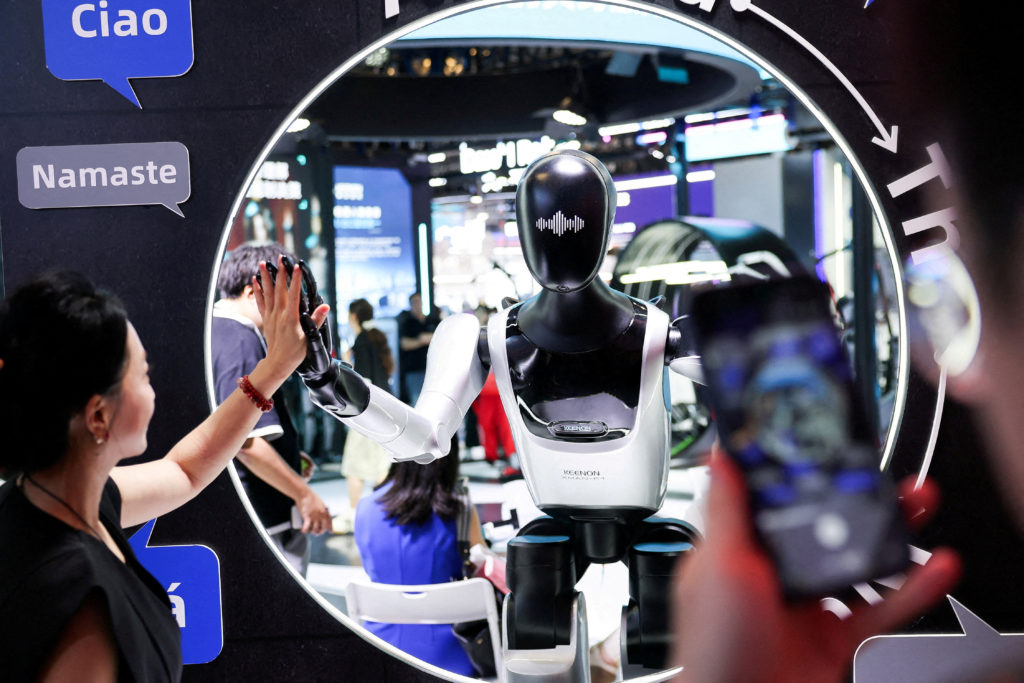
The U.S. Federal Communications Commission (FCC) has imposed a ban on the import of new foreign-made humanoid robots and power inverters, citing national security concerns and specifically targeting China's dominance in the robotics market.
Beijing has responded by accusing the U.S. of protectionism. This move comes ahead of a planned meeting between U.S. President Donald Trump and Chinese leader Xi Jinping in September, potentially testing bilateral relations. China holds an estimated 85% market share in the global humanoid robot industry. The FCC's ban also extends to new imports of four-legged robot dogs, known as quadruped robots.
The agency stated that advanced robots pose cybersecurity and national security risks. Furthermore, relying on offshore production for such equipment leaves U.S. supply chains vulnerable to disruptions. The prohibition on power inverters, essential components for converting DC to AC electricity used in renewable energy systems, data centers, and appliances, could have significant ramifications.
This action is the latest in a series of U.S. restrictions on Chinese imports, following similar measures on drones and export controls on advanced U.S. technology to China. Analysts suggest these actions create potential flashpoints leading up to the September summit. While China's domestic manufacturing base and other export markets may mitigate the impact on its overall humanoid development, the U.S. market represents an important future opportunity that will now be protected from potential price competition for U.S. developers.
secure America's critical supply chains
DistantNews Editorial
Originally published by PBS NewsHour. Summarized and contextualized by our editorial team with added local perspective. Read our editorial standards.
More Stories


From Our Blog

How the Same Story Looks Different in Different Countries

What Gets Lost (and Found) When News Is Translated

The Critical Role of Diaspora Media in Global News

What Travellers Should Know About Countries with Restricted Press

A Digital Nomad's Guide to Following Local News
